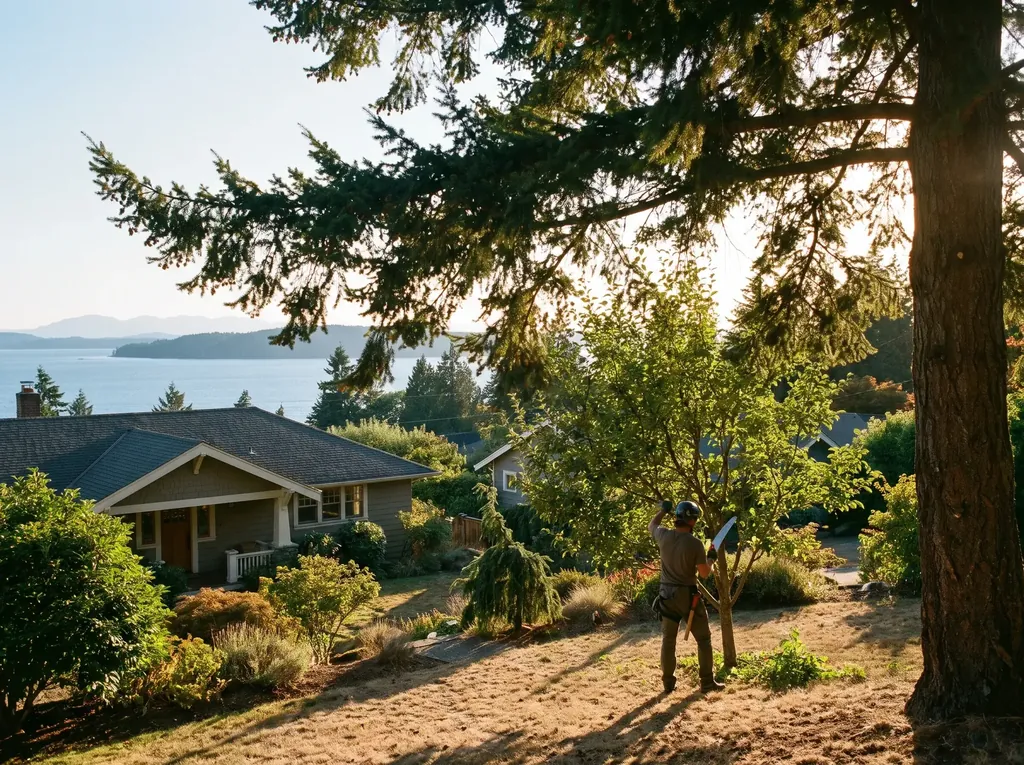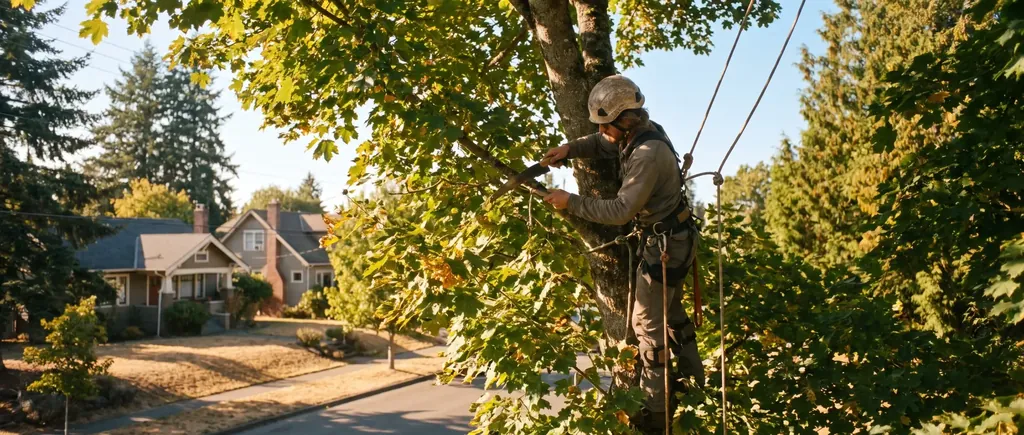
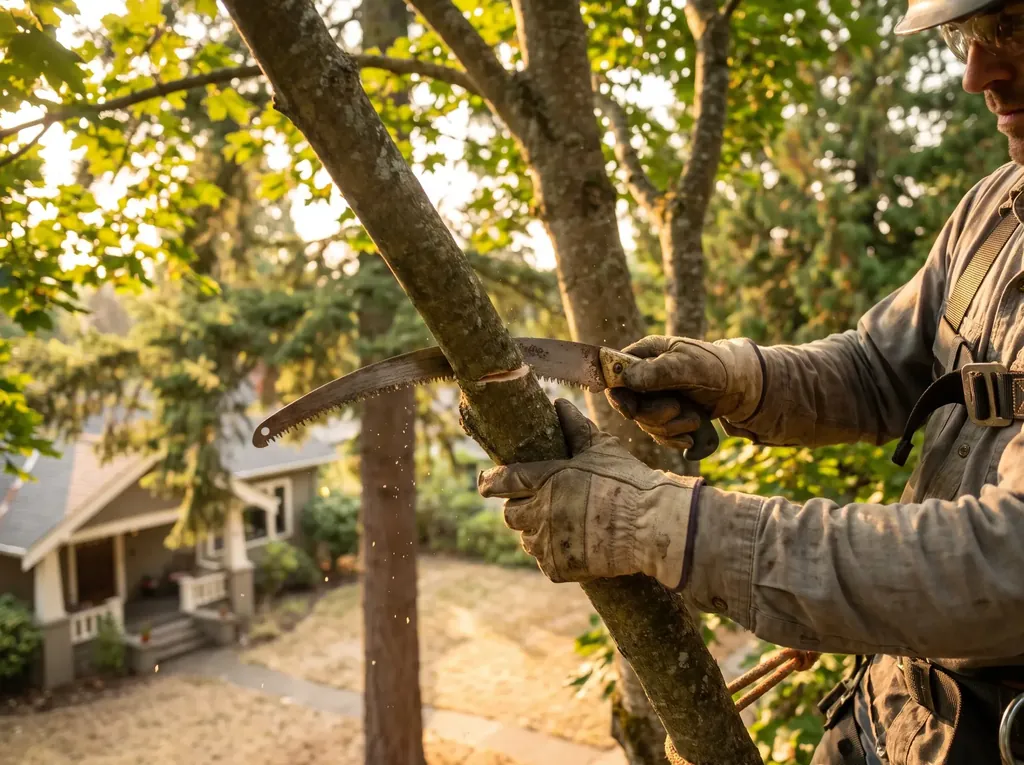
Climber thinning the crown of a big-leaf maple above a quiet Bellingham street

Tree Trimming and Pruning Services

Deadwood out, crowns thinned, limbs lifted off the roof and away from the house. Every cut made in the right place for a reason we can explain, and never a topped tree.

We do not top trees

  • Cuts made at the branch collar
  • We never top a tree
  • Free on-site estimates
  • Yard raked and cleaned before we leave
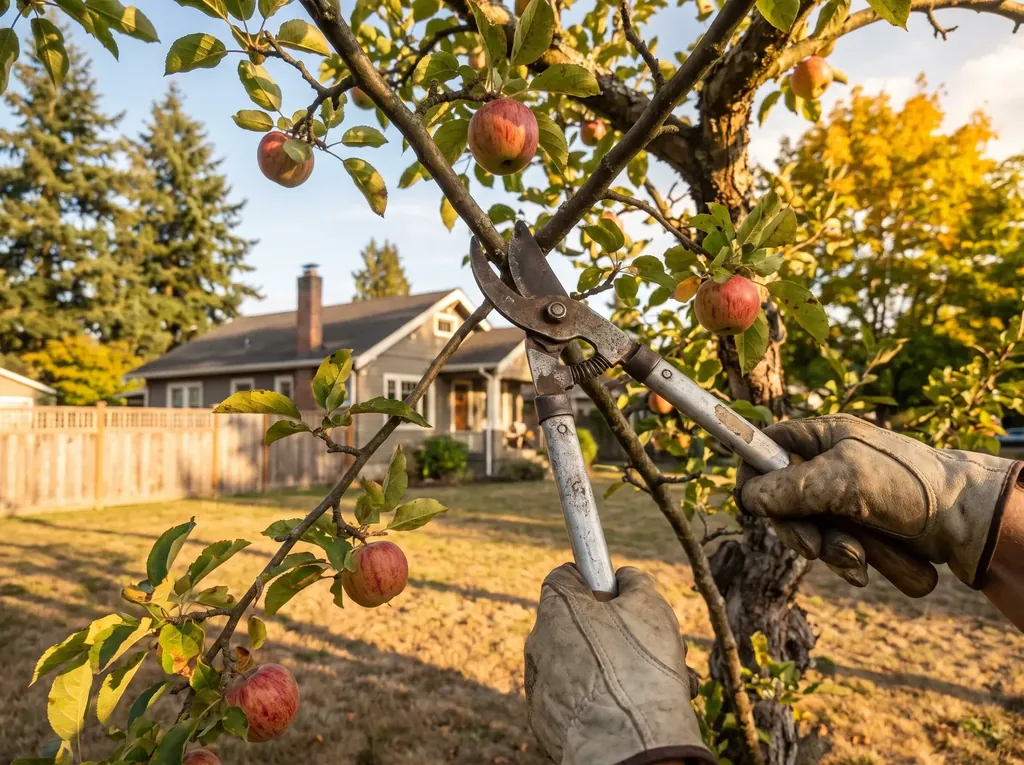
Arborist making a clean pruning cut on a maple branch

Good pruning is mostly about the cuts you do not make

Most of the trees we get called about in Bellingham are not sick. They are big. A Douglas fir that went in as a seedling a generation ago now hangs over the roof, fills the gutters with needles and moss every winter, and creaks in the first proper blow out of the Fraser Valley. A big-leaf maple has thrown a long, heavy limb out over the driveway. A western red cedar has grown into the eaves on the shady side of the house.

None of those trees needs to come down. Each of them needs a few well chosen cuts, made in the right places, with most of the living crown left alone.

That is what tree trimming should be. We take out the dead, broken and crossing wood first, because that is the wood that lands on cars and lets rot in. Then we thin and shorten only what is causing the problem, cutting back to a healthy branch or to the trunk at the branch collar so the wound closes the way the tree is built to close it. We do not leave stubs, we do not strip the inside of the crown bare, and we do not top trees.

A tree pruned well should look like nobody touched it, only lighter and further from the house. If you can stand in the yard afterwards and point at every place we cut, we cut too much.

What we handle

Roof, gutter and siding clearance

Limbs over the roof drop needles, cones and moss into the gutters and hold damp against the shingles all winter. We raise and shorten the limbs that overhang the house so the roof dries out and the gutters stop filling every month, without flattening one side of the tree.
Deadwood removal and crown thinning

Dead limbs in a big fir or maple are the ones that come down in a windstorm. We clear them out, take out crossing and rubbing branches, thin crowded growth lightly, and shorten long, heavy limbs so the crown carries less weight at the ends.

Limb clearance over drives, paths and the service drop

Low limbs over the driveway, the path, the shed or the line running to the house, raised or shortened back to a sound branch. Anything near the high voltage lines on the pole is the electric utility's work, and we will tell you who to call.

What is included

A walk around the tree before anyone climbs

We look at the whole tree, not just the limb you called about: the trunk, the root flare, old wounds, fungus, dead tops, the way the crown has grown. Sometimes the problem limb is a symptom of something else, and you should know that before you pay for pruning.

Cuts at the branch collar

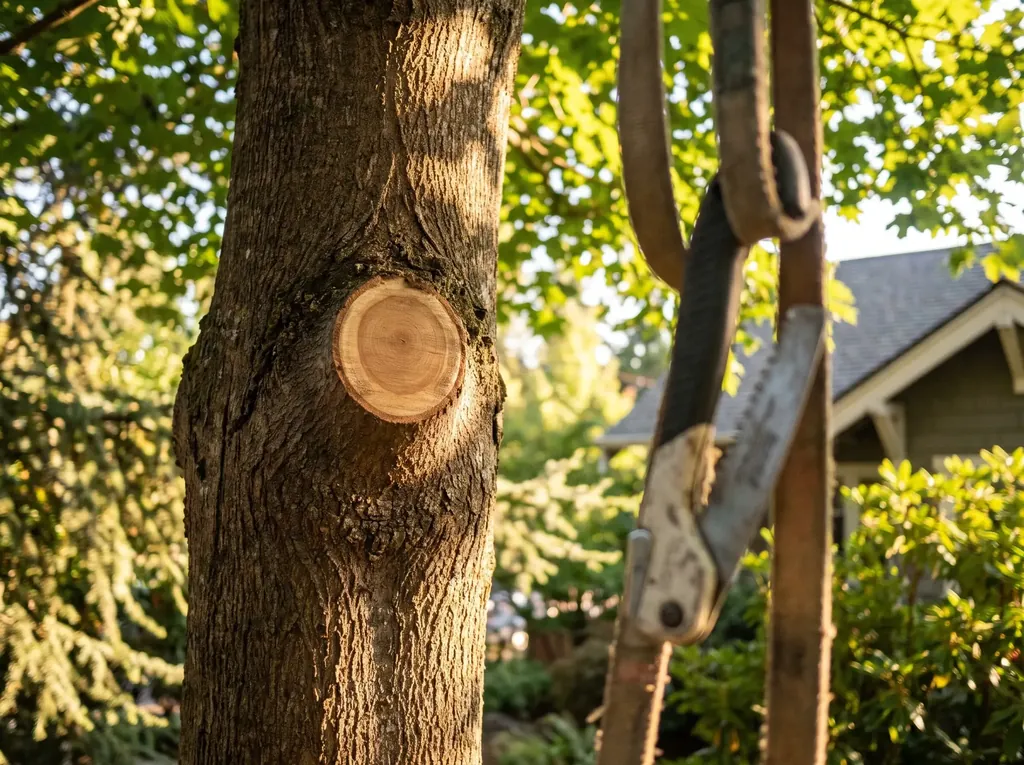
Every limb comes off just outside the swollen collar where it joins the trunk or parent branch. That collar is where the tree seals off a wound. Cut into it and you invite decay. Leave a stub past it and the stub dies back and rots. Heavier limbs come down in pieces so the bark does not tear.

A sensible amount, not a maximum

On a healthy mature tree we usually take no more than about a fifth to a quarter of the live foliage in a season, and less on an older or stressed tree. Taking more does not buy you extra years between visits. It triggers a flush of weak, fast sprouts that need cutting again sooner.

Clean-up and haul-off

Limbs chipped or hauled, the lawn and beds raked, the roof and gutters blown clear of anything we dropped. If you want the chips for paths or mulch, we leave them where you ask.

Clean pruning cut healing at the branch collar

How a pruning job runs

  1. Tell us about the tree

    A photo and a sentence about what is bothering you is plenty: needles in the gutters, a limb on the roof, a tree that just feels too big for the yard.

  2. A free look on site

    We walk the property, look at the tree from every side, and talk through what we would cut, what we would leave and why.

  3. A written estimate

    You get the scope in plain words: which limbs, roughly how much comes off, how the debris is handled, and anything we recommend leaving alone.

  4. Setting up

    Tarps or boards over beds and decks where limbs will land, and ropes rigged for anything that has to be lowered rather than dropped.

  5. Pruning

    Dead and broken wood first, then the clearance and thinning cuts, each made at the collar or back to a healthy side branch that can take over.

  6. Clean-up and walk-through

    We clear up, then walk the yard with you so you can see what came off and what to keep an eye on next year.

Why homeowners call us to prune

We would rather keep your tree than take it down, and we say so on the estimate. A healthy Douglas fir or cedar near a house is usually worth keeping. It shades the house in August, holds the slope and takes the edge off the wind. Most of the time the right answer is a lighter, cleaner crown and a few feet more clearance, not a stump.

We explain every cut. If we suggest thinning the crown of a maple, we will tell you which limbs, how much, and what the tree will look like afterwards. If you would rather we did less, we can do less.

We do not top trees. Topping means cutting the main stem or big limbs back to stubs at an arbitrary height, and it makes a tree weaker, uglier and more dangerous. The stubs rot, and the bundle of sprouts that grows back is heavy and weakly attached. We will not do it, even when asked, and we will explain what we would do instead.

And we are honest when pruning is not the answer. If a tree has a rotten base, a split trunk or a dead top over the bedroom, we will tell you it should come down, and why.

Got a tree that has outgrown its spot?

Send us a photo and tell us what is bothering you. We will come out, look at it properly, and tell you what it actually needs.

What our customers say

We are only just starting to collect customer reviews. When we do, they will appear here in full, in our customers' own words.

Tree pruning questions

Can I just cut branches off a tree?

You can, and small branches you can reach from the ground are a fair job for a homeowner with a sharp pruning saw. Where people go wrong is where they cut. Cut just outside the branch collar, the slightly swollen ring where the branch meets the trunk, not flush with the trunk and not halfway along the branch. Take heavier branches off in three cuts so the weight does not tear a strip of bark down the trunk. Anything that needs a ladder or a chainsaw, or anything over the roof or near a line, is a job to hand over.

How many branches can you cut off a tree without killing it?

It is less about the number of branches and more about how much living leaf goes. As a general guide, a healthy mature tree can lose around a fifth to a quarter of its live crown in a season without real harm, and an older or stressed tree should lose less. Dead branches do not count, since they are not feeding the tree. Big cuts on big limbs do more damage than many small ones, so a well pruned tree has lots of modest cuts rather than a few huge ones.

What part of a tree should not be cut?

The branch collar, the main leader on a conifer, and the root zone. Cutting into the collar leaves a wound the tree cannot seal. Cutting the leader of a Douglas fir or cedar spoils its form and sets up several competing tops, each weakly attached. And trenching or regrading across the roots under the crown can kill a tree more slowly and more surely than any pruning cut.

What is the difference between tree pruning and tree topping?

Pruning removes chosen branches at the collar or back to a healthy branch that can take over, so the tree keeps its natural shape and seals its wounds. Topping cuts the stem and big limbs back to stubs at whatever height someone picked. The stubs decay and the tree answers with dense, weakly attached sprouts that grow fast and break easily. Pruning makes a tree safer. Topping makes it look smaller for a couple of years and more dangerous for the rest of its life.

Is it okay to leave dead branches on a tree?

Small twiggy deadwood deep in a healthy crown is normal and does little harm. Large dead limbs are different. They fall in wind, often onto roofs, cars and paths, and they can be an entry point for decay. Dead limbs over anywhere people walk, park or sleep should come out, and they are usually the first thing we cut.

Will a tree grow back if you cut all the branches off?

Some will sprout again and some will not. Many broadleaf trees, like big-leaf maple, push out a mass of new shoots from the trunk, but that growth is weakly attached and the tree is badly stressed and open to decay. Most conifers, including Douglas fir, will not regrow from bare wood at all. Either way, stripping a tree is not something we do. It is close to a removal that leaves the trunk standing.

Where we prune

We prune trees across Whatcom County: Bellingham, Ferndale, Lynden, Blaine, Everson, Sudden Valley, Birch Bay, Sumas, Deming and Custer, plus the rural ground between them.

Areas we serve

Other tree work we do

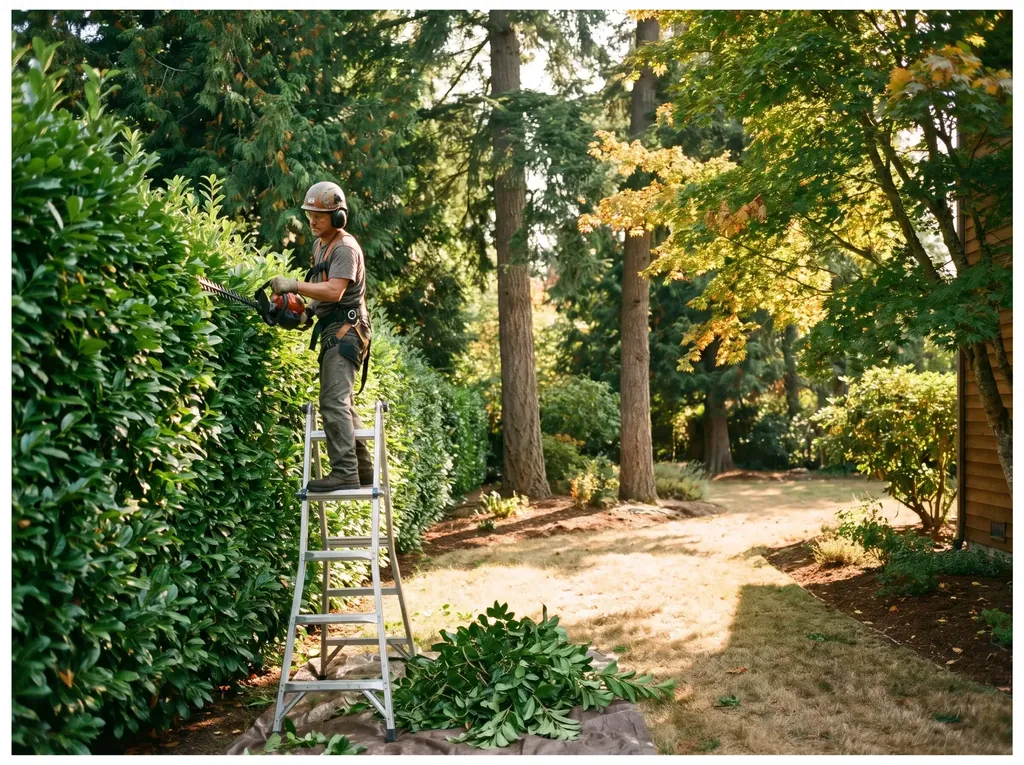
Tall laurel hedge being trimmed into a crisp line

Hedge and Shrub Trimming

Laurel, arborvitae, holly and overgrown shrubs shaped, reduced or brought back from the brink.

Selectively thinned fir framing a view of Bellingham Bay

View Pruning

Selective thinning and windowing that opens a view of the bay or the mountains and leaves the tree standing.

Old apple tree being pruned in a Whatcom County yard

Fruit Tree Pruning

Apple, pear, plum and cherry pruned for structure, light and a better crop, including the neglected old ones.

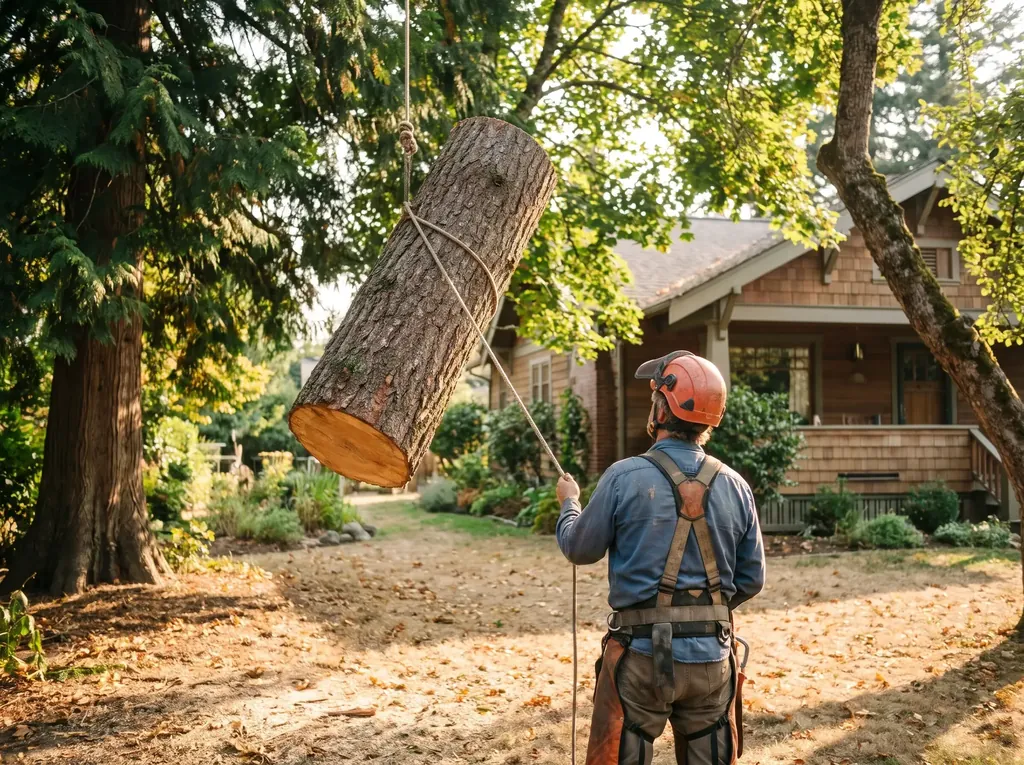
Trunk section being lowered from a tree on a rope

Tree Removal

When a tree really has to go, taken down in sections where there is no room to drop it.

Stump grinder working a fir stump on a sunny lawn

Stump Grinding

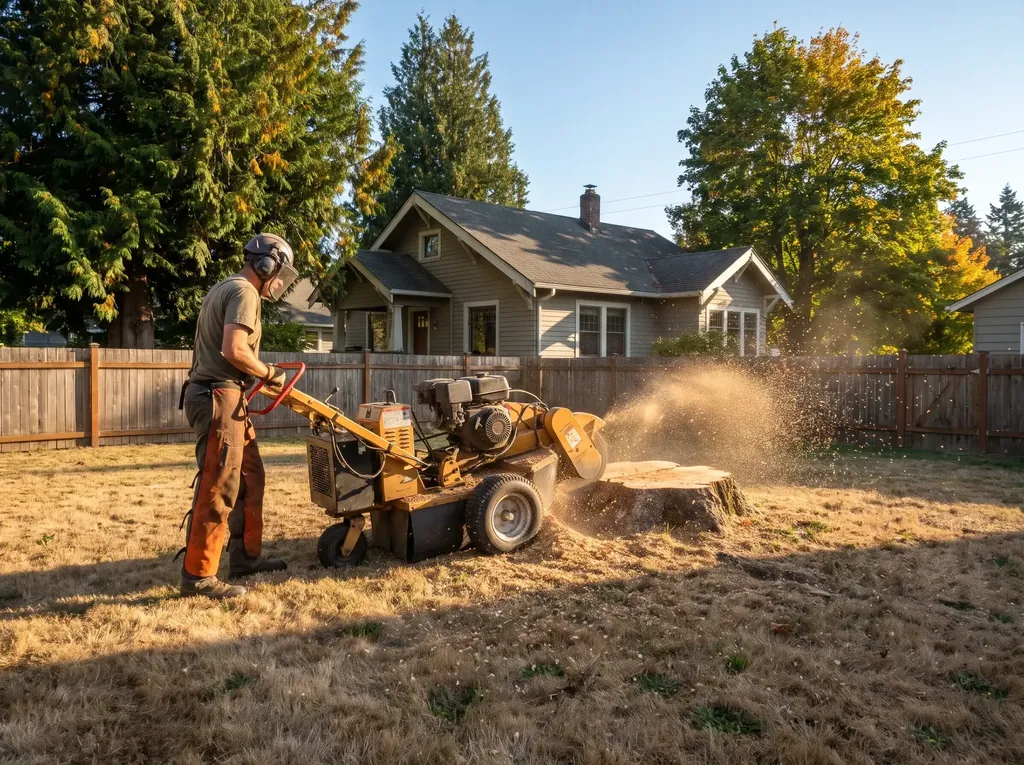
Stumps ground below grade, surface roots chased, chips cleaned up or left as mulch.

Brush and young alder cleared from a sunny rural lot

Land and Lot Clearing

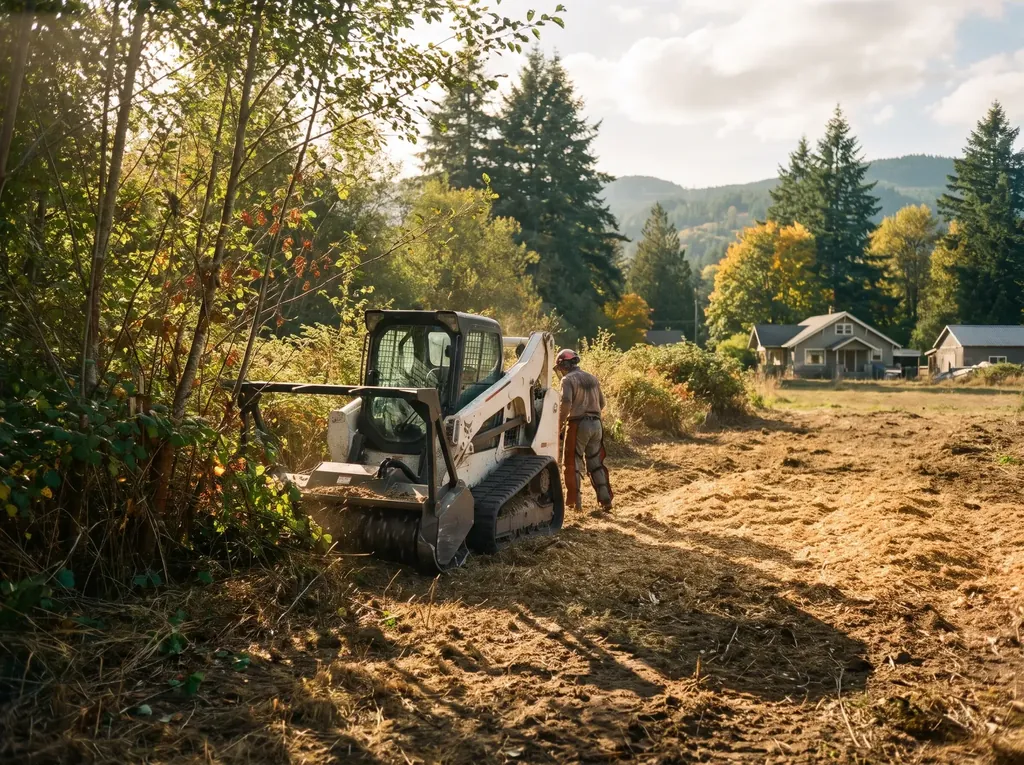
Overgrown lots and acreage cleared of alder, brush and small trees, including forestry mulching.

Get a free pruning estimate

Tell us where the tree is, what kind it is if you know, and what is bothering you about it. A photo helps. We will get back to you to set up a time to look.

Needles in the gutters, a limb over the roof, a view closing in. Tell us in your own words.

Free and no obligation. Prefer to talk? Call (360) 555-0137.