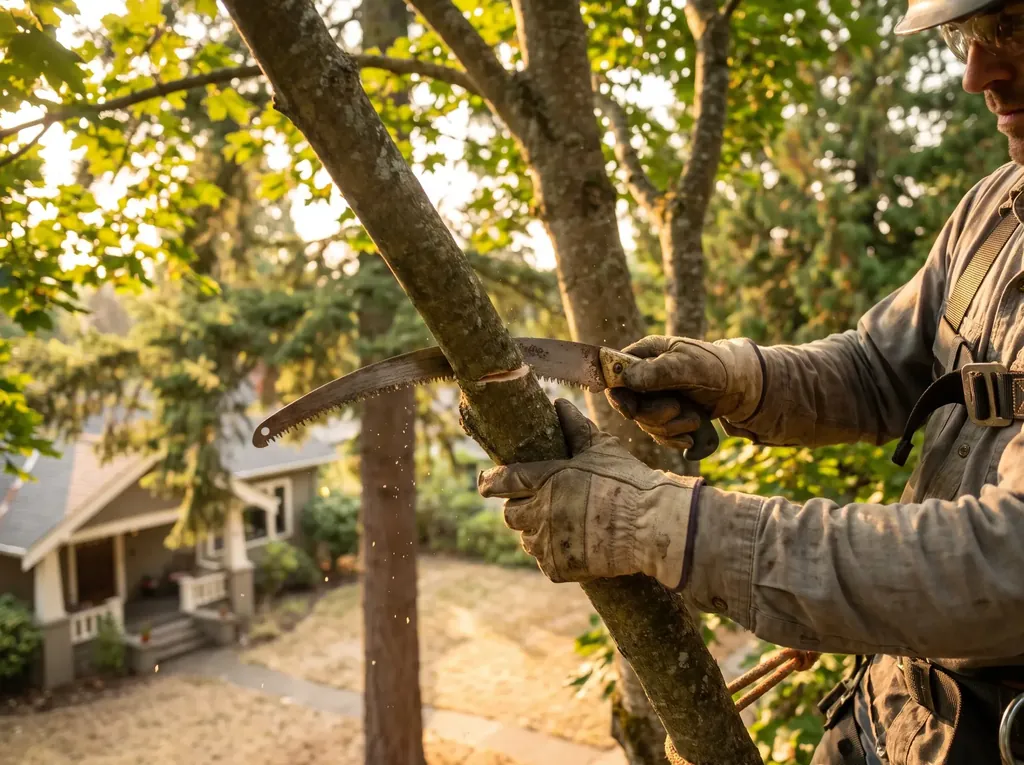
Tree Trimming and Pruning
Deadwood out, crowns thinned, limbs cleared from roofs, houses and lines, every cut made where the tree can seal it off.
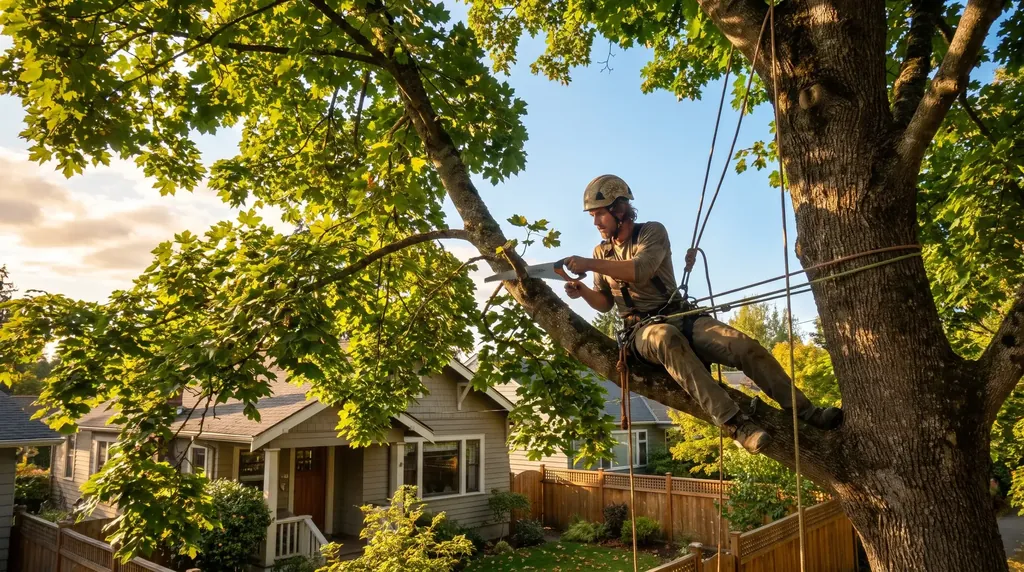
Big firs, maples and cedars pruned so they stay healthy, stay standing and stay off your roof. We would rather keep a good tree than take it down, and we will tell you plainly which one you have.
We never top trees
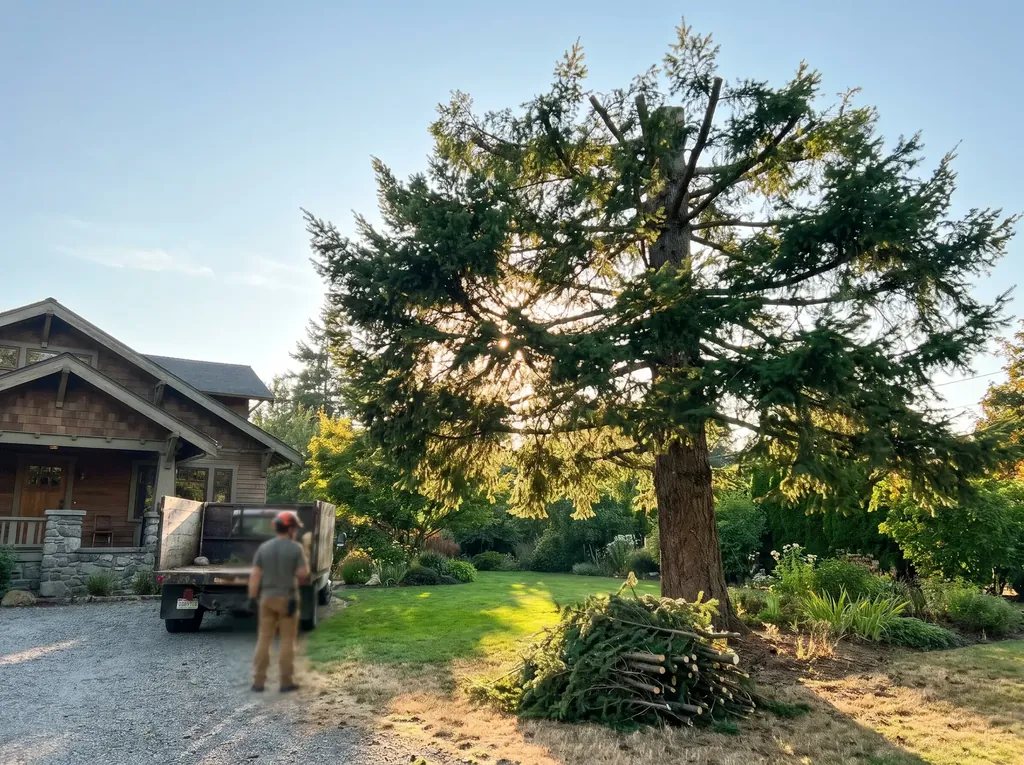
A Whatcom County yard usually has one tree that is causing the trouble. The Douglas fir dropping needles and moss into the gutters every winter. The big-leaf maple with a limb resting on the roof. The cedar brushing the power drop to the house. The laurel hedge that was waist high when you moved in and now shades half the yard.
The common answer to all of that is to cut the tree down, or to top it and hope. Neither is usually necessary. A tree that has grown into the wrong shape can almost always be pruned back into the right one: deadwood out, crossing and rubbing limbs removed, crowded growth thinned lightly, and long, heavy limbs over the house shortened back to a point where the tree can seal the wound, so the crown carries less weight at the ends.
That is the work we do most. Trimming and pruning for homeowners who like their trees and want them to behave. We also do removals, storm work, stumps and clearing, in full, for the times when keeping a tree is not the honest answer.
Deadwood out, crowns thinned, limbs cleared from roofs, houses and lines, every cut made where the tree can seal it off.
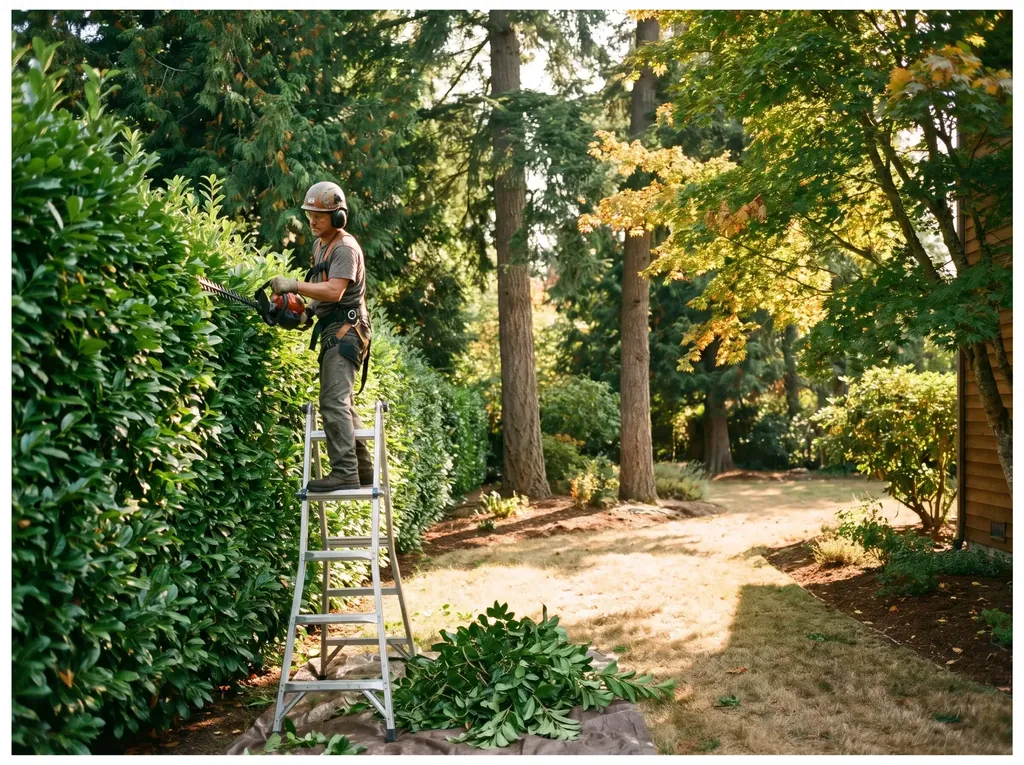
Laurel, arborvitae, holly and overgrown shrubs shaped, reduced or brought back from the brink.
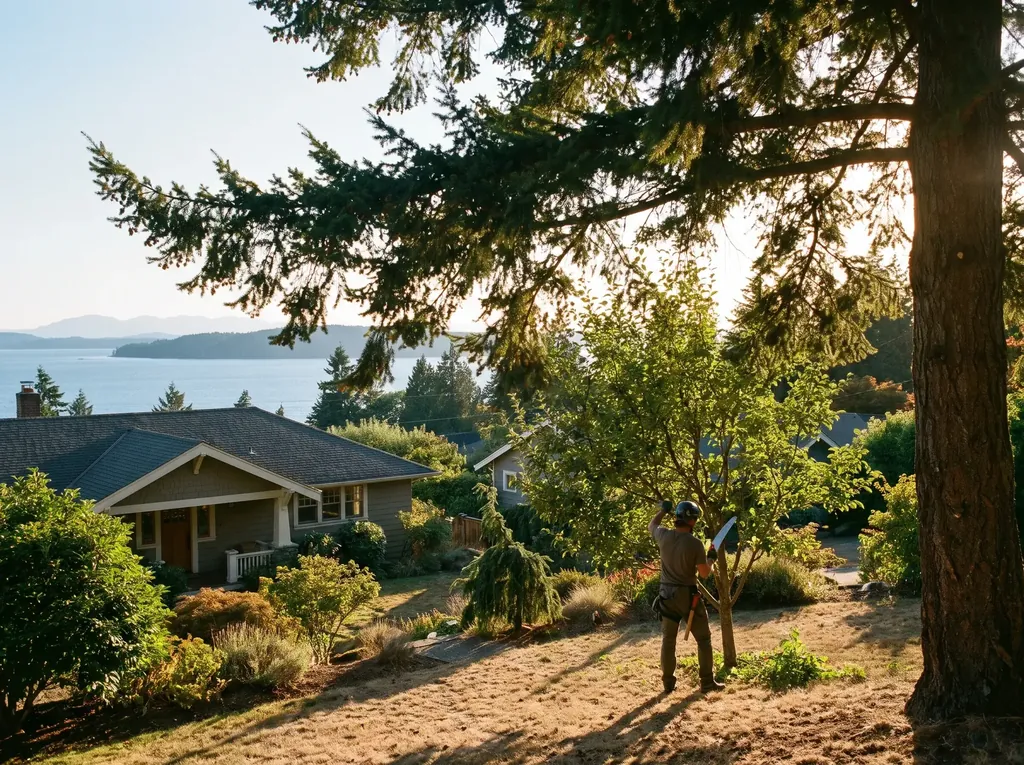
Selective thinning and windowing that opens a view of the bay or the mountains and leaves the tree standing.
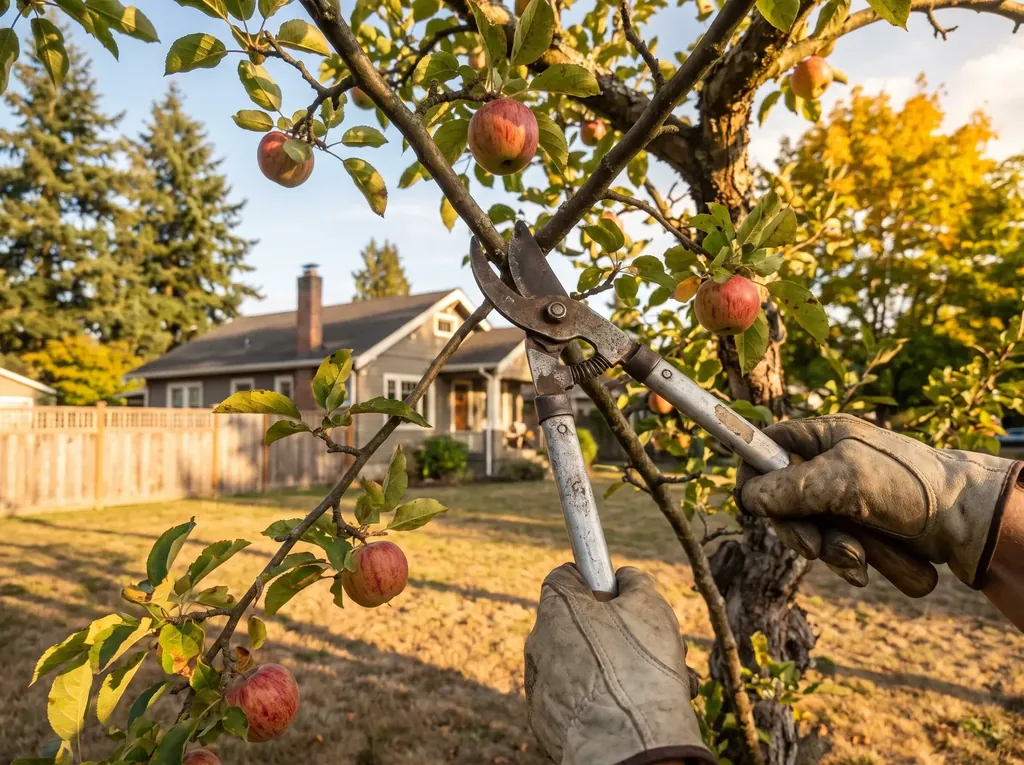
Apple, pear, plum and cherry pruned for structure, light and a better crop, including the neglected old ones.
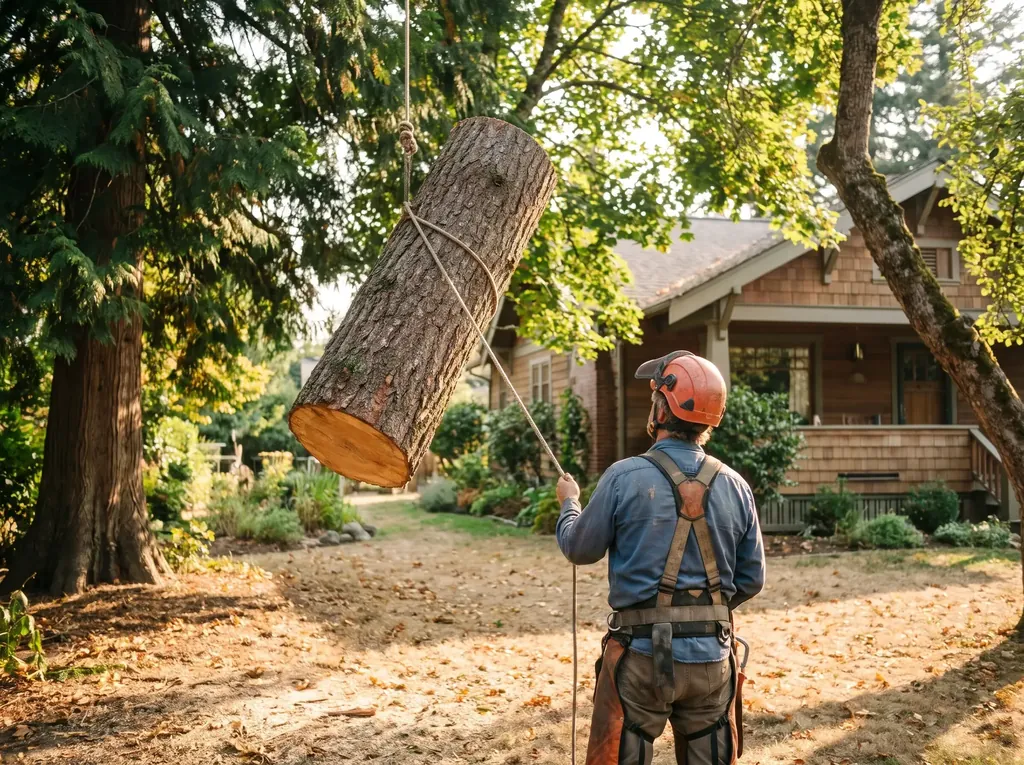
When a tree really has to go, taken down in sections where there is no room to drop it.
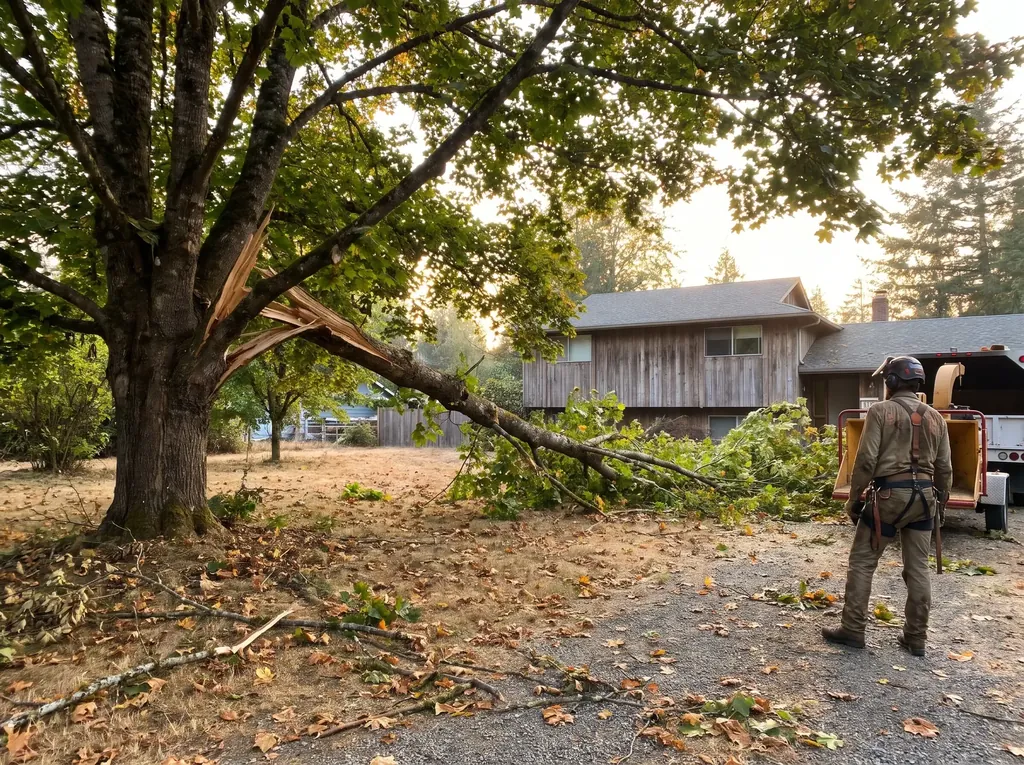
Broken limbs, hangers and trees down after a windstorm, made safe and cleared.
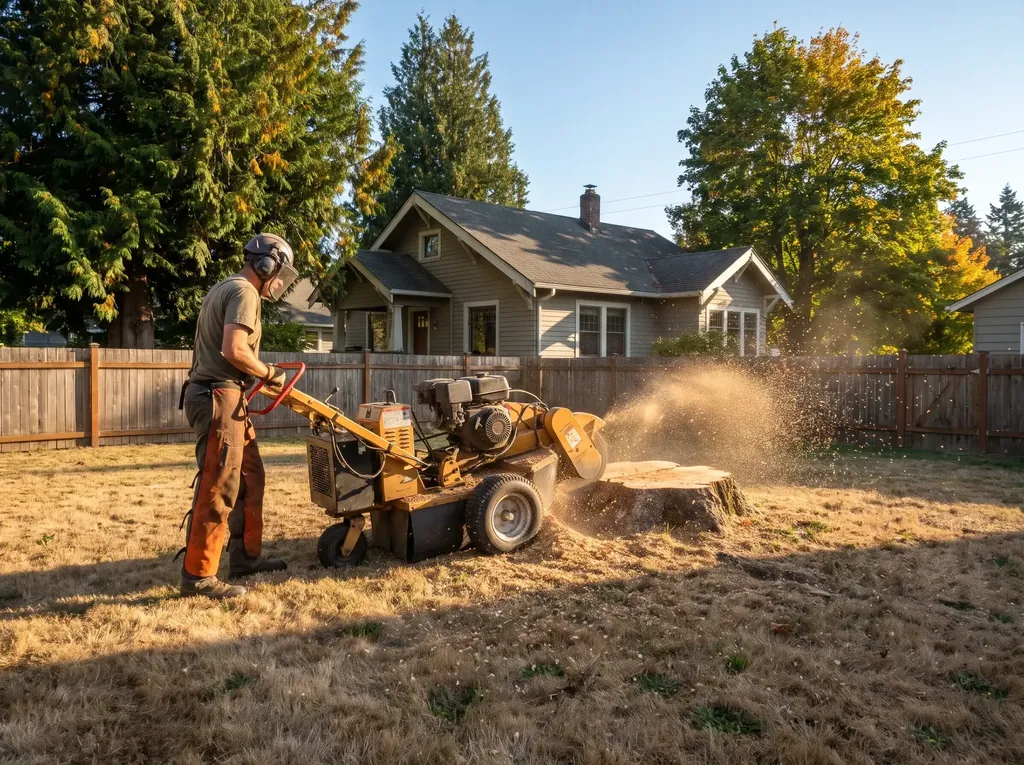
Stumps ground below grade, surface roots chased, chips cleaned up or left as mulch.
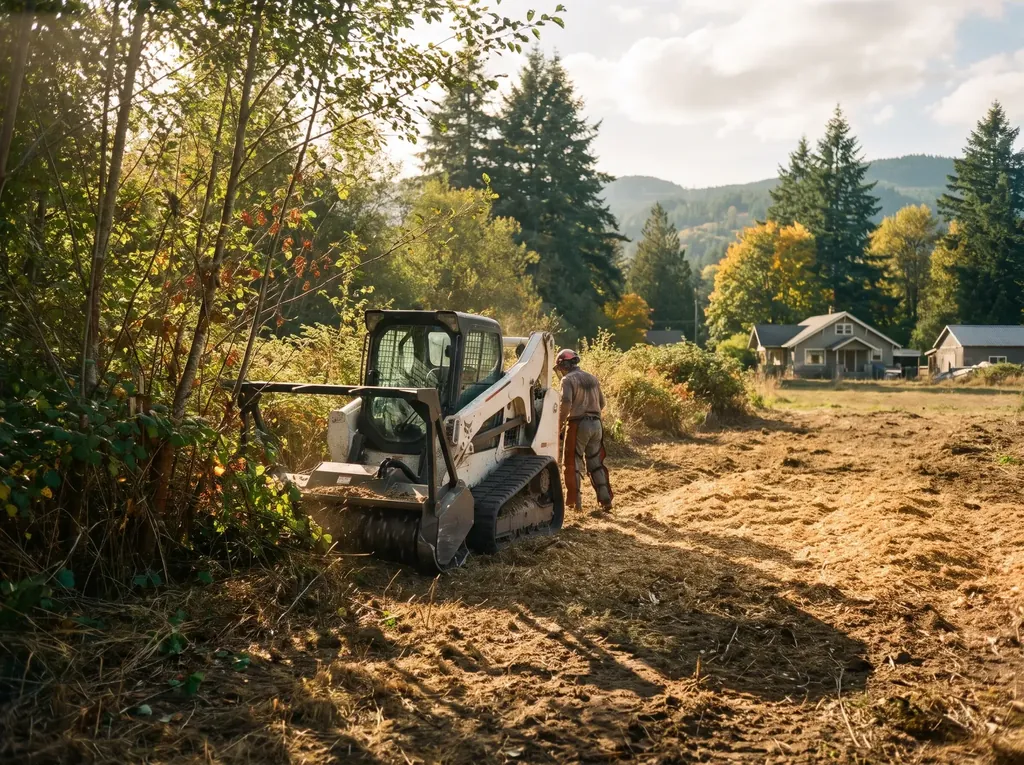
Overgrown lots and acreage cleared of alder, brush and small trees, including forestry mulching.
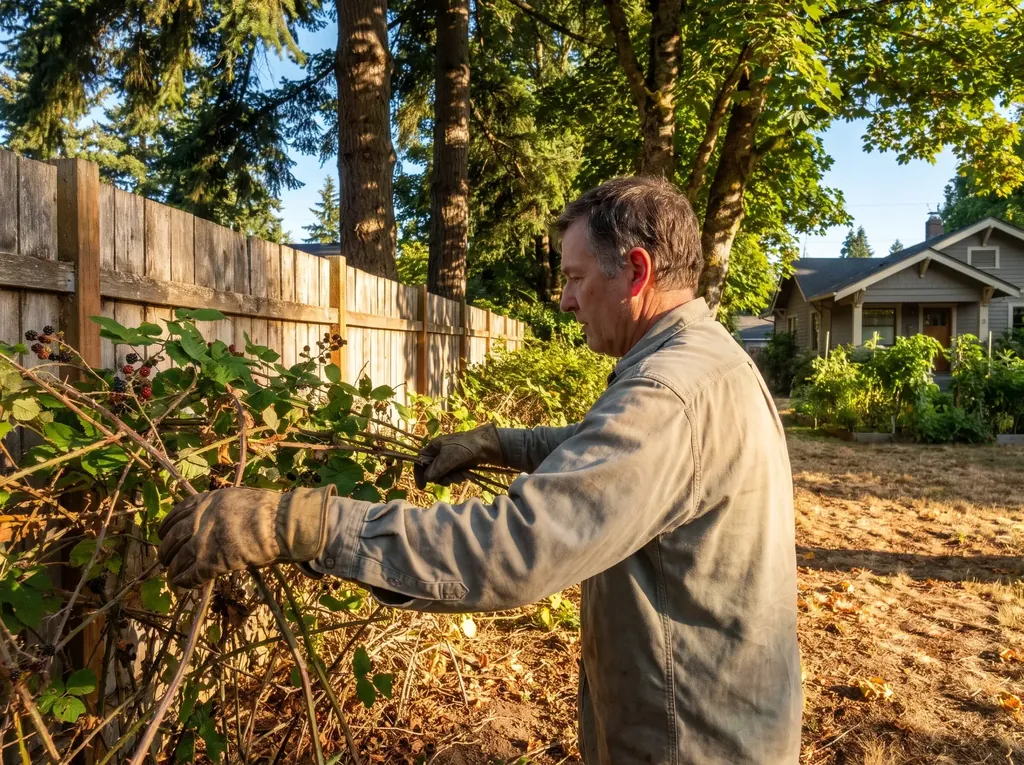
Himalayan blackberry, Scotch broom and invasive brush cut back and dealt with at the root.
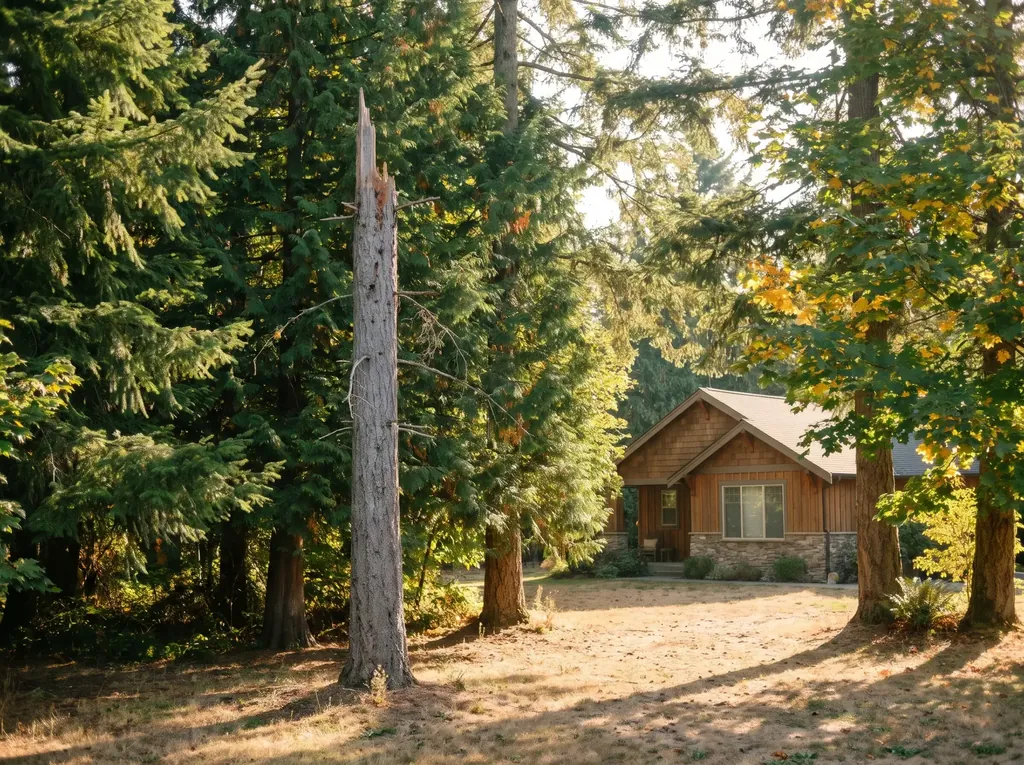
Leaning, cracked or dead trees taken down before the next storm does it for you.
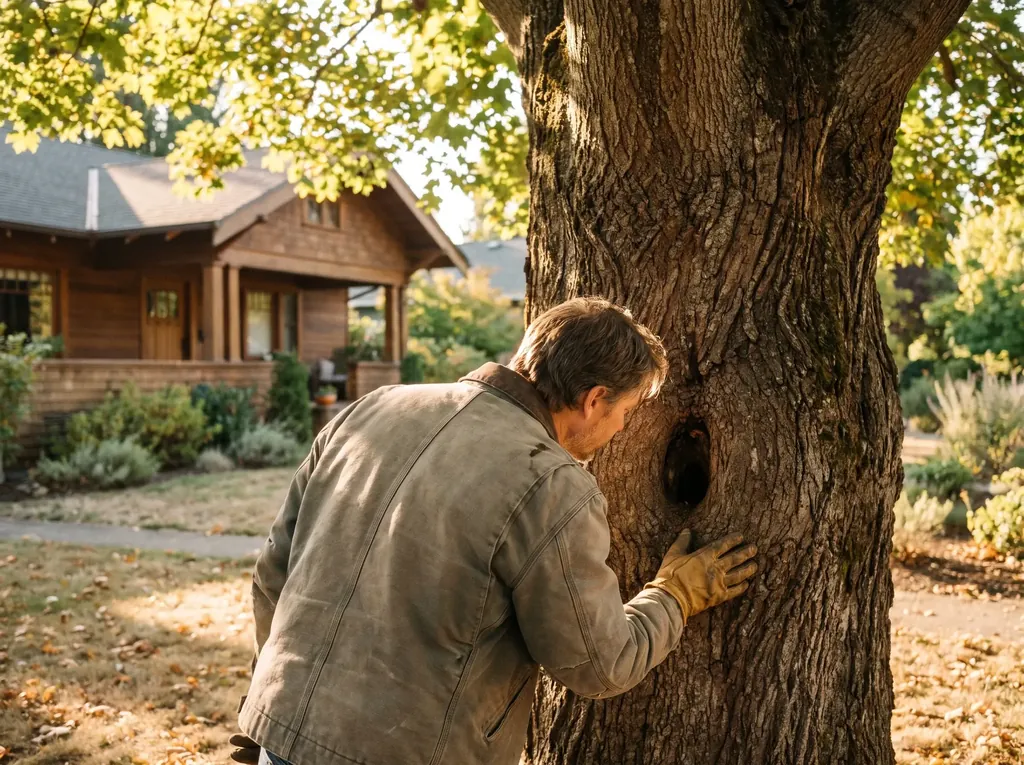
A straight answer on whether a tree is sound, needs work, or needs to come down.
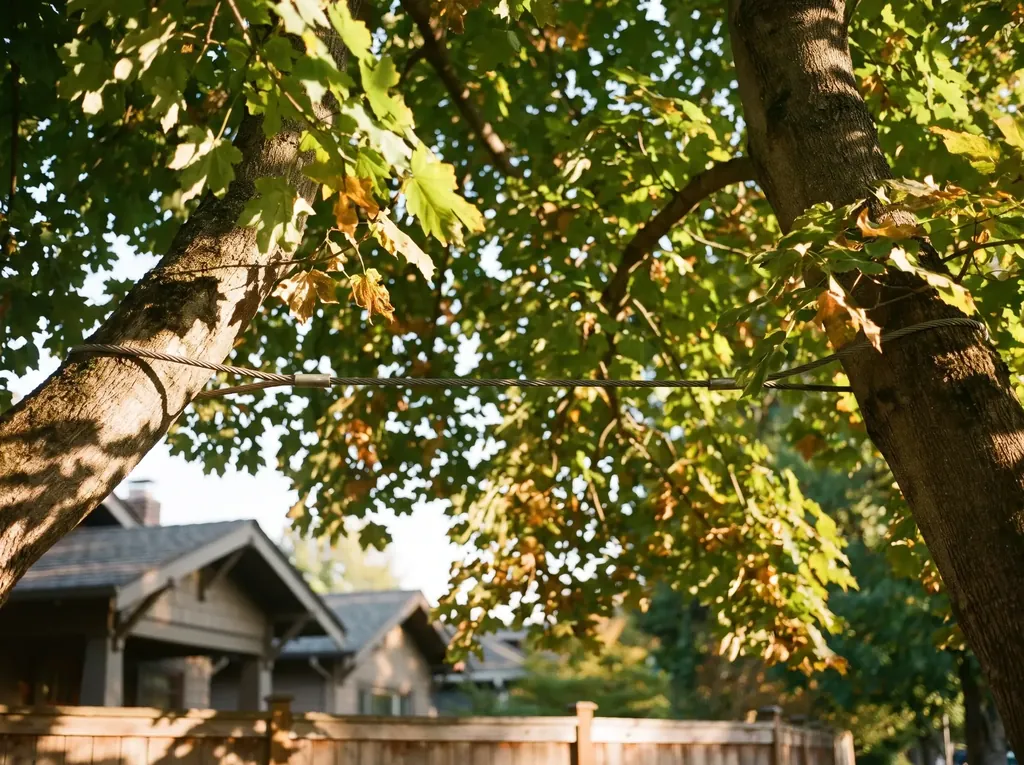
Support for split or weak unions on trees that are worth the effort of keeping.
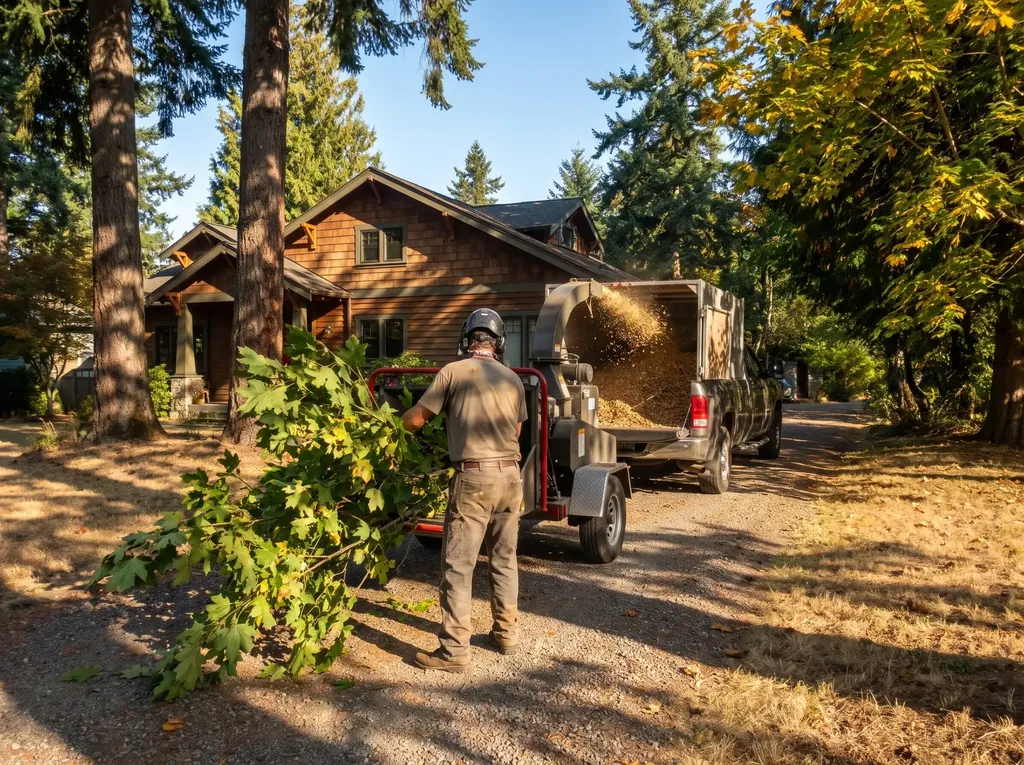
Prunings, limbs and storm debris chipped on site or hauled away.
Clearing a roof is the reason you called. Leaving a tree that is healthier and better balanced than before is the reason we cut where we cut. Those two goals almost never conflict, and when they do we tell you.
Topping a maple turns one trunk into a crown of fast, weakly attached sprouts, and topping a fir leaves several weak competing tops. Both are more likely to fail in the next windstorm than the original top ever was. It looks like a fix for a year or two. We will reduce a tree properly, or tell you it needs to come out, but we will not top it.
Before anything comes off, we walk the tree with you and say what is going, why, and what it will look like afterwards. If you want less taken, we can do that. If a cut you asked for would hurt the tree, we will say so.
Some trees are dead, rotten at the base, or growing somewhere they will never fit. Pruning those is money spent delaying the inevitable. When that is the situation we say it once, clearly, and quote the removal properly.
A limb over the roof, a hedge out of hand, a view gone, a tree you are worried about. A photo helps us bring the right gear.
A free on-site estimate. We walk it, talk through the options, and give you a written price for the work you choose.
You know before we start which limbs are going and roughly how the tree will look after. No surprises from the driveway.
Climbing or working from the ground, cutting at the branch collar, lowering anything heavy on ropes over roofs and gardens.
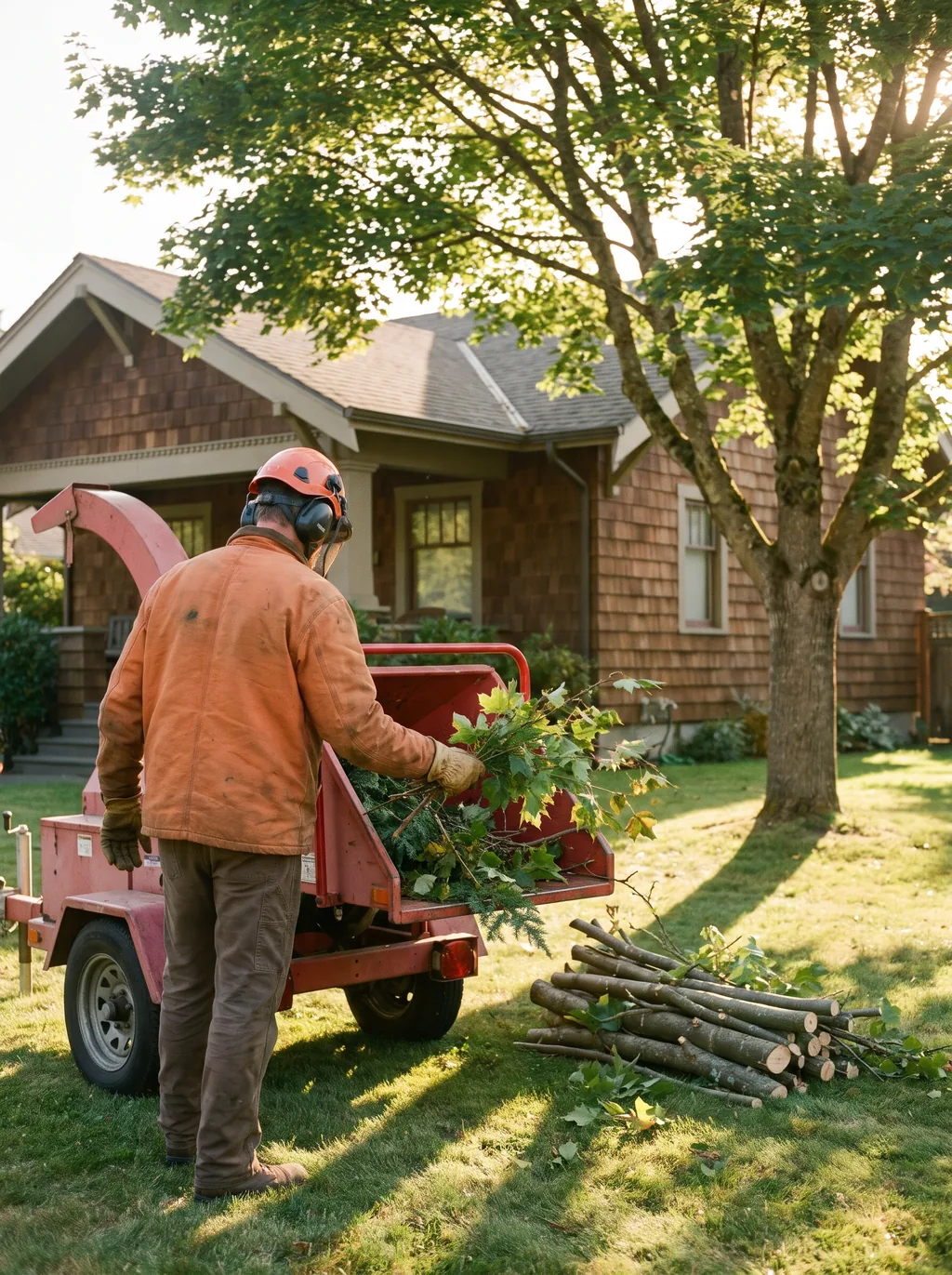
Brush chipped, wood cut and stacked or hauled, gutters and roof cleared of anything we dropped, lawn raked.
Most trees need nothing for a few seasons after good pruning. We tell you roughly when yours will, and what to watch for in between.
We are only just starting to collect customer reviews. As they come in, each one will be shown in full, exactly as written.
We trim and prune trees across Whatcom County: Bellingham, Ferndale, Lynden and Blaine, plus Everson, Sudden Valley, Birch Bay, Sumas, Deming, Custer and the rural ground in between.
From hillside lots above Bellingham Bay to orchard trees and windbreaks out on the farmland, the trees change a lot across the county, and so does what they need.
For most trees here, the times to avoid heavy pruning are spring, while the leaves are pushing out and the tree is spending its stored energy, and early fall, when fresh wounds sit open into a wet winter. Late winter, before the buds break, suits most deciduous trees. Conifers are forgiving and can be pruned most of the year. Deadwood and anything dangerous can come out any time.
A trim is usually cheaper on the day. A tree that needs trimming every couple of years can cost more than a removal over a long stretch, but it also keeps the shade, the screening and the value the tree adds to the yard. If a tree is healthy and fits where it is growing, trimming is almost always the better spend. If it is failing, removal is.
There is no honest single figure. The price depends on the size of the tree, how much is coming off, whether it can be climbed or needs ropes to lower limbs over a roof, how close it is to lines or the house, and how much brush has to be hauled. We give a written price after seeing the tree, and the estimate is free.
Sometimes. Policies often cover removing a tree that has fallen on the house or another covered structure, and often do not cover removing a healthy tree or one that died of neglect. The wording varies between policies, so read your own or ask your agent before the work is booked. We are happy to document storm damage with photos for a claim.
Tell us where you are and what the tree is doing. A photo or two helps. We will come out, look at it with you, and give you a written price.
We will be in touch to set up a time to look at the tree. If it is urgent, call (360) 555-0137.
Nothing was sent. Please call (360) 555-0137 and we will set up your free estimate.