Hangers and broken limbs
Snapped limbs caught in the crown, split leaders and torn branches over roofs, paths and drives, brought down under control and cut back to clean wood so the tree can seal the wound.
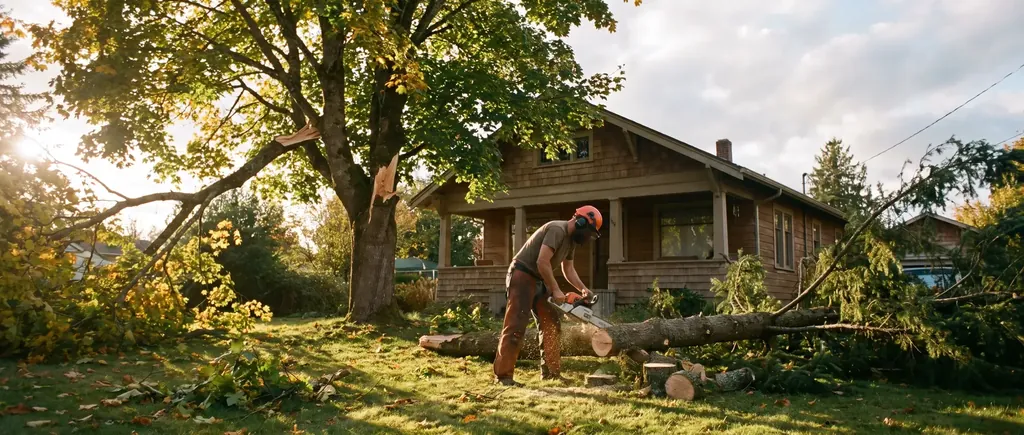
Broken limbs, hangers caught in the crown and trees down across the drive after a Whatcom County windstorm. Made safe first, cleared properly after, and the trees that survived pruned so they stand up better next winter.
Tree on a line? Call the utility first
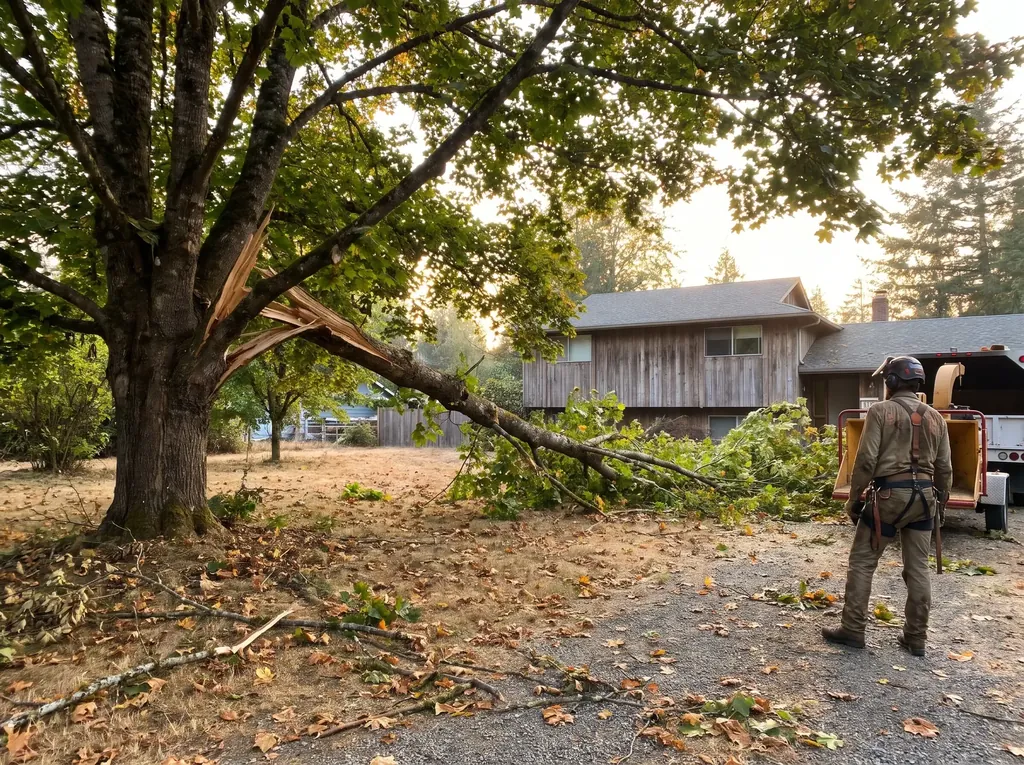
Whatcom County gets its trees tested every winter. The big southwesterly storms come in off the water soaked and gusty, and the cold, dry outflow winds pour out of the Fraser Valley from the northeast, hitting Lynden, Ferndale, Blaine and north Bellingham from the opposite direction to most of our storms. Put that wind together with saturated winter soil and a top-heavy Douglas fir, and you get snapped tops, torn limbs and the occasional whole tree tipped out of the ground.
Most of the damage is not dramatic. It is a big-leaf maple limb hanging by a strip of bark over the driveway, a broken fir top lodged in the crown thirty feet up, or an alder leaning on the garage. Those hangers are the most dangerous thing in a storm-damaged yard, because they look settled and they are not. They come down in the next gust, or when someone tugs on a branch to clear the lawn.
Our storm work is about making that safe first and tidy second. We bring down hangers and broken limbs under control, cut out tension-loaded wood without letting it spring, clear what has fallen, and then look properly at the trees that are still standing. Plenty of storm-damaged trees can be kept with a few corrective cuts. Some cannot, and we will tell you which is which.
Snapped limbs caught in the crown, split leaders and torn branches over roofs, paths and drives, brought down under control and cut back to clean wood so the tree can seal the wound.
Fallen trees and heavy limbs lifted or cut off structures in pieces, without dropping more weight onto the roof, and cleared from driveways so you can get out.
Trees that lost a limb or a top but are otherwise sound, pruned back to good wood and reshaped so they are balanced and less likely to fail next time.
We look at what is hanging, what is under tension, what is touching what, and whether any lines are involved. Nothing gets cut until we know where every piece will go.
Storm-bent limbs and trunks store a lot of force. We relieve tension in stages so wood does not spring back or roll, and lower heavy pieces on ropes rather than dropping them.
Before and after photos, and a short written description of the damage and the work, so you have something to send your insurance company.
Debris chipped or hauled, and a walk through the rest of the trees on the property so you know if anything else was weakened.
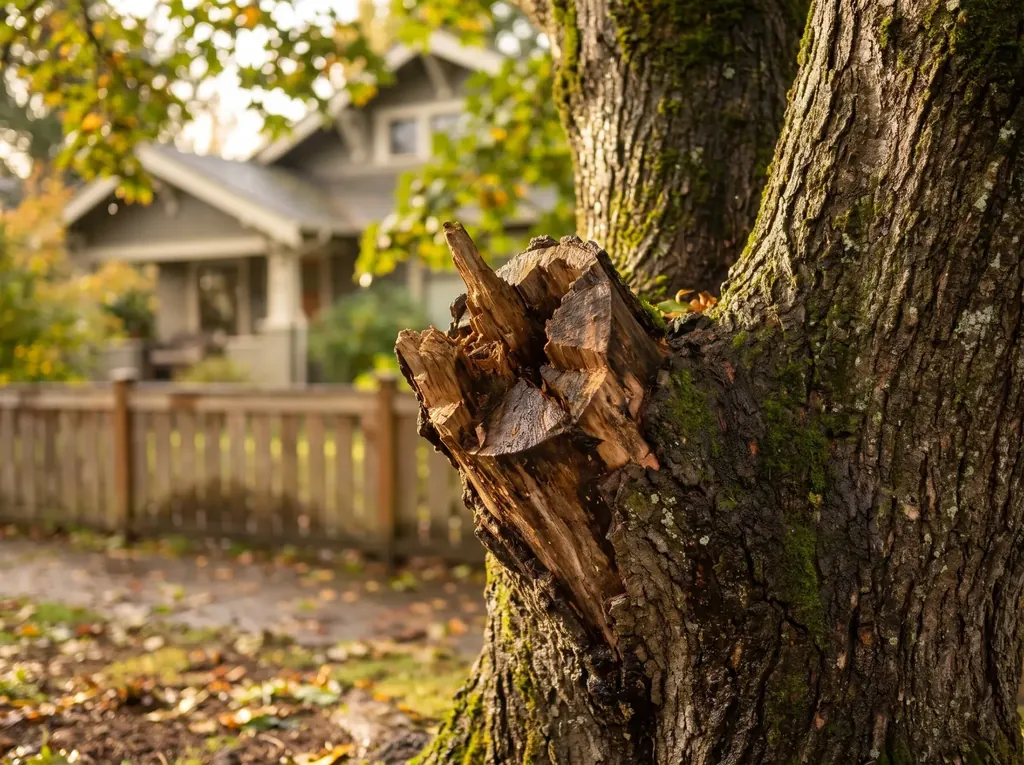
If lines are involved, call the utility first. Then call us or send photos: what fell, where it is, and whether it is on the house or blocking access.
After a big storm we sort calls by risk. A tree on a house or blocking the only way out comes before a limb on the lawn.
Hangers and loaded wood dealt with first, so the area is safe to work in and safe for you to walk through.
Once the immediate danger is dealt with, we give you a clear scope and price for clearing up and for any follow-up pruning.
Fallen wood cut, chipped or hauled, the yard raked, and the roof and gutters cleared of what came down.
Damaged trees pruned back to good wood, and an honest view of any that are now a risk and should be removed.
We stay calm and do things in the right order. Storm work is where shortcuts hurt people, and the slowest part of the job, working out how each loaded piece will move, is the part we never skip.
We do not use a storm to sell removals. A fir that lost one big limb is often still a good tree. We will cut the damage back cleanly, balance the crown and tell you honestly whether it is sound.
We give you something to show your insurance company. Photos and a plain description of the damage and the work help when you file a claim.
And we work on prevention as well as clean-up. Most of what fails in a windstorm was already dead, cracked or overloaded. Taking out dead wood and shortening long, heavy limbs before winter are some of the most useful things you can do to keep your trees standing through it.
Call or send photos of the damage. Tell us whether it is on the house or blocking the drive, and we will tell you what happens next.
We are only just starting to collect customer reviews. When we do, they will appear here in full, in our customers' own words.
A tree or large limb on a house, car or occupied building. A tree on or touching a power line, which is the utility's emergency first. A hanger over a door, path, driveway or play area. A tree that has started to lean or lift out of the ground after a storm, especially toward the house. A fallen tree blocking the only way in or out. If people could be hurt or a building is being damaged, treat it as urgent. A limb on the lawn can wait for daylight and a proper look.
Sometimes. Many homeowner's policies cover removing a tree that has fallen on a covered structure, such as the house or a garage, often up to a set limit. They are less likely to pay for a tree that fell without hitting anything, or for removing a tree that is still standing. Every policy is different, so call your insurance company and check before you assume either way. Our photos and written notes can help with the claim.
Usually you start with your own homeowner's policy, because it covers damage to your house regardless of where the tree came from. Whether the neighbour is responsible can depend on whether the tree was obviously dead or dangerous beforehand. Talk to your insurance company first. We can document the tree and the damage so both owners and their insurers have the same facts.
As a general matter, the tree's owner is responsible for keeping it safe, and neighbours are often allowed to trim branches that hang over their side, but the details matter and the rules are not something to guess at. If a neighbour's tree is overhanging your house after a storm, we can look at it and give both of you the same plain answer about what it needs.
Small twigs, yes. Large dead limbs, no, especially over a roof, a drive or anywhere people walk. Dead wood is brittle and is the first thing to break in a windstorm. Taking it out before winter is one of the cheapest ways to avoid a storm call later.
It depends on the size of the tree or limb, what it is lying on, how much rigging is needed to lift it off safely, access for equipment, and how much clean-up there is. A limb across the lawn is a short job. A fir across a roof is a slow, careful one. We give you a clear price once the immediate danger is dealt with and we can see the whole job.
We clear storm damage across Whatcom County: Bellingham, Ferndale, Lynden, Blaine, Everson, Sudden Valley, Birch Bay, Sumas, Deming and Custer, plus the rural ground between them.
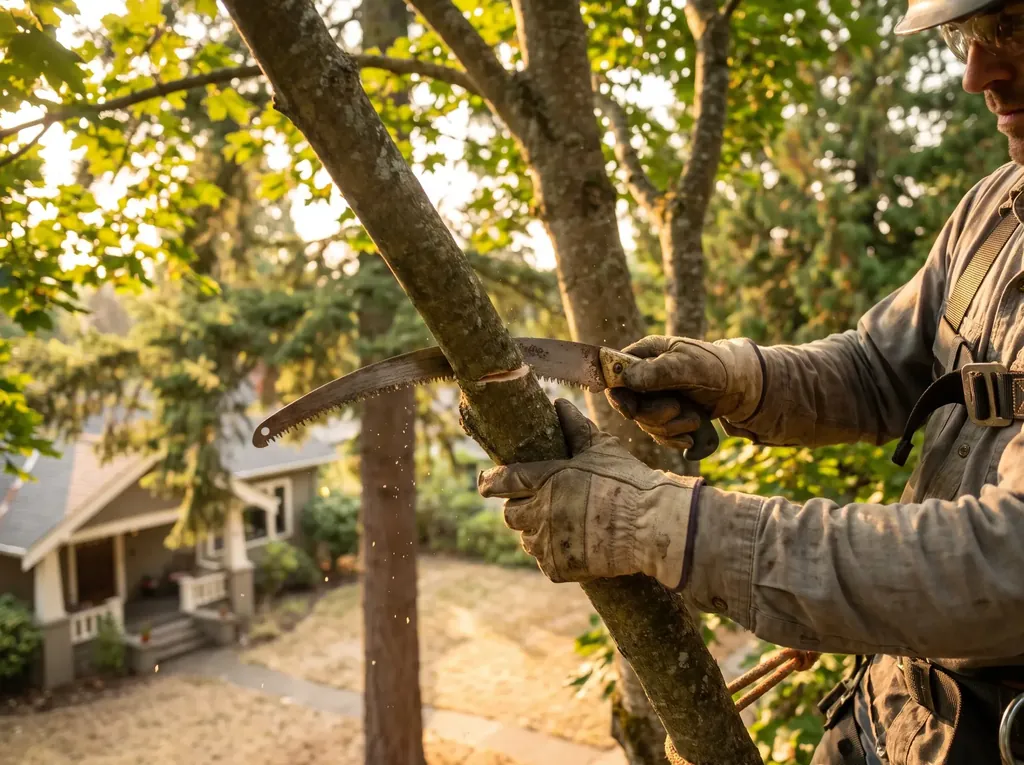
Deadwood out, crowns thinned, limbs cleared from roofs, houses and lines, every cut made where the tree can seal it off.
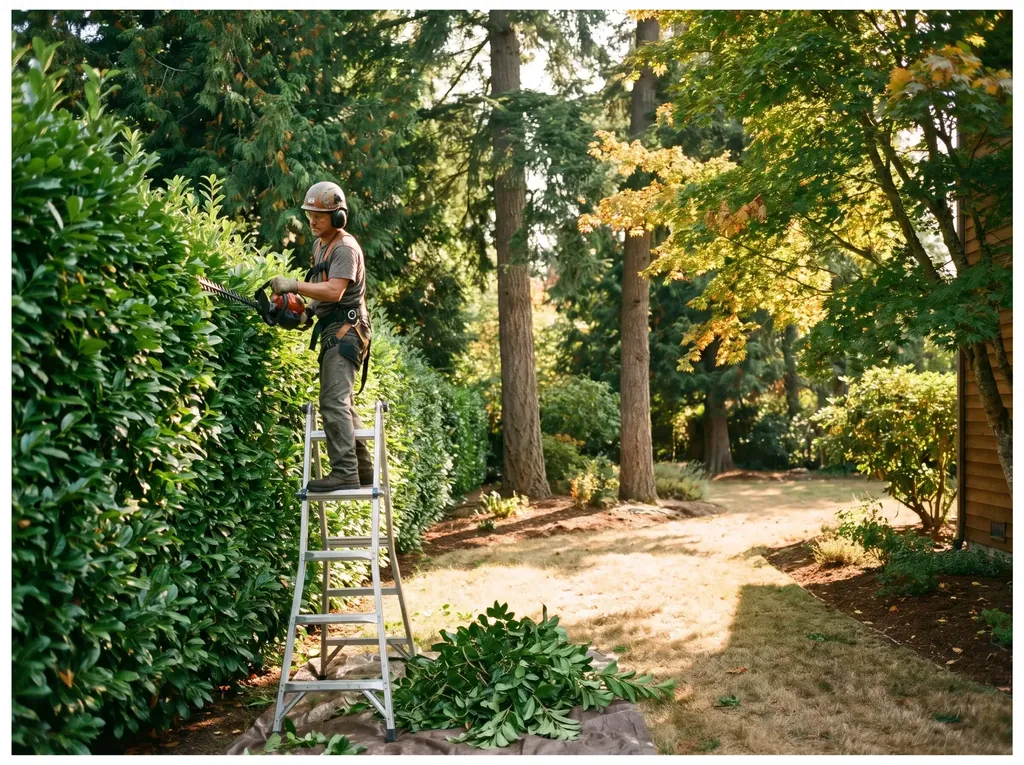
Laurel, arborvitae, holly and overgrown shrubs shaped, reduced or brought back from the brink.
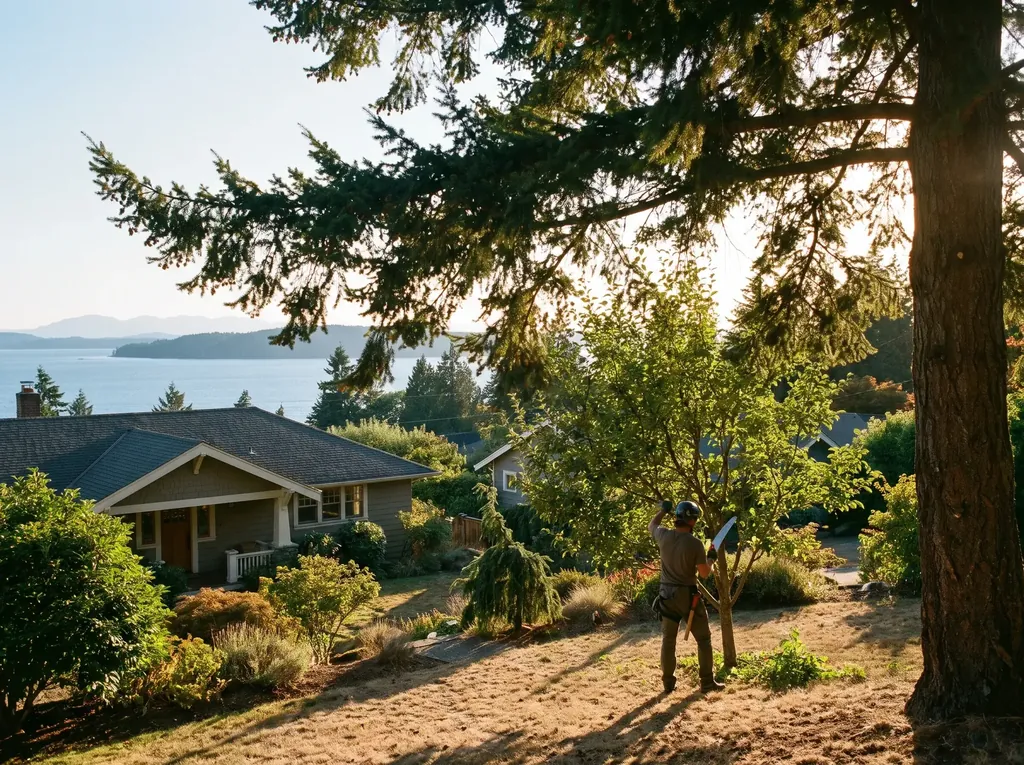
Selective thinning and windowing that opens a view of the bay or the mountains and leaves the tree standing.
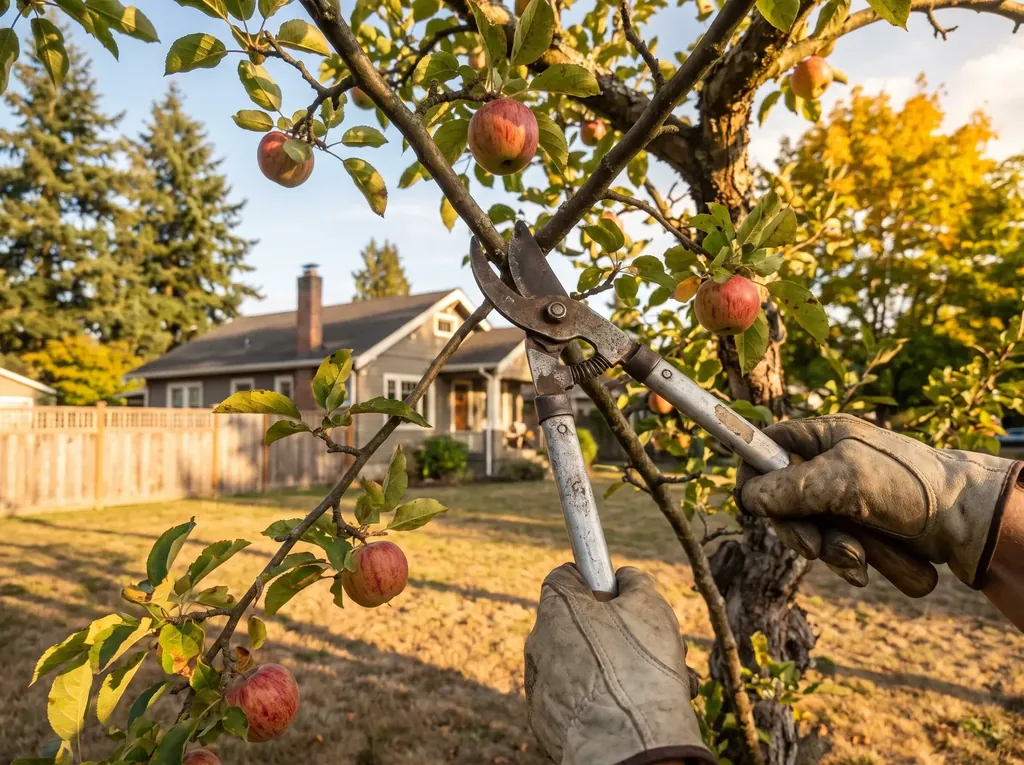
Apple, pear, plum and cherry pruned for structure, light and a better crop, including the neglected old ones.
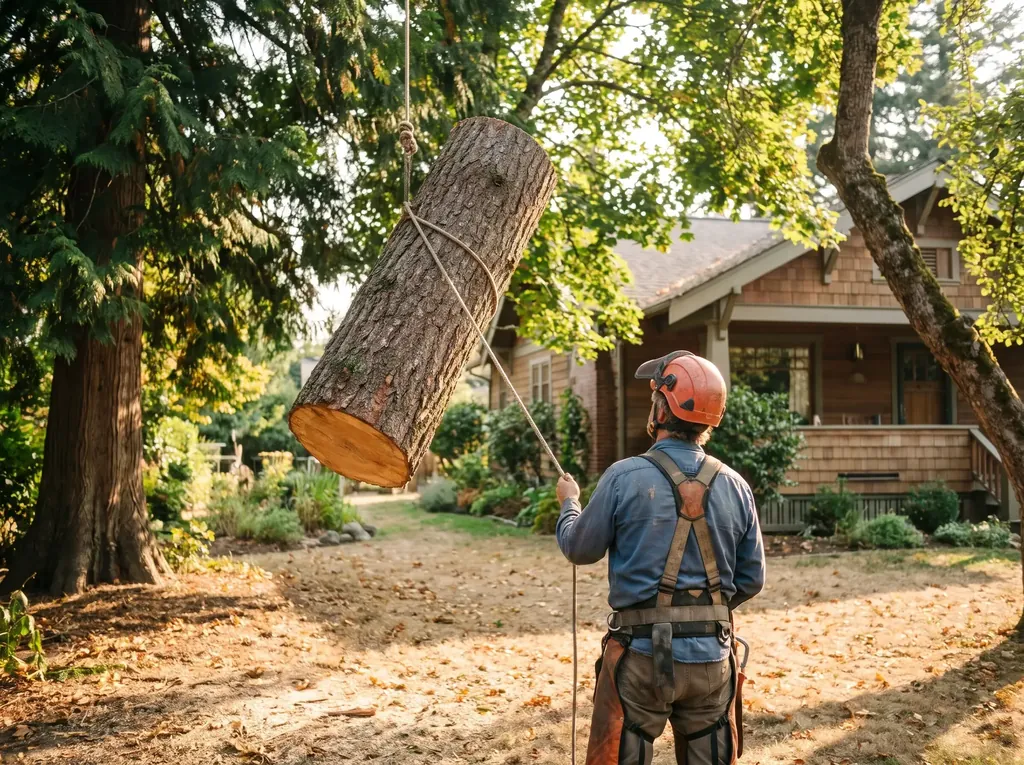
When a tree really has to go, taken down in sections where there is no room to drop it.
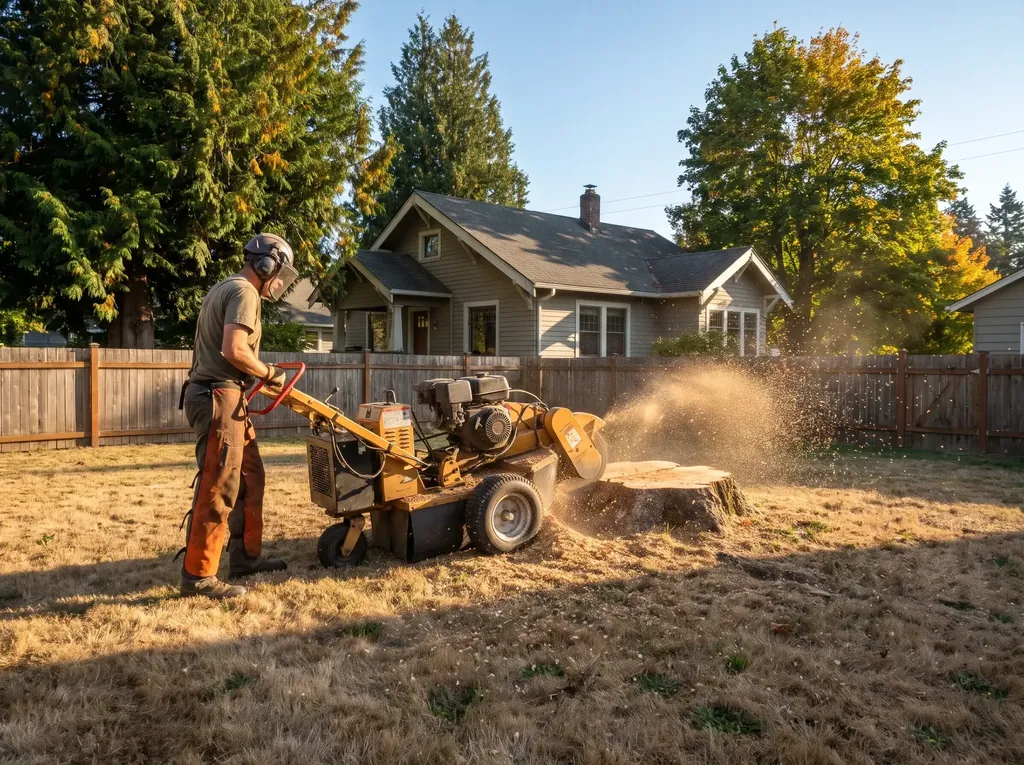
Stumps ground below grade, surface roots chased, chips cleaned up or left as mulch.
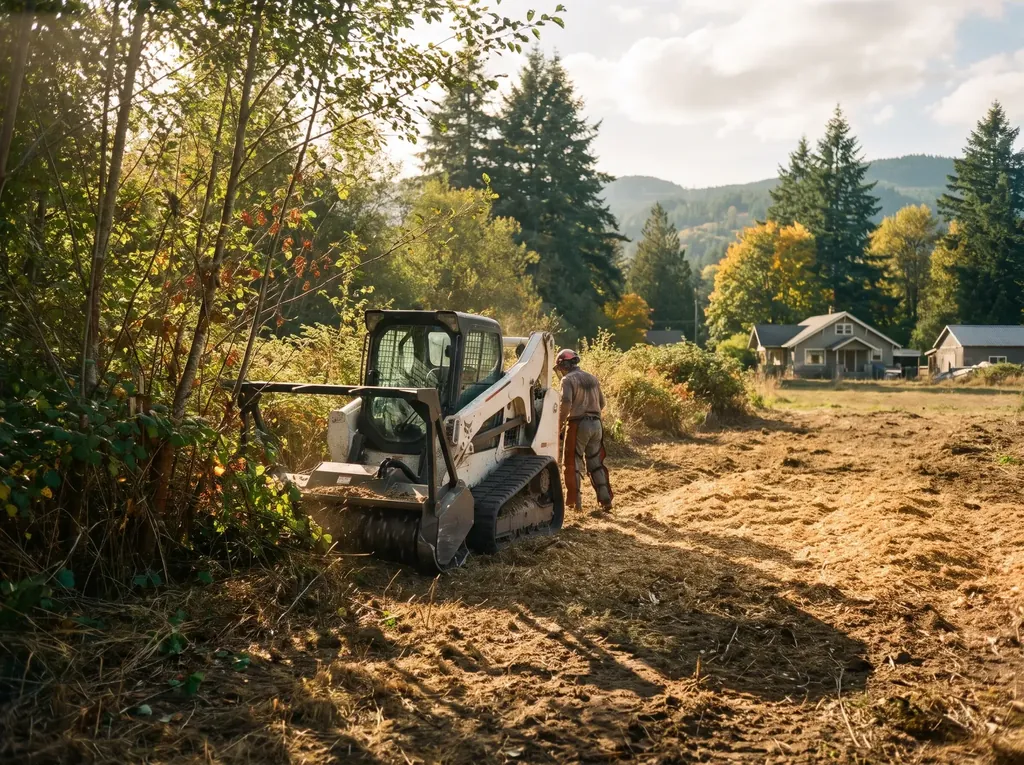
Overgrown lots and acreage cleared of alder, brush and small trees, including forestry mulching.
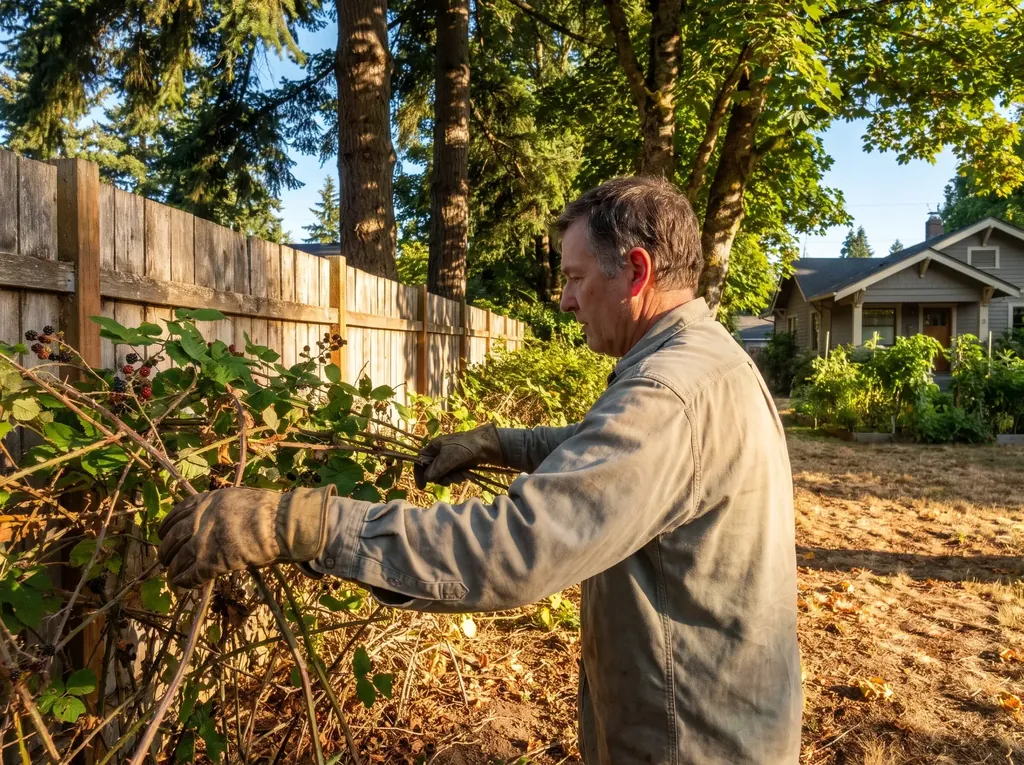
Himalayan blackberry, Scotch broom and invasive brush cut back and dealt with at the root.
Tell us what fell, where it is, and whether it is on the house or blocking access. Photos of the damage help us plan before we arrive.
We will be in touch to set up a time to look at the tree. If it is urgent, call (360) 555-0137.
Nothing was sent. Please call (360) 555-0137 and we will set up your free estimate.