Training young trees
The first few years decide the shape of a fruit tree for the rest of its life. We choose the main limbs, space them around the trunk and set the tree up to carry fruit without splitting.
Apple, pear, plum and cherry pruned for a strong framework, light into the middle and a better crop, from young trees to the old orchard apples nobody has touched in years.
Neglected old trees welcome
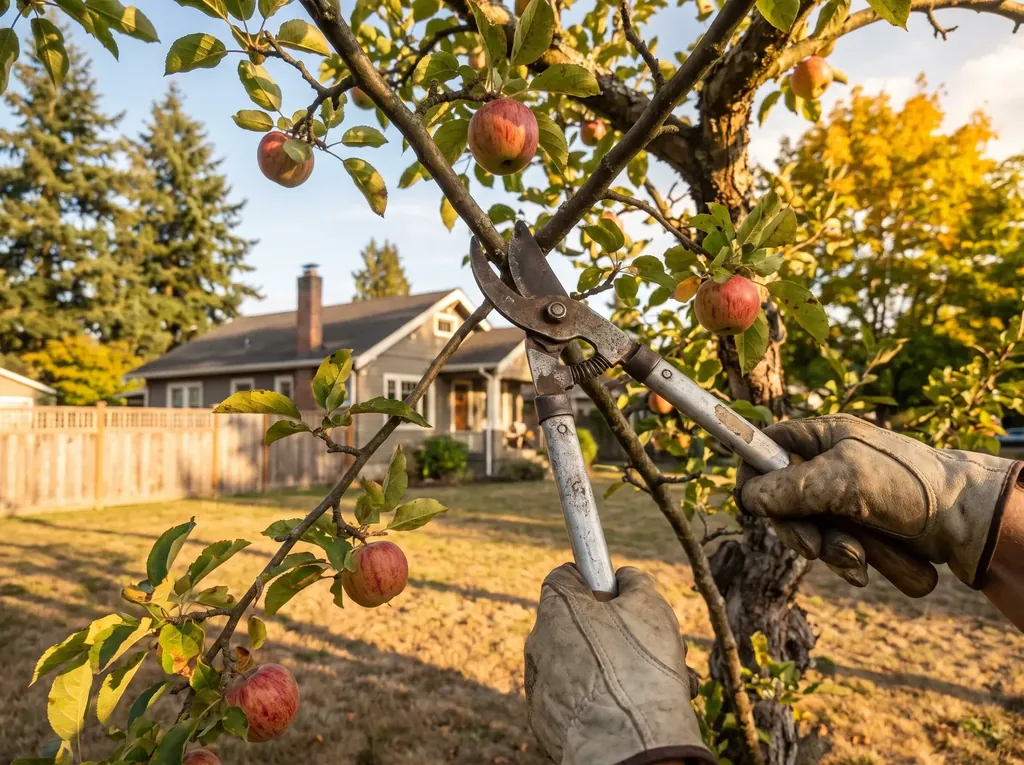
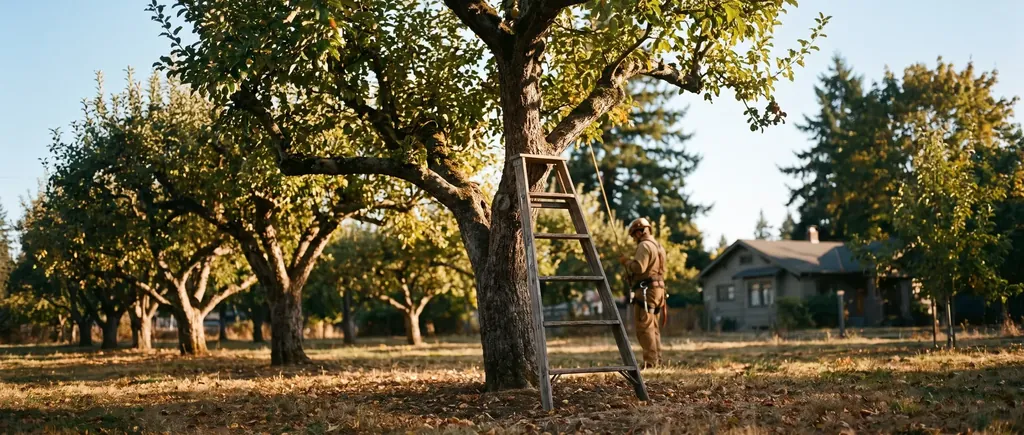
Whatcom County is full of old fruit trees. There are working orchards and farm trees around Lynden and Everson, and in town there is a pair of apples or a gnarled pear at the back of half the older lots in Columbia, Sehome and Fairhaven, planted by someone two owners ago. Many of them still flower every spring. Fewer of them crop well, because they have grown into a crowded tangle of upright shoots with all the fruit up where nobody can reach it.
Fruit trees are pruned differently from shade trees. A maple is pruned to stay healthy and out of the way. An apple is pruned so light and air get into the middle of the tree, so the branches are strong enough to carry a crop, and so the fruit is set at a height you can pick. That means a clear framework of main limbs, an open centre or a central leader depending on the tree, and steady renewal of the wood that carries fruit.
Our climate adds a reason of its own. Wet springs here are hard on fruit trees, and a dense canopy that stays damp after every shower is an open invitation to scab and canker. Opening the crown so leaves dry faster is one of the most useful things you can do for an apple or pear in this county. We do not spray, but good pruning does a lot of the work that spraying is often asked to do.
The first few years decide the shape of a fruit tree for the rest of its life. We choose the main limbs, space them around the trunk and set the tree up to carry fruit without splitting.
Water sprouts thinned out, crossing branches removed, the centre kept open and the height kept within reach of a ladder. A yearly visit keeps a productive tree productive.
Big, overgrown apples and pears brought back over two or three seasons: deadwood out first, then the worst of the crowding, then a gradual lowering of the crown. Many trees that look past saving still have decades of fruit in them.
Apples and pears are pruned mainly in the dormant season, late winter into early spring, with a light summer prune to control vigour where it helps. Cherries are best pruned in dry weather in late summer, because bacterial canker gets into pruning wounds in our wet winters. Many growers treat plums the same way for the same reason.
We remove whole shoots back to their point of origin rather than shortening everything. Shortening every branch tip makes a tree throw up a forest of water sprouts the next spring, which is exactly the problem most neglected trees already have.
Main limbs chosen and kept, competing leaders removed, and the crown brought down gradually so most of the crop can be picked from a step ladder.
We look for canker, dead spurs, borer damage and rot in old pruning wounds, and tell you what we find. Prunings with disease in them are hauled, not chipped into your beds.
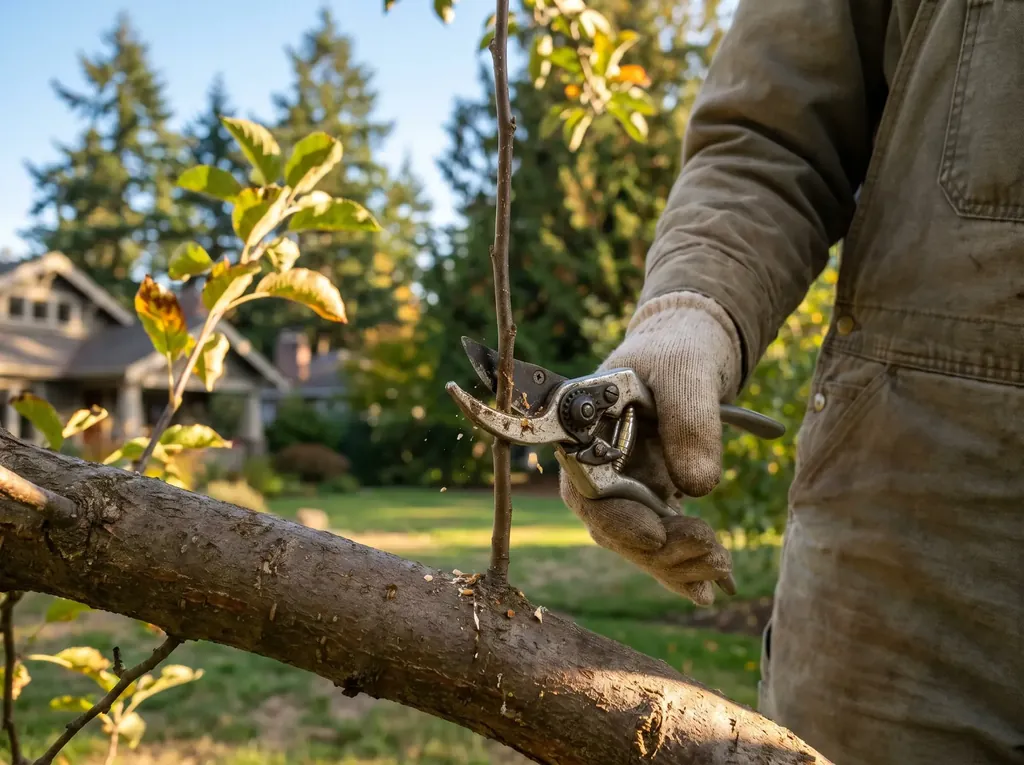
What fruit it is, roughly how big, and when it was last pruned if you know. "Never, as far as we can tell" is a perfectly good answer.
We check the trunk, the main limbs and the fruiting wood, and decide whether the tree needs one visit or a plan over a few seasons.
What we will cut this time, what we will leave for later, and which season suits each tree.
Dead, diseased and broken wood out, then crossing limbs and competing leaders.
Water sprouts and crowded shoots thinned, the centre opened, and fruiting wood kept or renewed.
Prunings cleared, and a plain note on when the tree wants its next cut and what to expect from the next crop.
We prune for fruit. Shearing an apple into a tidy lollipop shape looks neat for a month and kills the crop for years. We make fewer, better cuts that leave fruiting wood in place.
We are patient with old trees. Taking an overgrown orchard apple down to size in one visit sends it into a panic of water sprouts. Spreading the work over a few winters gives you a lower, healthier tree that actually crops.
We do not spray. We prune to keep the canopy open and dry, haul diseased wood away, and tell you honestly when a tree has a problem pruning will not fix.
And we will tell you when a tree is done. A fruit tree with a hollow, split trunk or a collapsing main limb can sometimes be propped and kept for a few more years, and sometimes it is time to plant a new one. You will get our honest view either way.
Tell us what it is and how long since anyone pruned it. We will come and look, and tell you what it would take to get it cropping again.
We are only just starting to collect customer reviews. When we do, they will appear here in full, in our customers' own words.
Start with the three Ds: dead, damaged and diseased wood, cut back to healthy wood. Next remove branches that cross or rub, and the upright water sprouts growing straight up from the main limbs. Then step back and look at the shape: keep a few well spaced main limbs and open the centre so light gets in. Use sharp, clean tools, cut just outside the branch collar, and stop before you have taken too much. Less is better than more in the first year.
In Whatcom County, apples and pears are usually pruned in the dormant season, from late winter into early spring, before the buds break. Cherries are better pruned in dry weather in late summer, after harvest, because bacterial canker gets into winter pruning wounds. Plums are prone to the same problem, so we often prune them in dry summer weather too.
Not for every tree. June is too late for the main structural prune on apples and pears, but it is a reasonable time for light summer pruning: thinning out water sprouts and overcrowded shoots to let light reach the fruit. For cherries, and often plums, dry summer weather is actually the preferred time. What to avoid in June is heavy cutting on any tree in full leaf.
Not by topping it. Pears naturally grow tall and upright, and cutting the top off at one height produces a mass of vertical sprouts and no fruit within reach. To bring a tall pear down, cut the tallest leaders back to a strong side branch growing outward, and do it gradually over a few seasons. The tree gets lower without the sprout explosion.
On a healthy tree in a single dormant season, as a general guide, about a fifth to a quarter of the live wood is a sensible limit, and less on an old or weak tree. Taking more than that does not make the tree smaller faster. It makes it grow back harder, mostly as water sprouts. Old neglected apples are best brought down over two or three winters.
Do not shear or shorten every branch, because it removes the fruiting wood and triggers water sprouts. Do not top the tree. Do not leave stubs, and do not cut flush into the branch collar. Do not take the whole crown down in one year on an old tree. And do not prune in wet weather if you can avoid it, since open wounds and damp conditions are how canker gets in.
We prune fruit trees across Whatcom County: Bellingham, Ferndale, Lynden, Blaine, Everson, Sudden Valley, Birch Bay, Sumas, Deming and Custer, plus the farms and rural ground between them.
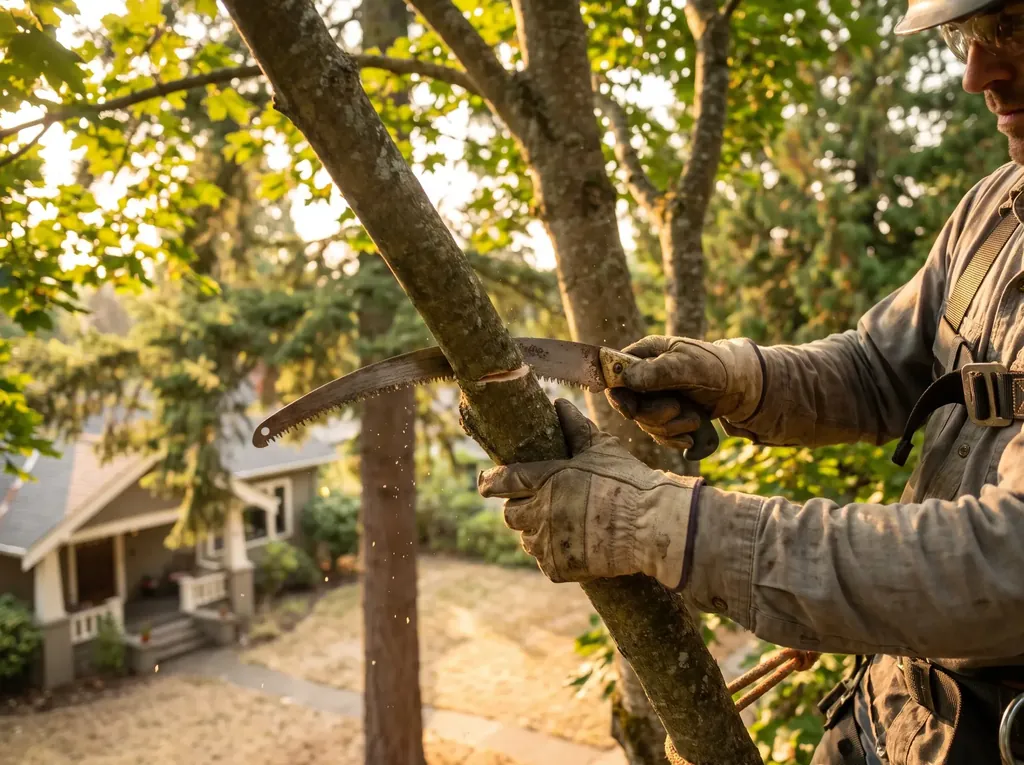
Deadwood out, crowns thinned, limbs cleared from roofs, houses and lines, every cut made where the tree can seal it off.
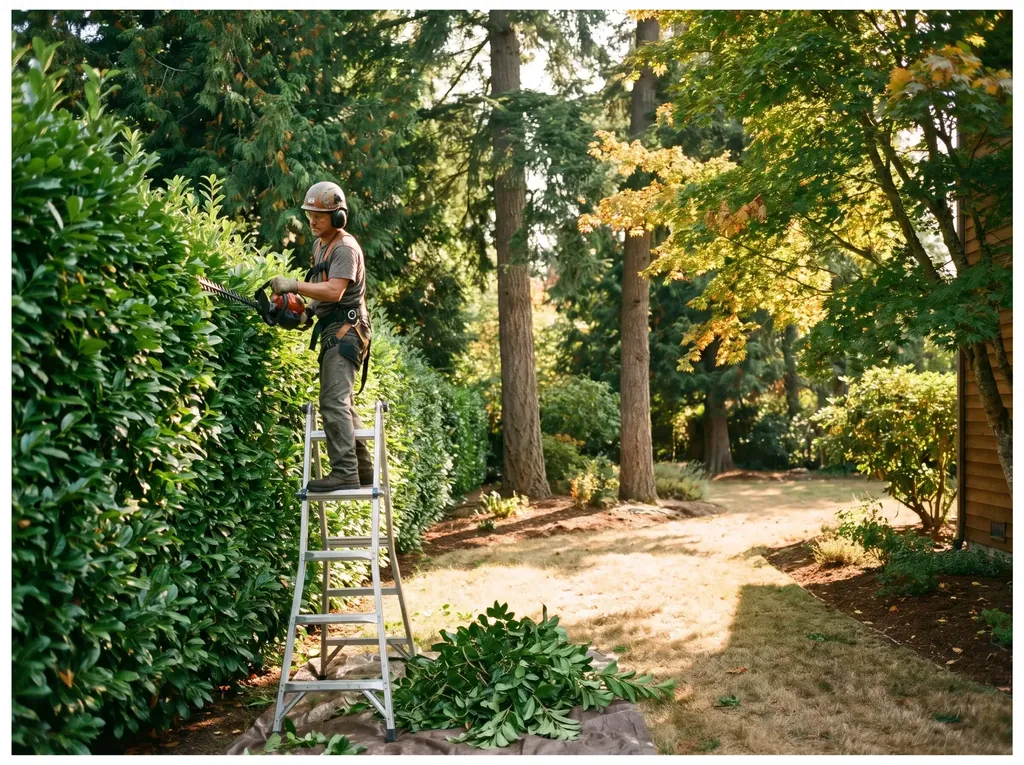
Laurel, arborvitae, holly and overgrown shrubs shaped, reduced or brought back from the brink.
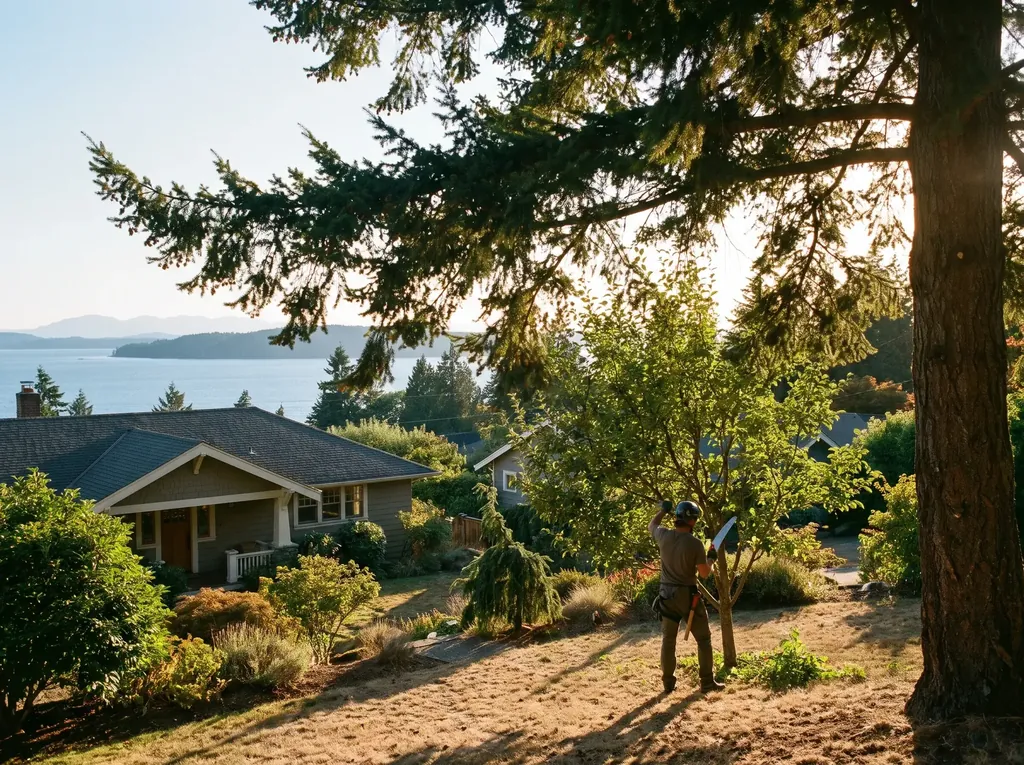
Selective thinning and windowing that opens a view of the bay or the mountains and leaves the tree standing.
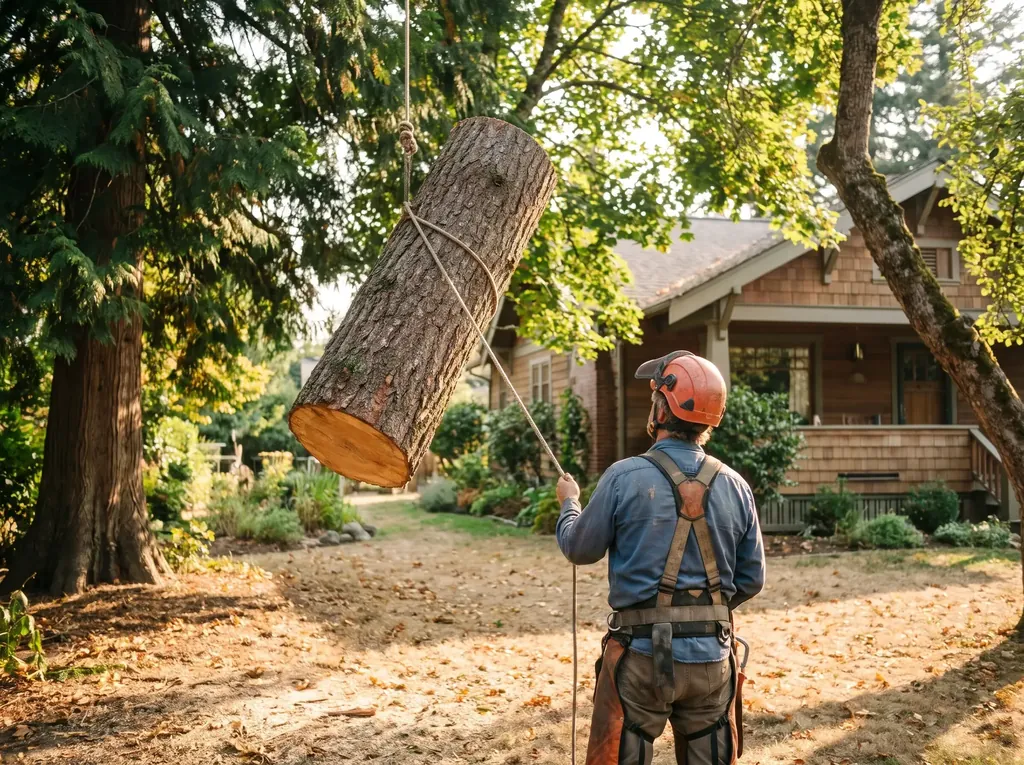
When a tree really has to go, taken down in sections where there is no room to drop it.
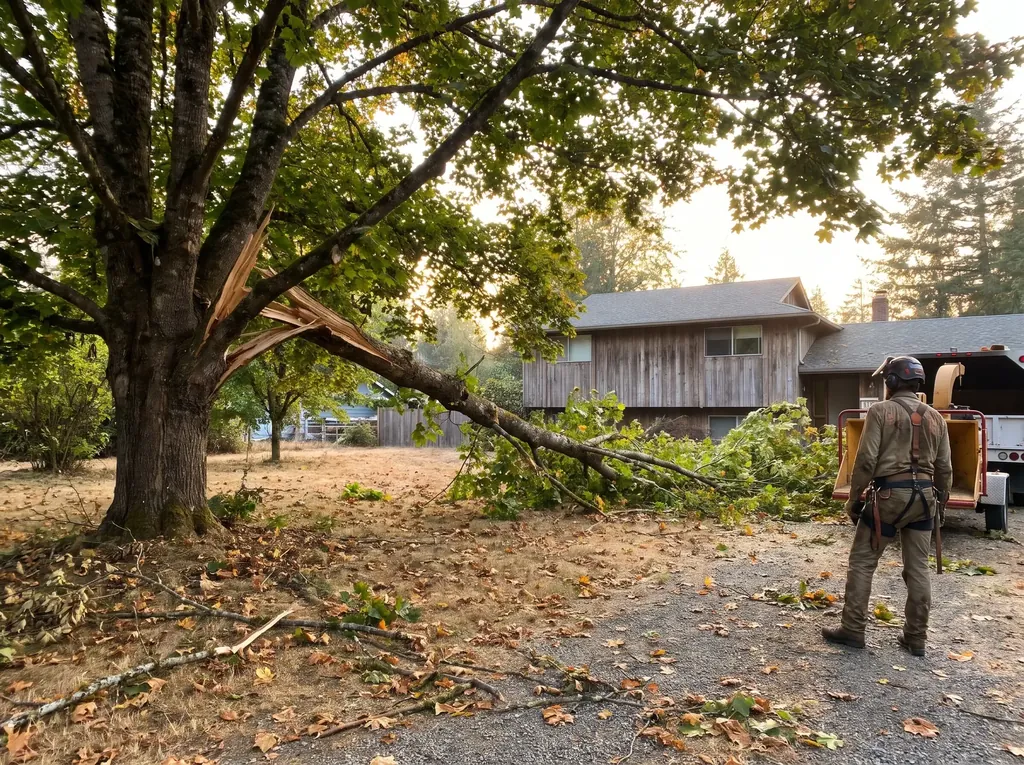
Broken limbs, hangers and trees down after a windstorm, made safe and cleared.
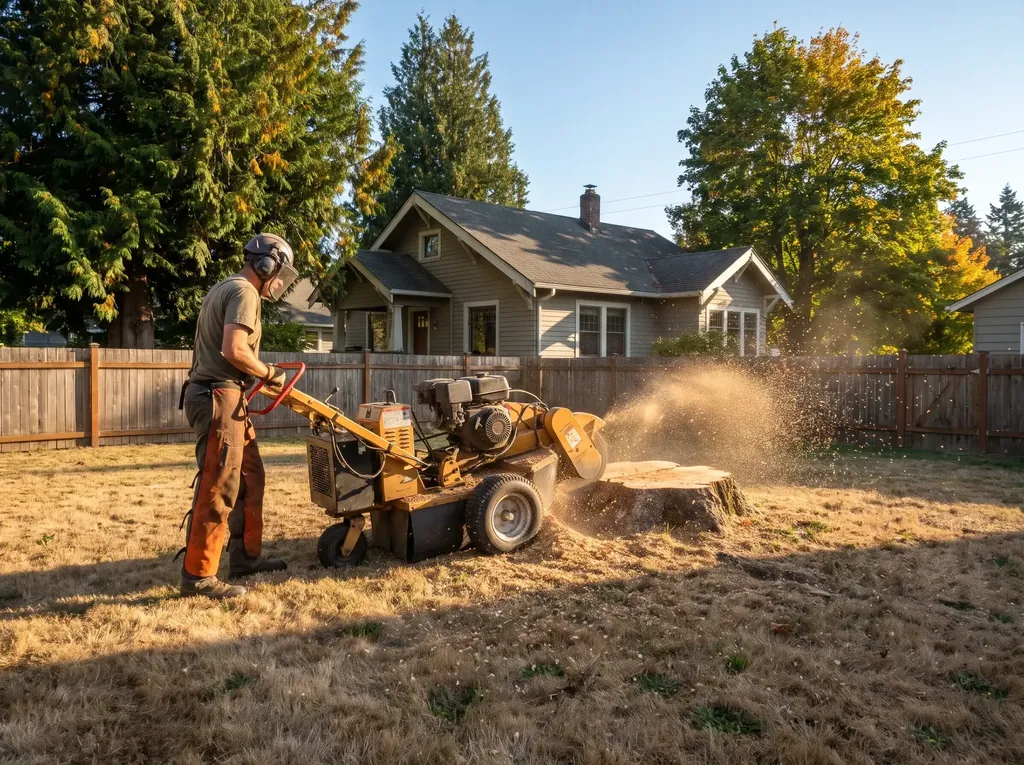
Stumps ground below grade, surface roots chased, chips cleaned up or left as mulch.
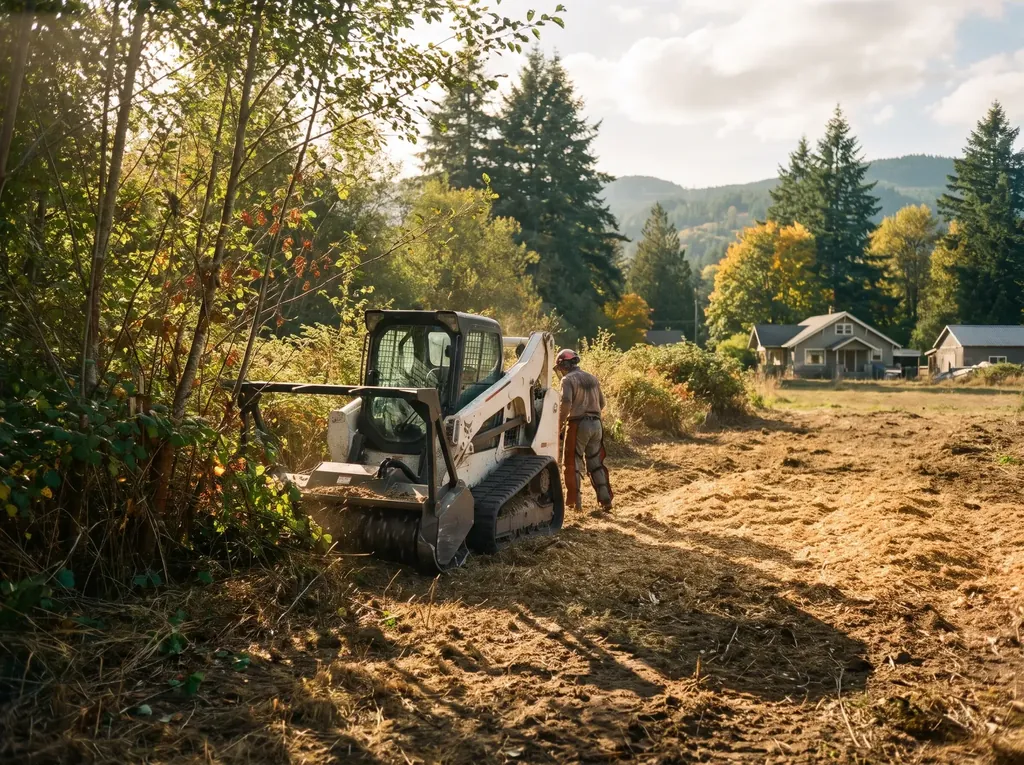
Overgrown lots and acreage cleared of alder, brush and small trees, including forestry mulching.
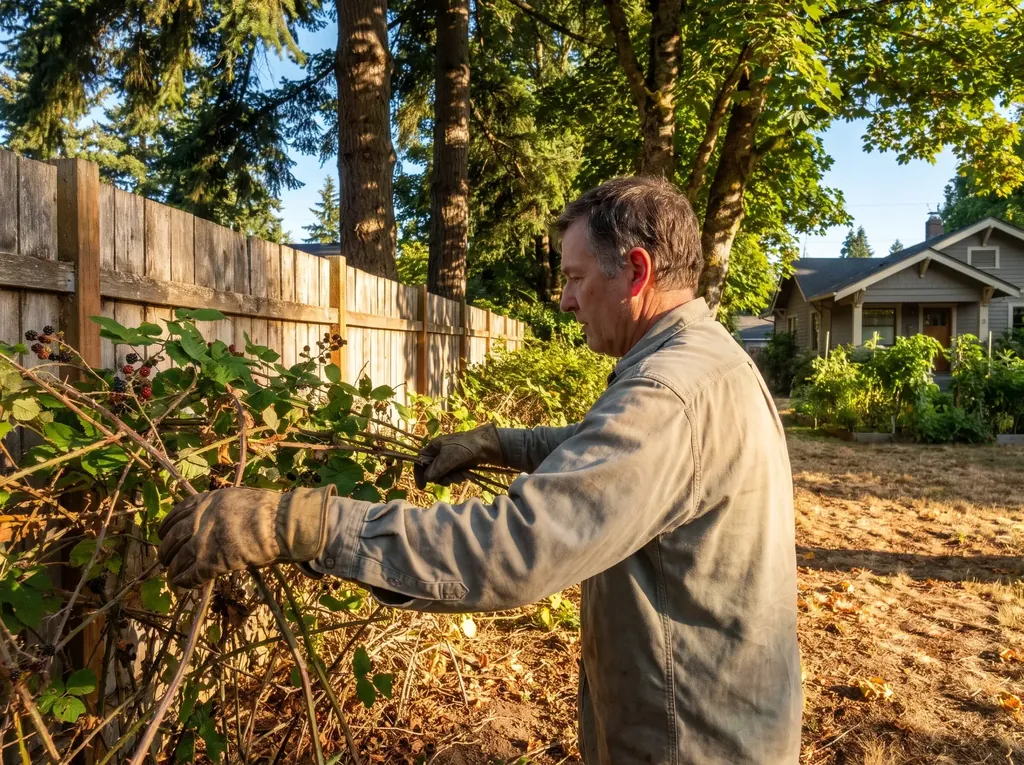
Himalayan blackberry, Scotch broom and invasive brush cut back and dealt with at the root.
Tell us what fruit trees you have, roughly how many and how big, and when they were last pruned. A photo of the tree in winter, when you can see the branches, is the most useful of all.
We will be in touch to set up a time to look at the tree. If it is urgent, call (360) 555-0137.
Nothing was sent. Please call (360) 555-0137 and we will set up your free estimate.