Brush and alder thicket clearing
Dense second growth alder, blackberry, broom and mixed brush cleared to open ground, so you can see the shape of the land and decide what comes next.
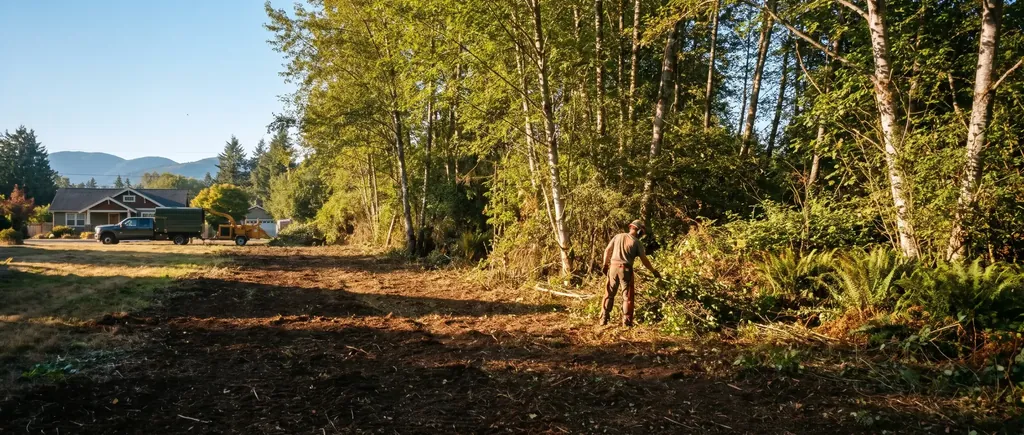
Overgrown lots and acreage cleared of red alder, brush, blackberry and small trees, for a future building site, a view, a pasture or simply a usable back acre. Selective where it should be, with the good trees left standing.
Keeper trees marked and left
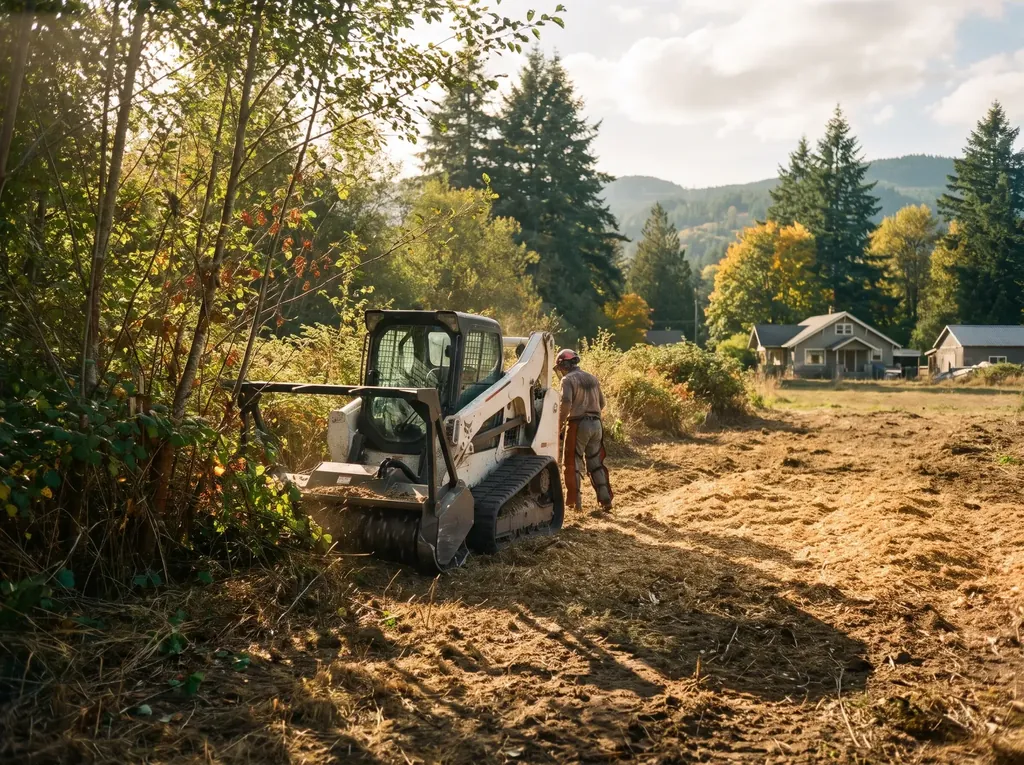
Leave a piece of ground alone in Whatcom County for a few years and it fills in fast. Red alder seeds in thick on any open soil. Himalayan blackberry and Scotch broom take the sunny edges. Salmonberry, vine maple and young cedar and fir crowd in underneath. A rural lot in Everson, Deming or Custer, the back acre of a Lynden farm, or a wooded parcel above Lake Whatcom can go from open to impassable in less time than people expect.
Clearing it is not the same as flattening it. Most overgrown lots have a few trees worth keeping: a straight Douglas fir, a healthy cedar, a big-leaf maple that will shade the house you plan to build. Those trees took decades to grow and they are what makes the property feel established. We walk the ground with you first, flag the keepers, and clear around them, taking out the alder thickets, the brush and the small, crowded trees that will never amount to much.
We are clear about what we do and what we do not. We cut, mulch, chip and grind. We do not grade, excavate, dig building pads or log timber for sale. If your project needs an excavator after the clearing is done, we can tell you what state we will leave the ground in so the next crew knows what they are walking onto.
Dense second growth alder, blackberry, broom and mixed brush cleared to open ground, so you can see the shape of the land and decide what comes next.
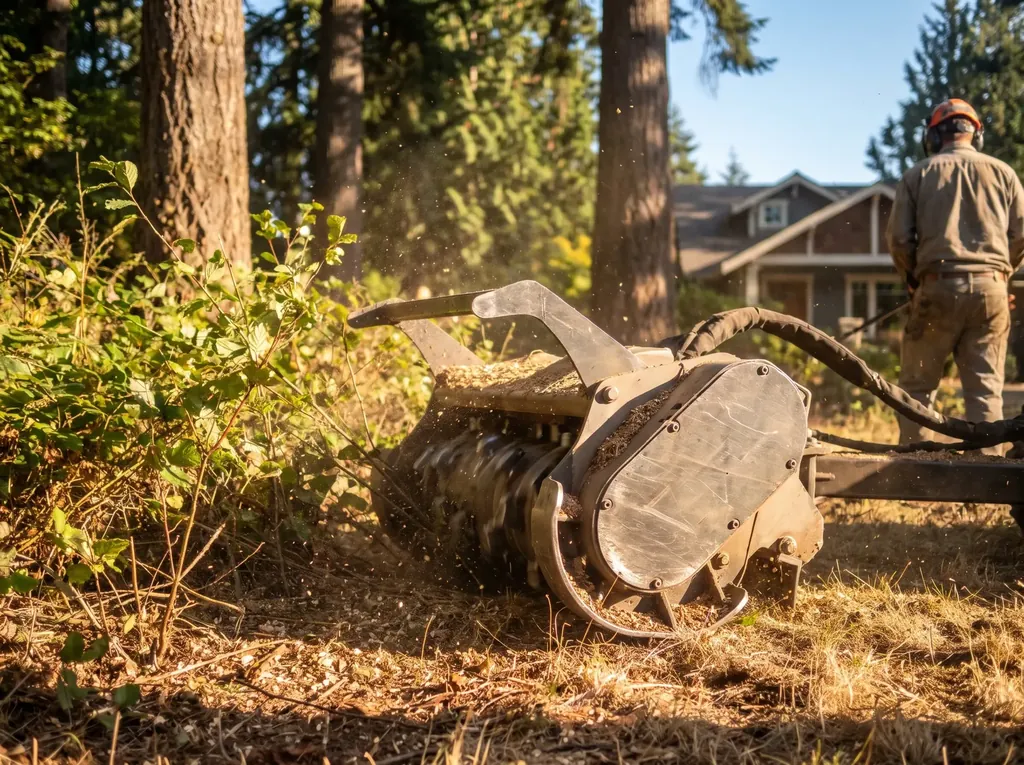
A tracked machine with a mulching head grinds standing brush and small trees into a layer of mulch on the spot. No burn piles, no hauling, and the mulch protects the soil while it breaks down.
Thinning a stand of trees rather than clearing it: removing the weak, crowded and dying stems so the best trees have room, and opening sightlines, trails, fence lines and access routes.
We walk the ground with you and mark what stays and what goes, property lines and any wet or sensitive spots we need to keep off.
Forestry mulching where the ground is firm and the material is small enough. Cut, chip and haul where it is not, or where you want bare ground rather than a mulch layer. We will explain the trade-off.
Much of Whatcom County is soft and wet from fall to spring, and heavy machines can rut and compact it badly. We schedule machine work for the drier months where we can, and tell you if your ground needs to wait.
Stumps cut low, ground out, or left where they help hold the soil, depending on what you plan to do with the land. You will know before we start what the ground will look like when we finish.
Rough size, what is growing on it, what you want to use it for, and where access is from.
We walk the ground with you, look at slopes, wet spots and access, and talk through what stays and what goes.
We check what applies to your parcel before quoting, and tell you plainly if anything needs a permit or review first.
Area, method, which trees stay, how stumps are handled, what the finished ground will look like, and when the work can happen.
Keepers protected, brush and small trees mulched or cut and chipped, and larger trees taken down where agreed.
We walk the finished ground with you so you can see what was done and what, if anything, will need a follow-up visit as regrowth starts.
We clear with a tree person's eye. We know which trees are worth working around and which are crowding them out, and we would rather leave you a property with a few good trees on it than a bare field.
We tell you what will grow back. Blackberry, broom and alder all return on disturbed ground. We will tell you honestly what to expect and how to stay ahead of it, by mowing, planting or a follow-up visit. We do not spray.
We respect the ground. Rutted, compacted soil is hard to fix, so we would rather wait for better conditions than tear up your land to start a week sooner.
And we check the rules before we start.
Clearing near streams, wetlands, steep slopes or the shoreline, or anywhere in the Lake Whatcom watershed, can carry extra requirements, and larger clearing projects can need permits. We check what applies to your parcel before we quote and will not start work that needs approval until it is in place.
Tell us how big it is and what you want to do with it. We will walk it with you and tell you the best way to get it open.
We are only just starting to collect customer reviews. When we do, they will appear here in full, in our customers' own words.
There is no useful average, because two acres of light brush and two acres of dense alder on a wet slope are completely different jobs. The main drivers are the size of the area, how dense the growth is, the size of the trees, the slope and the ground conditions, access for machines, whether material is mulched in place or hauled, and whether stumps are ground. We price every clearing job after walking the ground, and the walk-through is free.
Forestry mulching is usually priced by the area or by machine time, and the price moves with how thick the growth is, the size of the stems, the slope and how firm the ground is. Light brush on flat, dry ground goes quickly. Dense alder on a wet hillside does not. We give you a written price for your ground after we have walked it.
It leaves a layer of mulch rather than bare soil, which is good for erosion but not what you want if you are about to seed a lawn or pour a foundation. Stumps are usually left at ground level unless they are ground separately. It is less suited to large trees, and heavy machines on wet Whatcom County soil can cause rutting and compaction if the timing is wrong. Young alder can resprout and reseeds heavily on bare ground, and blackberry comes back through the mulch without follow-up.
Usually the cheapest approach is the one that moves the least material. Mulching in place avoids hauling and disposal. Clearing selectively, rather than taking everything, reduces the work. Doing it in the drier months avoids the slow going and ground repair that comes with wet soil. And being clear about the end use helps, because ground for a pasture does not need the same finish as ground for a house.
Often yes, but clearing is where the rules most often apply, particularly near water, wetlands, steep slopes and shorelines, in the Lake Whatcom watershed, and once a project gets above a certain size. We check what applies to your parcel before quoting and tell you plainly if a permit or review is needed.
We clear lots and acreage across Whatcom County: Bellingham, Ferndale, Lynden, Blaine, Everson, Sudden Valley, Birch Bay, Sumas, Deming and Custer, plus the rural ground between them.
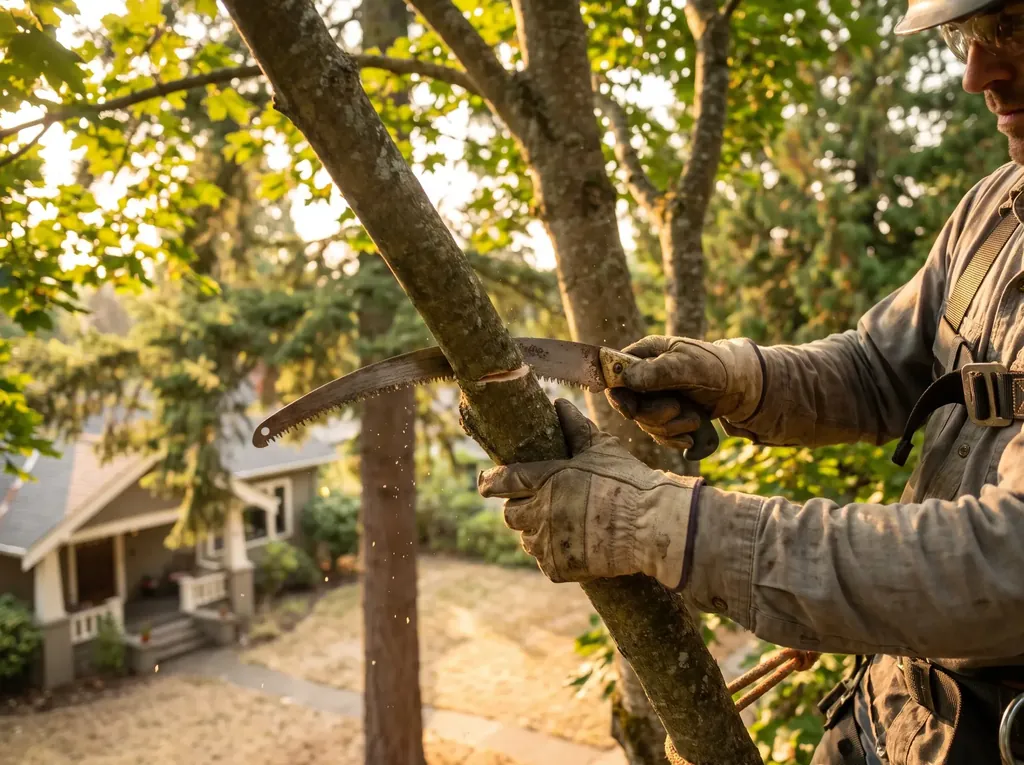
Deadwood out, crowns thinned, limbs cleared from roofs, houses and lines, every cut made where the tree can seal it off.
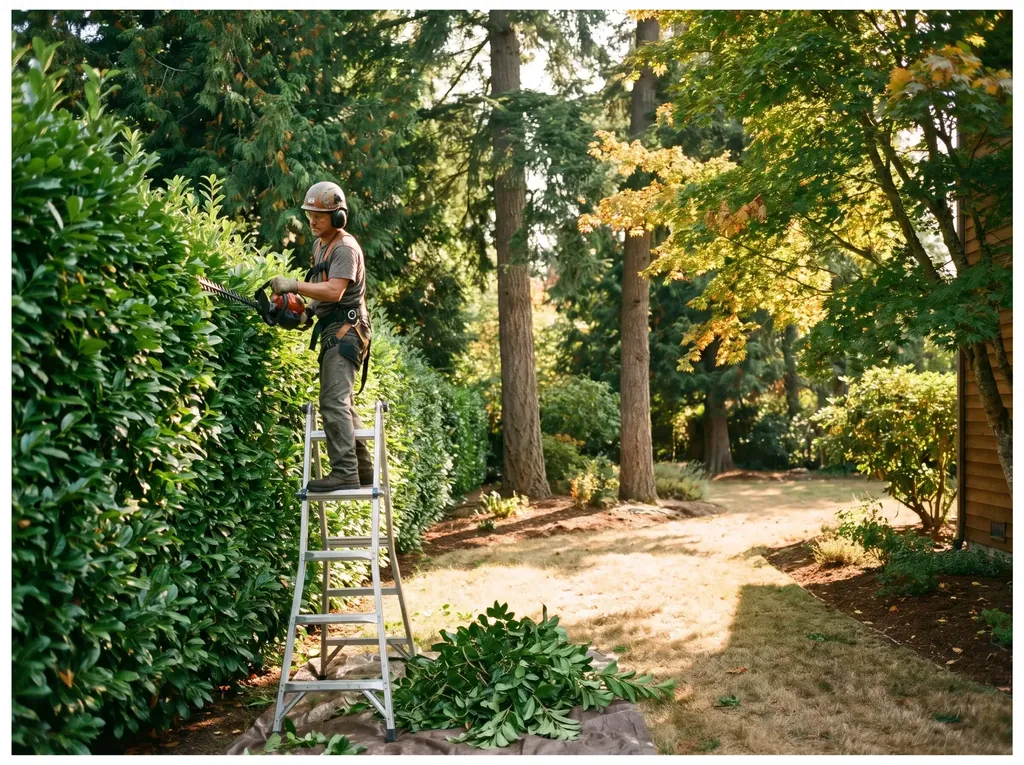
Laurel, arborvitae, holly and overgrown shrubs shaped, reduced or brought back from the brink.
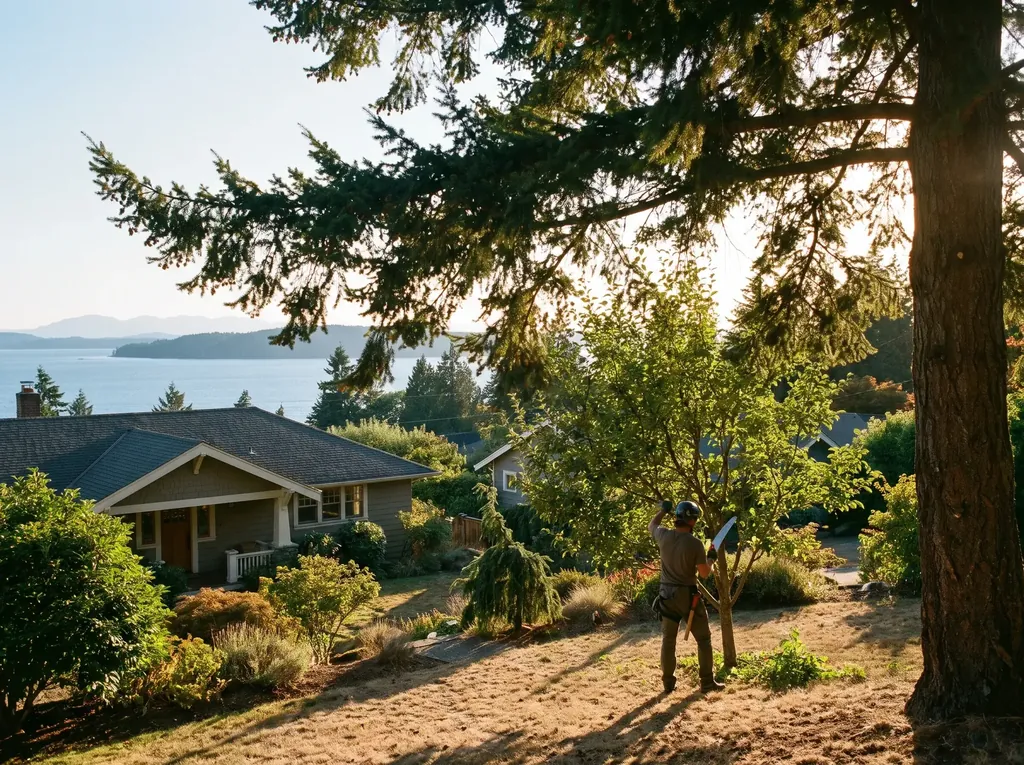
Selective thinning and windowing that opens a view of the bay or the mountains and leaves the tree standing.
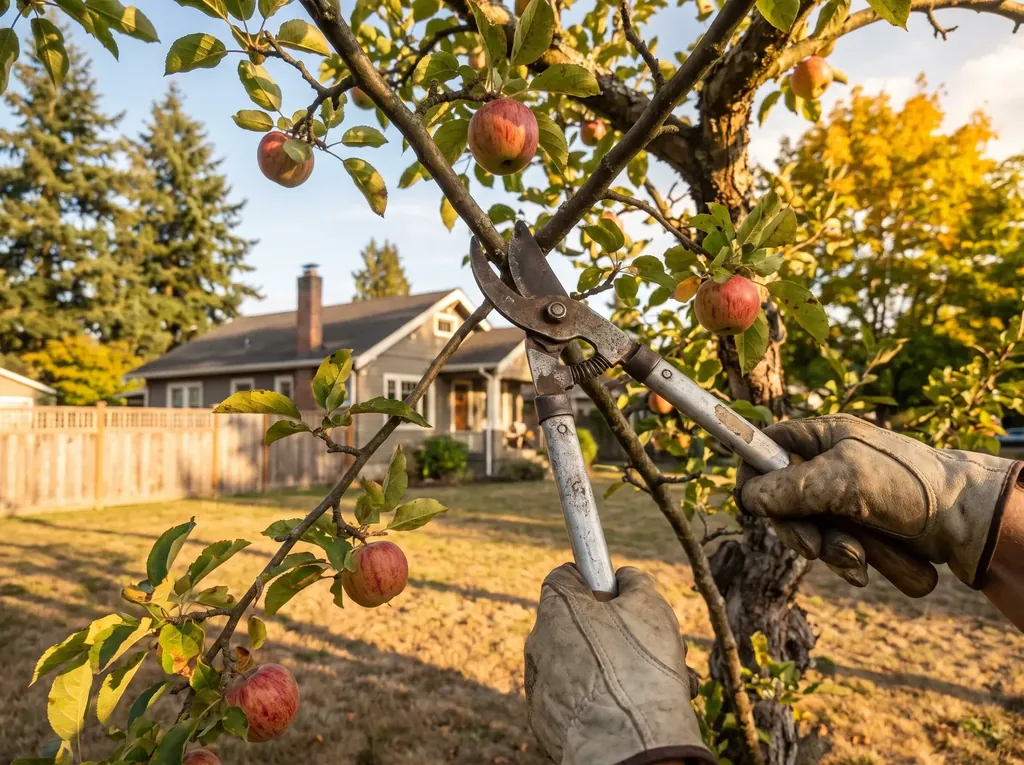
Apple, pear, plum and cherry pruned for structure, light and a better crop, including the neglected old ones.
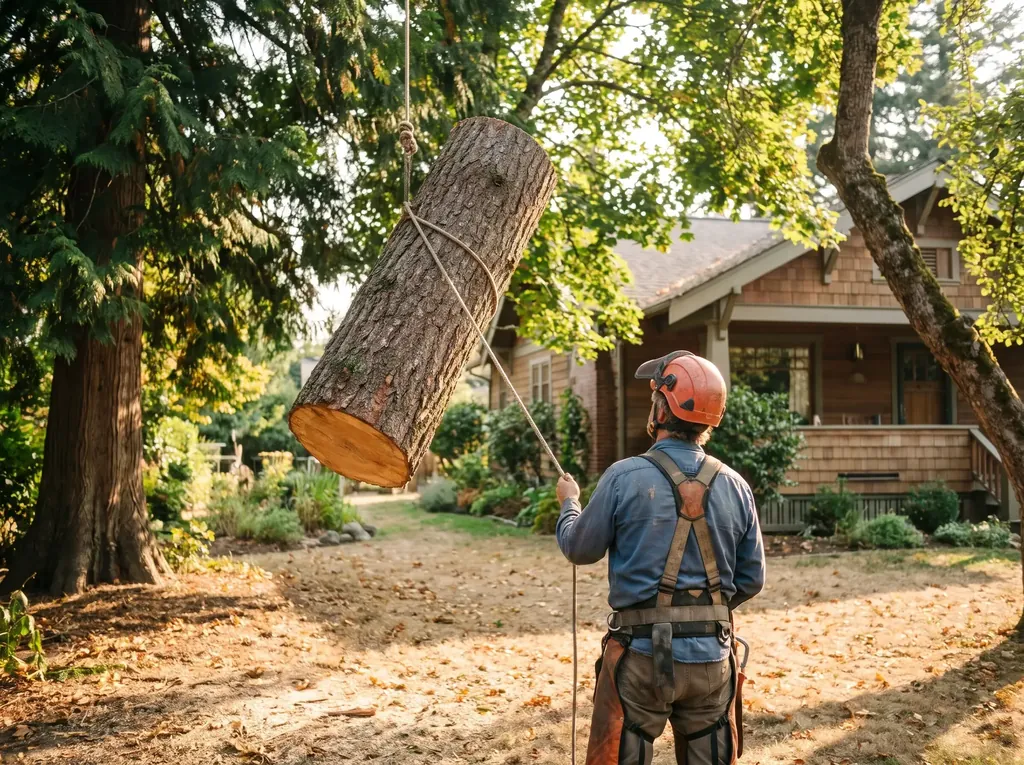
When a tree really has to go, taken down in sections where there is no room to drop it.
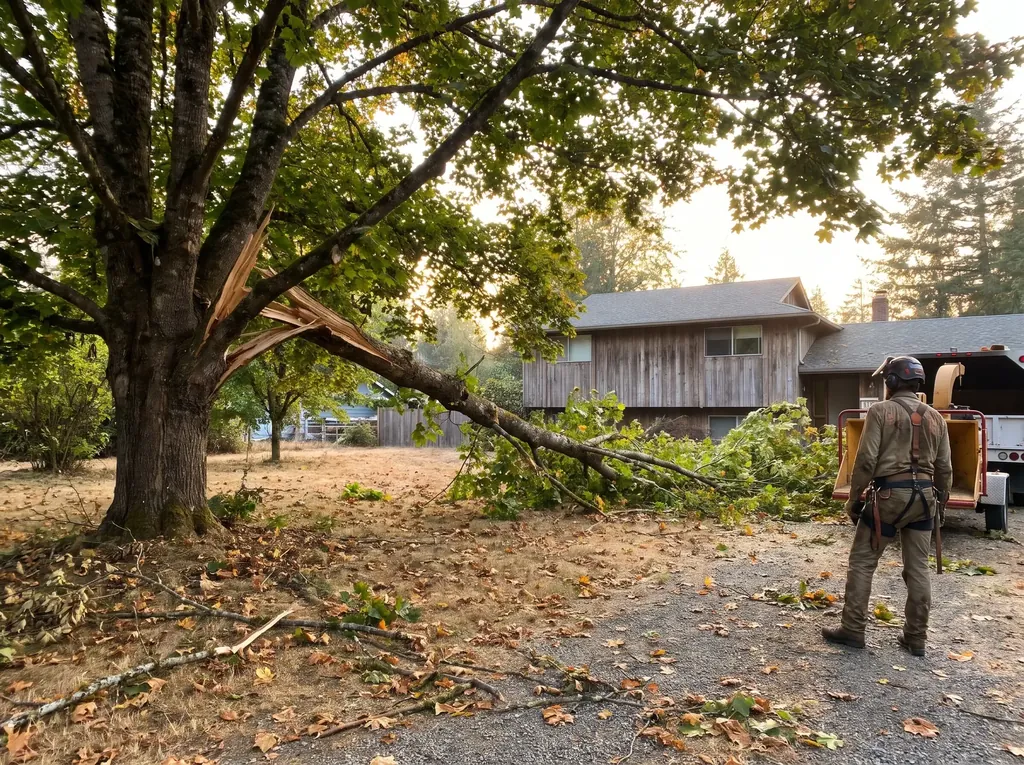
Broken limbs, hangers and trees down after a windstorm, made safe and cleared.
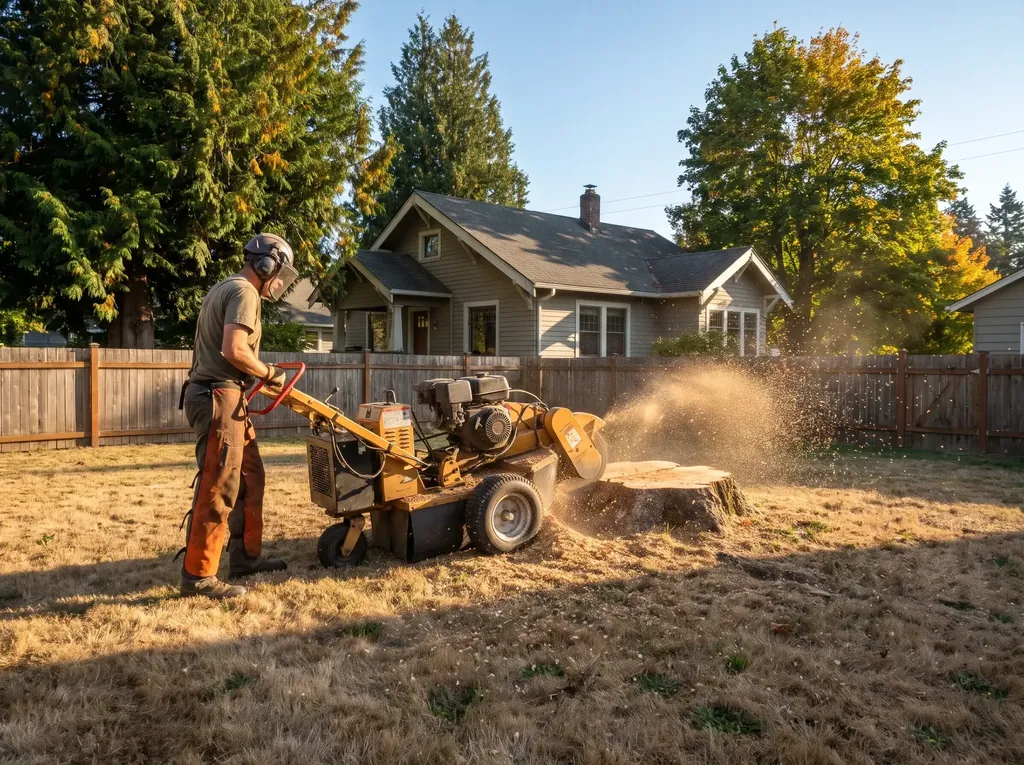
Stumps ground below grade, surface roots chased, chips cleaned up or left as mulch.
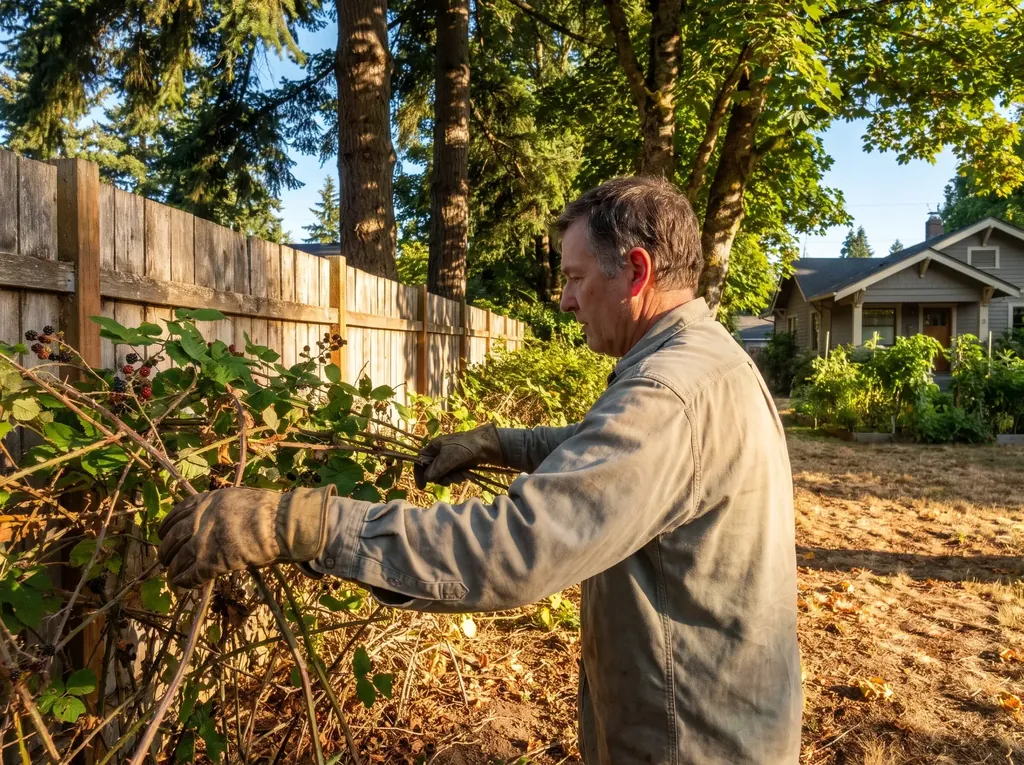
Himalayan blackberry, Scotch broom and invasive brush cut back and dealt with at the root.
Tell us roughly how much ground you want cleared, what is growing on it, and what you plan to use it for. Photos and a rough address or parcel location help us plan the walk.
We will be in touch to set up a time to look at the tree. If it is urgent, call (360) 555-0137.
Nothing was sent. Please call (360) 555-0137 and we will set up your free estimate.