Dead, dying and decayed trees
Trees with rot at the base, dead tops, fungus on the trunk or major dieback. We tell you what we see, why it matters, and how soon it should come out.
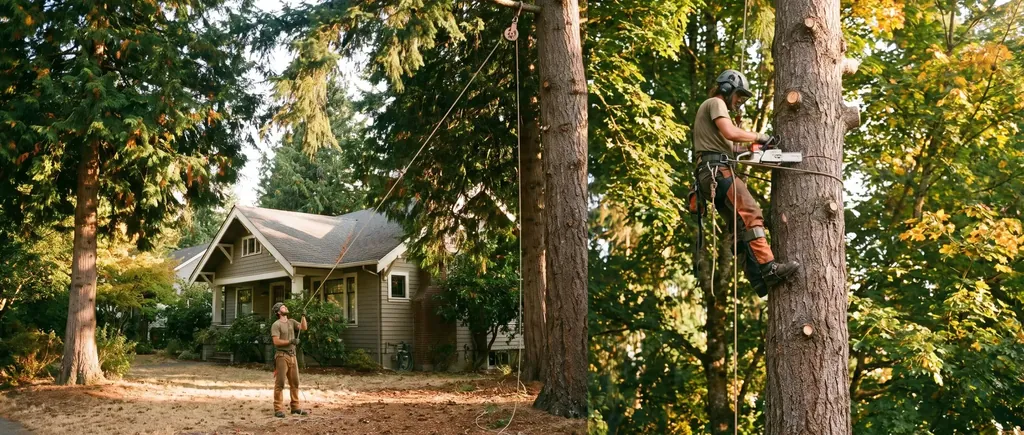
Sometimes pruning cannot fix it. When a tree is dead, rotten at the base, split or simply in the wrong place, we take it down in controlled pieces, protect the house and garden, and leave the yard clean.
Honest advice before any cut
Most of our work is pruning, and when someone calls about removing a tree, our first job is to check whether it really needs to go. A big fir that drops needles in the gutters, or a maple that shades the vegetable bed, usually needs better pruning rather than a chainsaw at the base.
Some trees do need to come down, and pretending otherwise does nobody any favours. A Douglas fir with conks at the base, a sign of root or butt rot, can look green and full right up until it fails. A red alder that has reached the end of its relatively short life starts dropping big limbs. A tree with a deep split between two stems, a lean that has changed since last winter, or soil heaving on one side after a storm is telling you something. And sometimes a healthy tree is simply in the wrong place: a cedar planted against the foundation, a cottonwood with roots in the drain line, a tree that will never fit the space no matter how it is pruned.
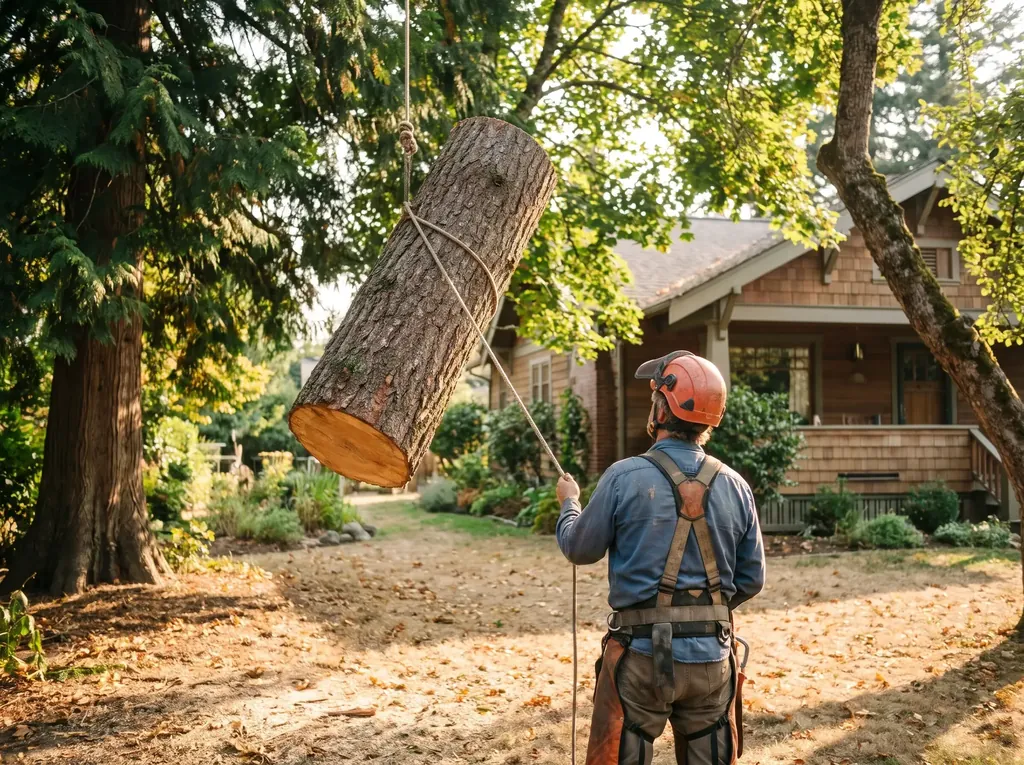
When a tree has to go, how it comes down matters. Most Bellingham lots do not have room to drop a big tree in one piece. We climb or work from a lift, take the crown and trunk down in pieces, and lower the heavy wood on ropes so it lands where it should, not on the roof, the fence or the rhododendrons.
Trees with rot at the base, dead tops, fungus on the trunk or major dieback. We tell you what we see, why it matters, and how soon it should come out.
Big conifers and maples between houses, over roofs, beside power drops or behind fences, taken down piece by piece with rigging and lowering lines where felling is not an option.
Trees that are damaging foundations, lifting paths or crowding a house, or that have simply outgrown the space. We will still tell you if pruning could buy years, and let you decide.
We look at the whole tree and the ground around it and tell you plainly whether it needs to come out, could be pruned instead, or could wait. If we are not sure, we say so.
Limbs and trunk removed in manageable pieces and lowered on ropes over anything that matters. Where there is a clear drop zone and it is safe to fell, we fell.
Boards over lawns and soft ground for equipment, tarps over beds, and care around fences, gutters and siding.
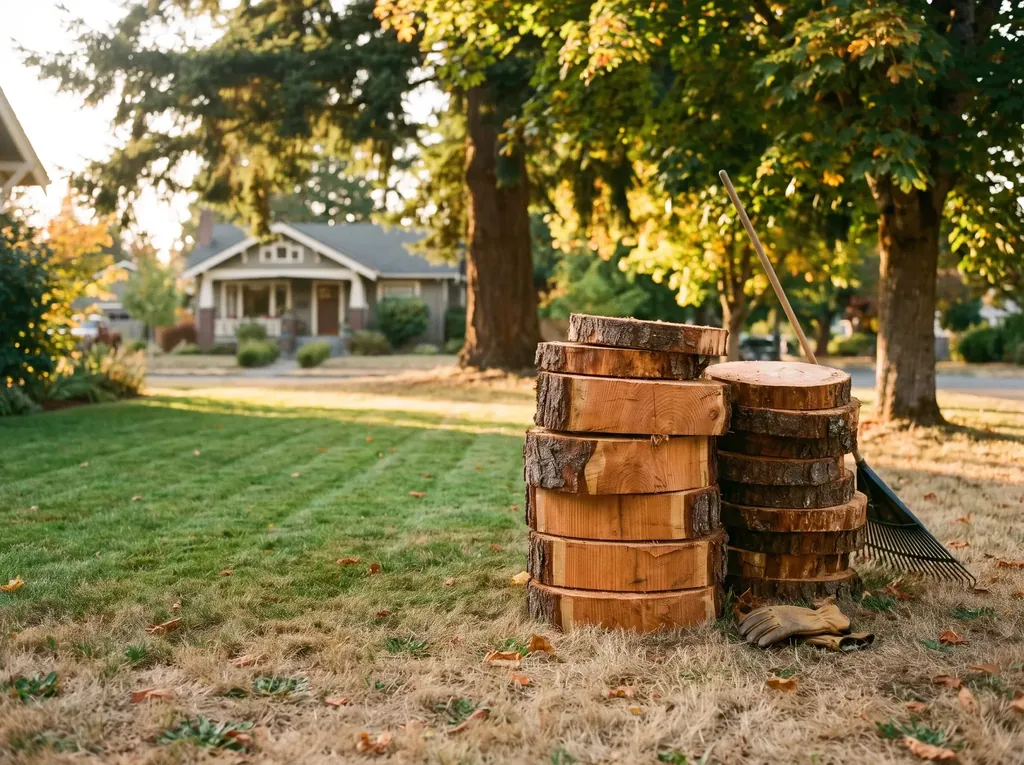
Brush chipped and hauled, the yard raked, and the trunk wood left in rounds for firewood or hauled, your choice. Stump grinding is quoted as a separate item so you can decide whether you want it.
A photo of the whole tree and one of the base is the best start, plus what is near it: the house, a fence, a line, the neighbour's garage.
We check the tree, the lean, the base and the drop zone, and talk about whether removal is the right call.
How the tree will come down, what happens to the wood and the brush, whether the stump is included, and anything that needs checking first.
The work area roped off, ground protection laid, rigging set and the plan for each heavy piece talked through on site.
Crown first, then the trunk in pieces from the top, each one cut and lowered under control.
Brush and wood dealt with as agreed, the yard raked and blown, and a last walk round with you before we leave.
We do not sell removals. If a tree can be kept safely with good pruning, we will tell you, even though removal is the bigger job. We would rather you trusted the next thing we say.
We are honest in the other direction too. If a tree near the house has root rot or a failing union, we will not talk you into thinning it and hoping. We will tell you it needs to come out, and roughly how urgent that is.
We take our time with rigging. Lowering a heavy trunk piece past a gutter with a few feet to spare is slow, careful work, and it is the part of the job you never want rushed.
And we check the rules before we start.
Some trees in and around Bellingham need permission before they can be removed, particularly on steep slopes, near streams and wetlands, along the shoreline and in the Lake Whatcom watershed. We check what applies to your property before we quote and tell you plainly if a permit or review is needed.
Send us a photo of the tree and the base. We will come and look, and tell you honestly whether it needs removing or just needs better pruning.
We are only just starting to collect customer reviews. When we do, they will appear here in full, in our customers' own words.
Trimming usually costs less on the day. Removal can cost less over many years if the tree would otherwise need regular work. But the honest answer depends on the tree. A healthy fir that needs a cleanup every several years is almost always worth keeping. A declining tree you would be paying to prune again and again, before removing it anyway, is often better taken down once. We will give you both options on the estimate when both make sense.
Often yes, but not always. Trees on steep slopes, near streams, wetlands or the shoreline, in some watershed areas and on some subdivided lots can carry extra rules. We check what applies to your specific property before we quote and will tell you if anything needs a permit or review first.
Late fall and winter are often the quieter months for tree work, and deciduous trees are lighter and easier to see into once the leaves are down. In Whatcom County the trade-off is wet, soft ground, which can make access harder on some lots. The bigger saving usually comes from booking a non-urgent removal ahead of time rather than after a storm, when everyone is busy.
Clear access helps: move cars, trailers and garden furniture, and tell us about gates and soft ground. Keeping the wood as firewood rounds instead of having it hauled saves time. Having several trees or a stump done in the same visit is more efficient than separate trips. And get the tree looked at before it becomes an emergency, because storm work on a damaged tree is harder and slower than a planned removal.
There is no single month when tree removal is banned everywhere, but spring and early summer is nesting season, and active nests need to be left alone. We check trees for nests before we cut and will reschedule non-urgent work if needed. If a tree near your house is dangerous, we will talk through what can safely be done straight away.
There is no single safe distance, because it depends on how big the tree will get. As a rough guide, large conifers like Douglas fir and western red cedar want plenty of room, well away from the house, while small ornamental trees can sit much closer. A tree already close to a house is not automatically a problem. A healthy, well pruned tree there can be fine for decades. We look at the species, the lean, the roots and the condition before saying it should go.
We take down trees across Whatcom County: Bellingham, Ferndale, Lynden, Blaine, Everson, Sudden Valley, Birch Bay, Sumas, Deming and Custer, plus the rural ground between them.
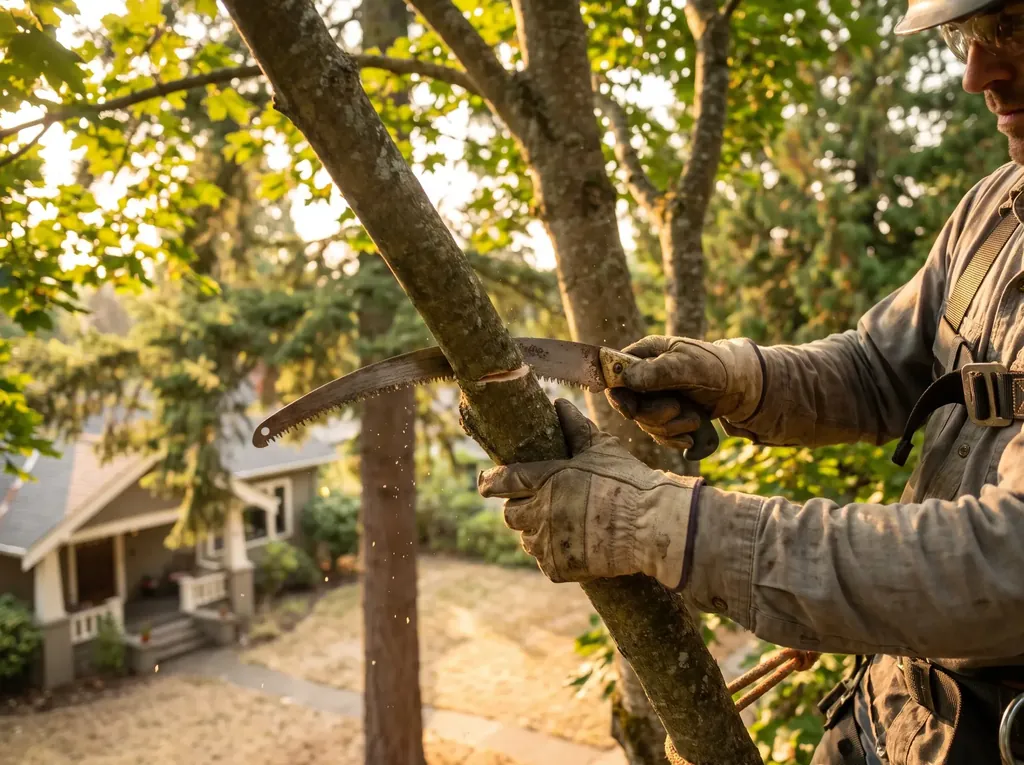
Deadwood out, crowns thinned, limbs cleared from roofs, houses and lines, every cut made where the tree can seal it off.
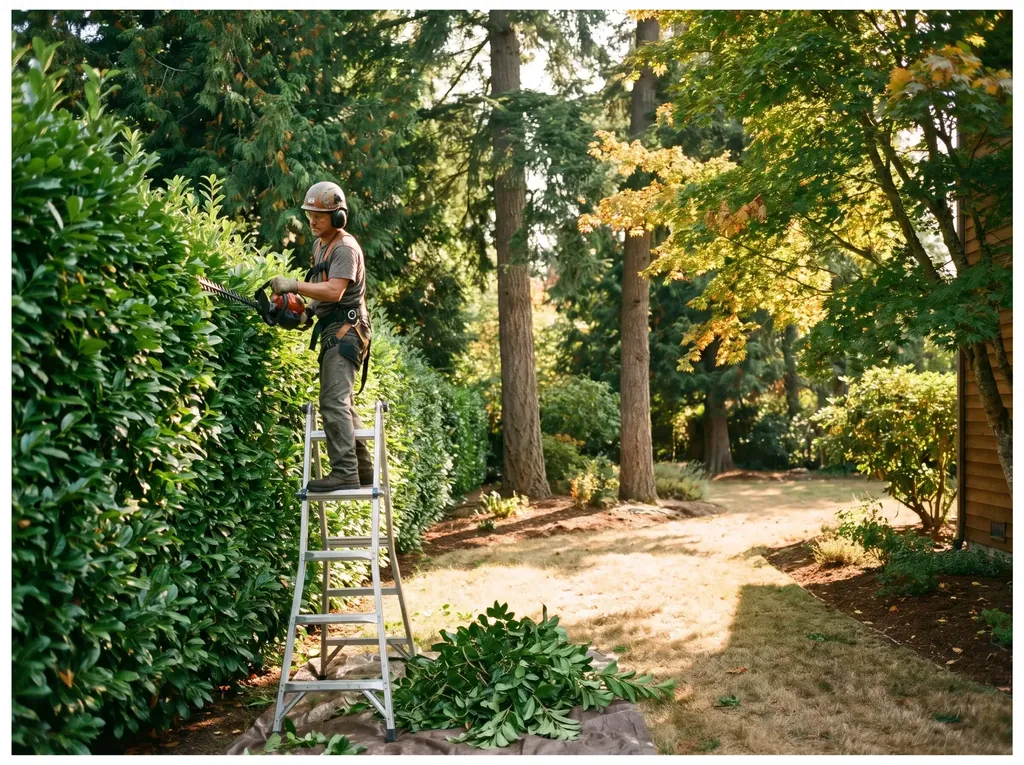
Laurel, arborvitae, holly and overgrown shrubs shaped, reduced or brought back from the brink.
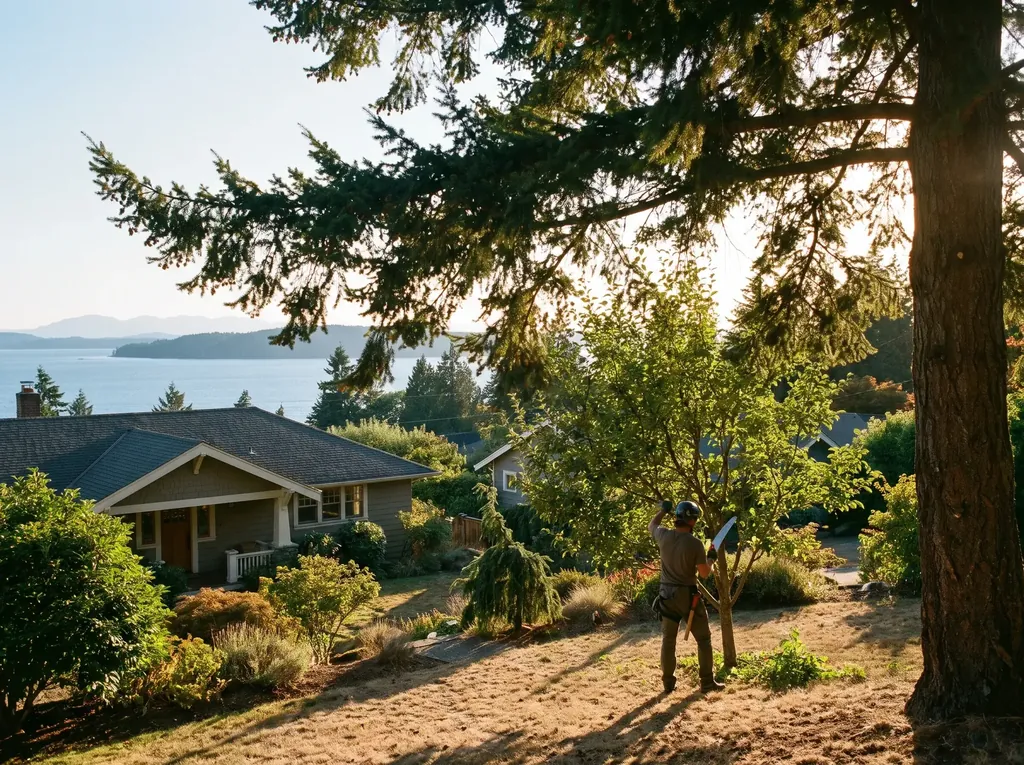
Selective thinning and windowing that opens a view of the bay or the mountains and leaves the tree standing.
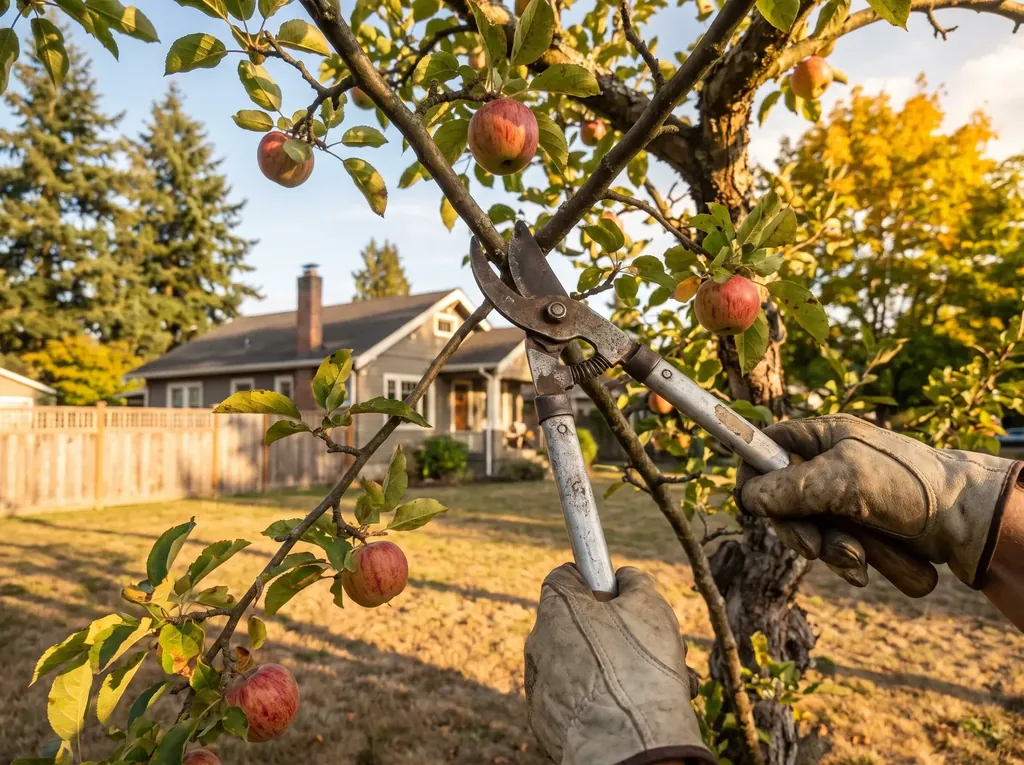
Apple, pear, plum and cherry pruned for structure, light and a better crop, including the neglected old ones.
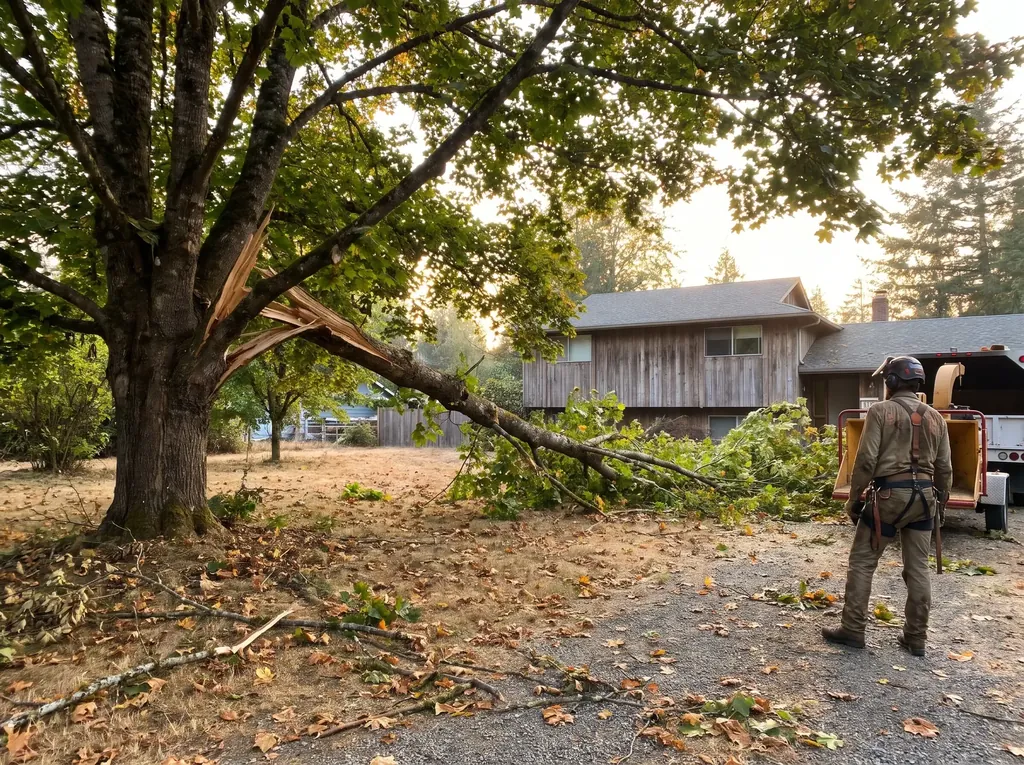
Broken limbs, hangers and trees down after a windstorm, made safe and cleared.
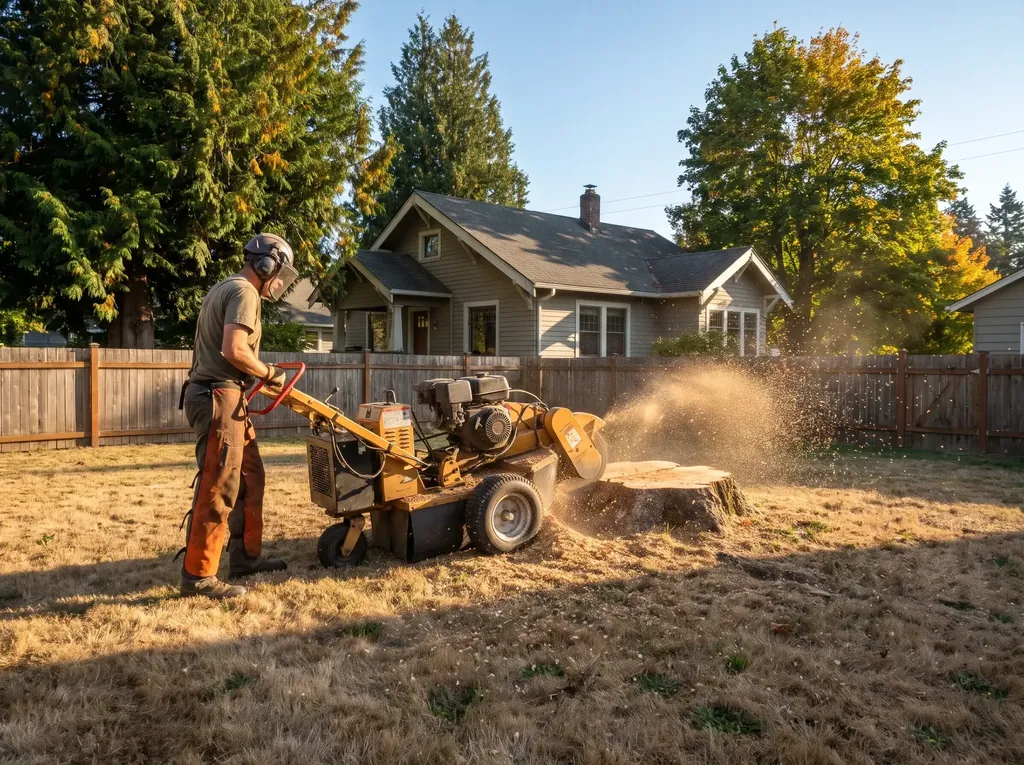
Stumps ground below grade, surface roots chased, chips cleaned up or left as mulch.
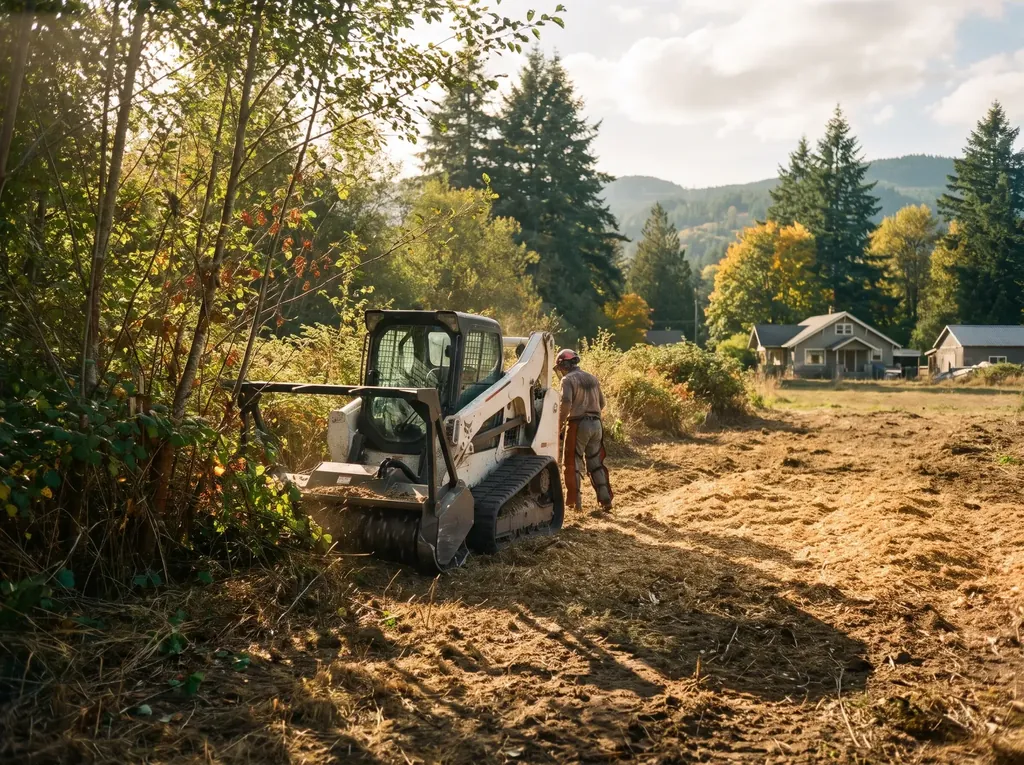
Overgrown lots and acreage cleared of alder, brush and small trees, including forestry mulching.
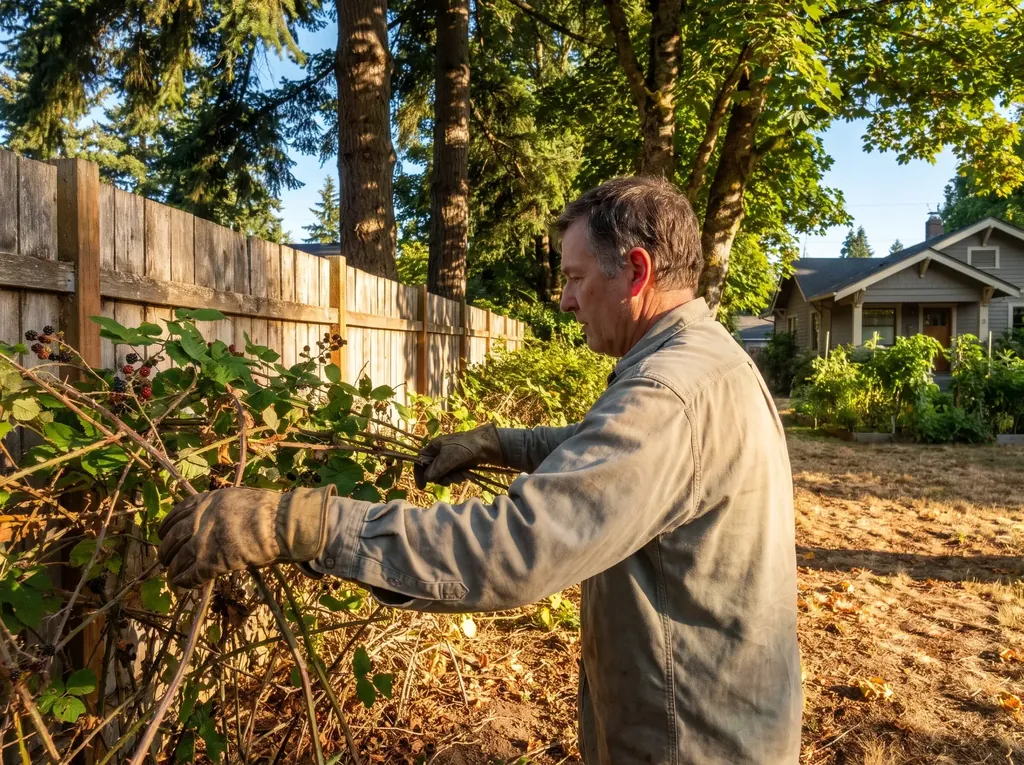
Himalayan blackberry, Scotch broom and invasive brush cut back and dealt with at the root.
Tell us where the tree is, what is near it, and why you think it needs to come down. A photo of the whole tree and one of the base help us give you a straight answer.
We will be in touch to set up a time to look at the tree. If it is urgent, call (360) 555-0137.
Nothing was sent. Please call (360) 555-0137 and we will set up your free estimate.