Blackberry thickets
Overgrown Himalayan blackberry along fences, ditches, banks and the back of the lot, cut down, cleared and dug out at the root crown so the ground can be used again.
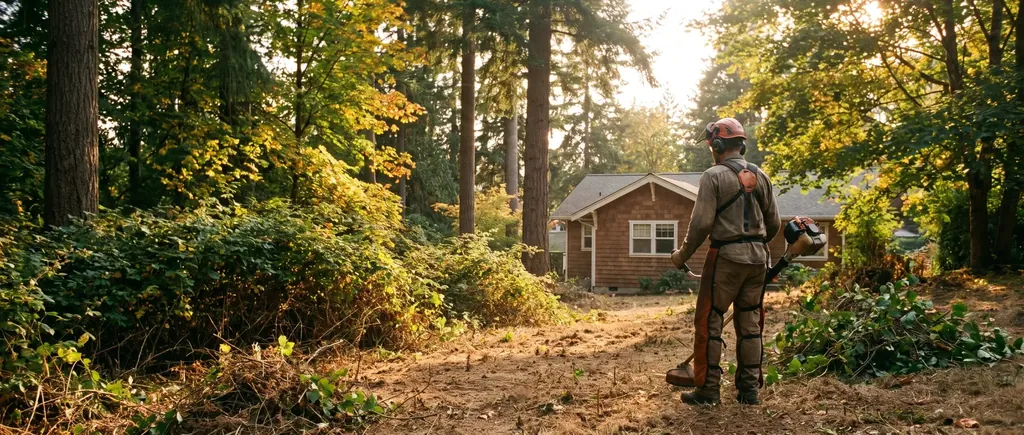
Himalayan blackberry, Scotch broom and the invasive brush that swallows fences, sheds and the back of the lot. Cut down, dug out at the root crown and chipped or hauled, with no spraying.
We do not spray
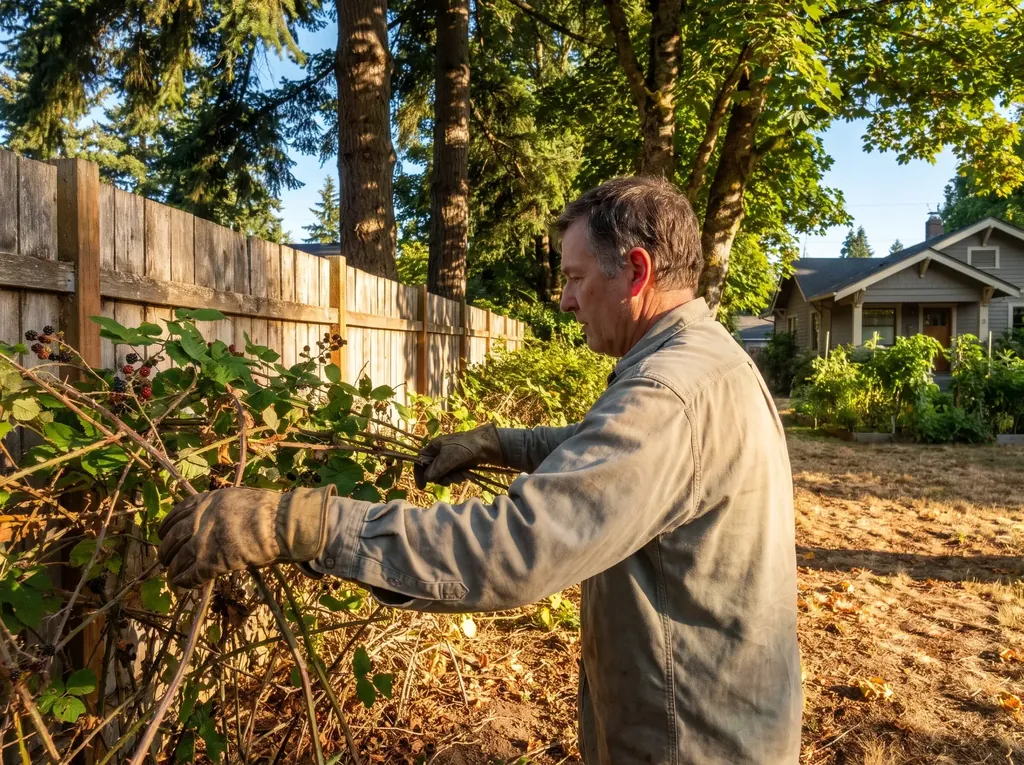
Anyone who has owned property in Whatcom County knows Himalayan blackberry. It arrives along a fence line or the edge of a ditch, and within a few seasons it has climbed the shed, buried the old car, swallowed the bottom of the garden and turned the back of the lot into a wall of thorns taller than you are. Every cane that arches over and touches the ground can root at the tip and start a new plant. Mow it once and it comes straight back, because the energy is stored in the woody root crown in the soil.
Scotch broom is the same story on dry, sunny ground: bright yellow in spring, fast spreading, and backed by a seed bank in the soil that keeps sprouting for years. English ivy climbs the trunks of firs and maples until it smothers them. Holly and laurel seedlings fill the shady corners. Together they turn a usable yard into ground you avoid.
We clear brush the hard way, which is the way that works. Canes are cut down and hauled or chipped, then the root crowns are dug out of the ground. Ivy is cut at the base of trees and pulled back from the trunks. Broom is pulled or cut low depending on its size. We do not spray. And we are honest that the first clearing is the start, not the end: there will be seedlings and the odd resprout for a season or two, and staying on top of them is what finally wins.
Overgrown Himalayan blackberry along fences, ditches, banks and the back of the lot, cut down, cleared and dug out at the root crown so the ground can be used again.
Scotch broom pulled or cut, English ivy cut off tree trunks and pulled back, and self-seeded holly and laurel taken out before they become trees.
The strip behind the garage, the bank down to the creek, the fence line nobody has seen for years. Cleared by hand and machine to suit the ground, with care around anything worth keeping.
Top growth cut down and pulled out of fences, trees and structures, so we can see the ground and the root crowns underneath.
The woody root crowns dug out of the soil. This is the slow part of the job, and it is the part that stops the blackberry roaring back the next spring.
Canes and brush chipped on site or hauled away, depending on volume and what you want. Thorny material is never left in piles where kids, dogs or the mower will find it.
Clear advice on what to expect as seedlings and resprouts come up, plus options for follow-up visits, mulching or planting so the brush does not simply move back in.
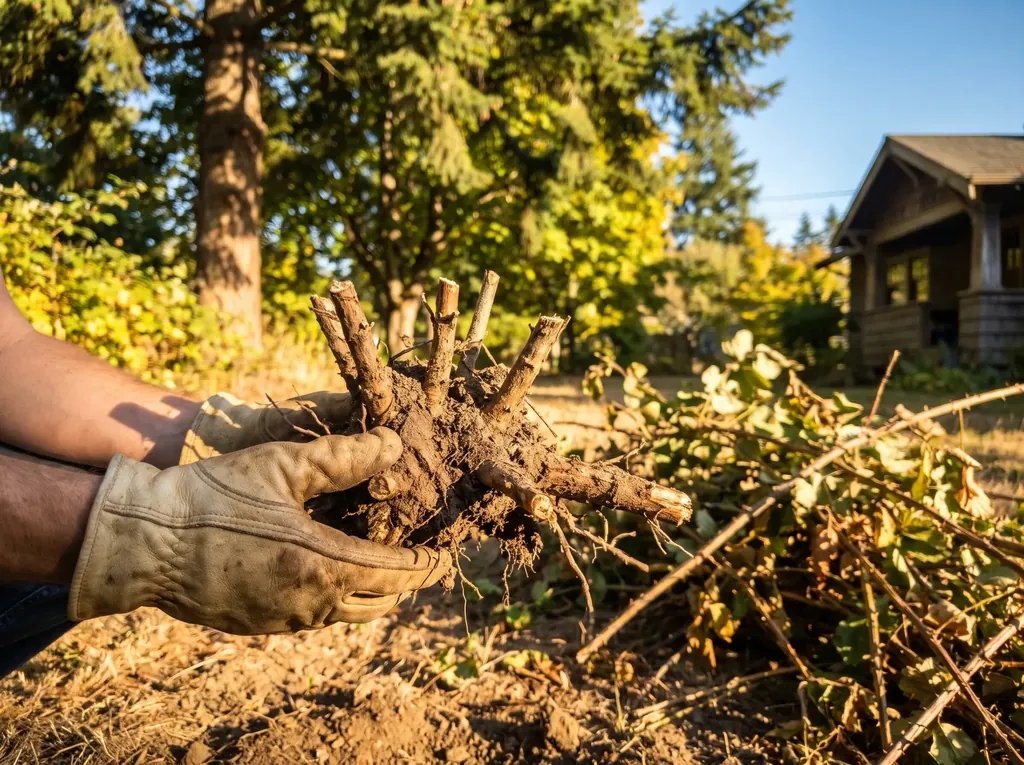
What it is if you know, roughly how big an area, and what is buried in it: a fence, a shed, old equipment, a creek.
We walk the area, look at slopes, water and access, and point out anything in there worth saving.
The area to clear, how deep we dig, what happens to the material, and what follow-up we recommend.
Top growth cut and pulled out, structures and fences freed, and the ground opened up.
Root crowns dug out across the cleared area, and broom and ivy dealt with as we go.
Material chipped or hauled, the area raked, and a plain plan for the next season so the brush does not win back the ground.
We dig. A single mow or flail looks good for a few weeks and then the canes come back. Repeated cutting can wear blackberry out, but it takes several years. Digging out the root crowns is slow, and it is the quickest way to a clearing that lasts, so we price and plan for it.
We do not spray. No herbicide on your property, near your well, along your creek or around your vegetable garden.
We are careful near trees and water. Brush along a creek bank or a steep slope is holding soil, and native plants are often mixed in with the invaders. We take out what needs to go and leave the natives where we can.
Work along streams, wetlands, shorelines and steep slopes can carry extra rules, and so can work in the nesting season. We check what applies to your property before we quote and schedule around active nests.
Send us a photo and tell us roughly how far it goes. We will come and tell you what it will take to get the ground back.
We are only just starting to collect customer reviews. When we do, they will appear here in full, in our customers' own words.
Himalayan blackberry is one of the hardest. The canes root wherever their tips touch the ground, the root crowns store enough energy to regrow after being cut back, and birds spread the seeds. Cutting once only sets it back. Repeated cutting over several years can wear it out, but digging out the root crowns, then staying on top of seedlings and resprouts for a season or two, is the quickest way to get rid of it without chemicals.
Himalayan blackberry is widely treated as an invasive weed in Western Washington, and it crowds out native plants along streams, fields and forest edges. The native trailing blackberry is a different, much smaller plant and is not a problem in the same way. If you are not sure which you have, we can tell you on site.
Heavy gloves, long sleeves and eye protection first. Then loppers or a hedge trimmer to cut the canes, a rake or pitchfork to drag them out, and a mattock or grubbing hoe to dig out the root crowns. For a large patch, a brush cutter with a blade speeds up the cutting. The digging is the part that matters, and it is hard work on our heavy, root-filled soil.
For a yard or the edge of a lot, cutting and then digging out the roots of the problem species gives the cleanest, longest-lasting result. For larger areas, a mulching machine clears quickly and leaves a protective layer of chips, but resprouting brush can come back through it. Whichever method you use, plan the follow-up: mowing, mulching or planting the cleared ground so the brush does not simply move back in.
Himalayan blackberries usually ripen from late July into September in Western Washington, depending on the year and the spot. That timing matters for clearing too. Many people like to pick one last crop and then clear in fall or winter, when the canes are easier to see, birds have finished nesting and the ground is ready for planting afterwards.
We clear blackberry and brush across Whatcom County: Bellingham, Ferndale, Lynden, Blaine, Everson, Sudden Valley, Birch Bay, Sumas, Deming and Custer, plus the rural ground between them.
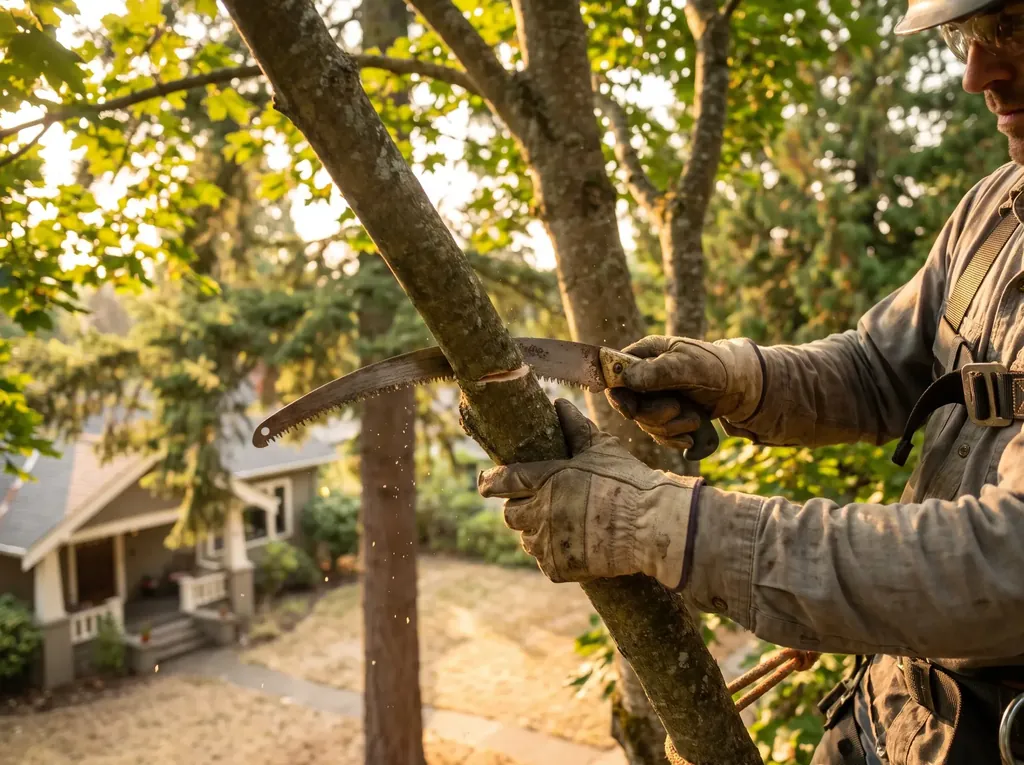
Deadwood out, crowns thinned, limbs cleared from roofs, houses and lines, every cut made where the tree can seal it off.
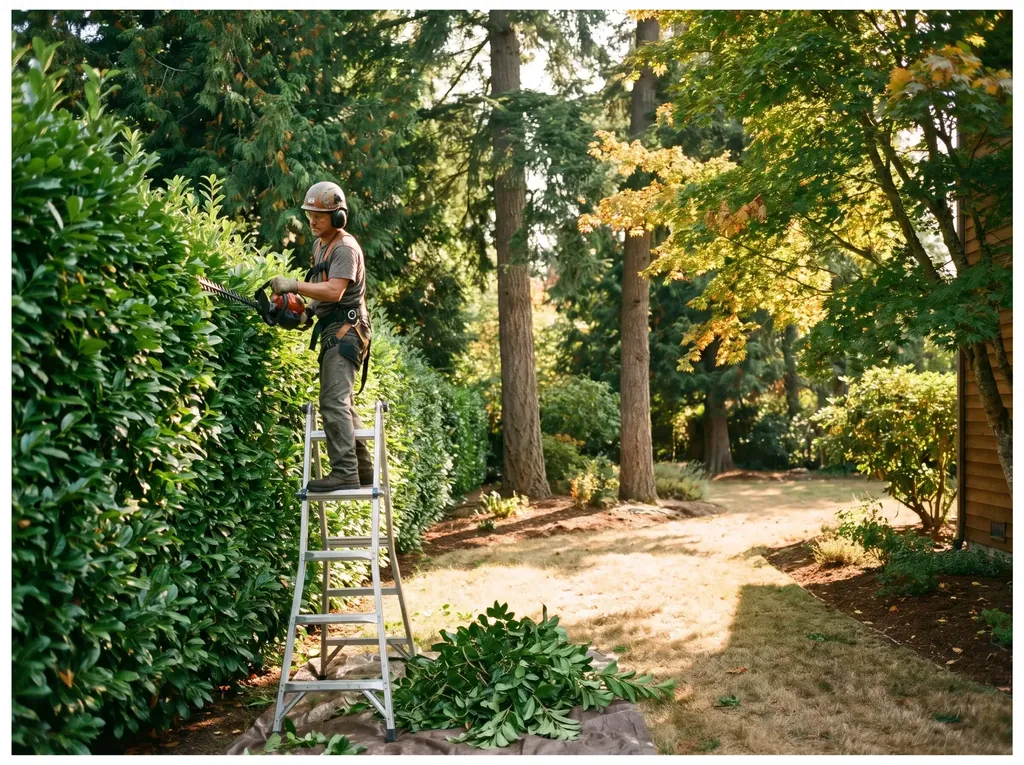
Laurel, arborvitae, holly and overgrown shrubs shaped, reduced or brought back from the brink.
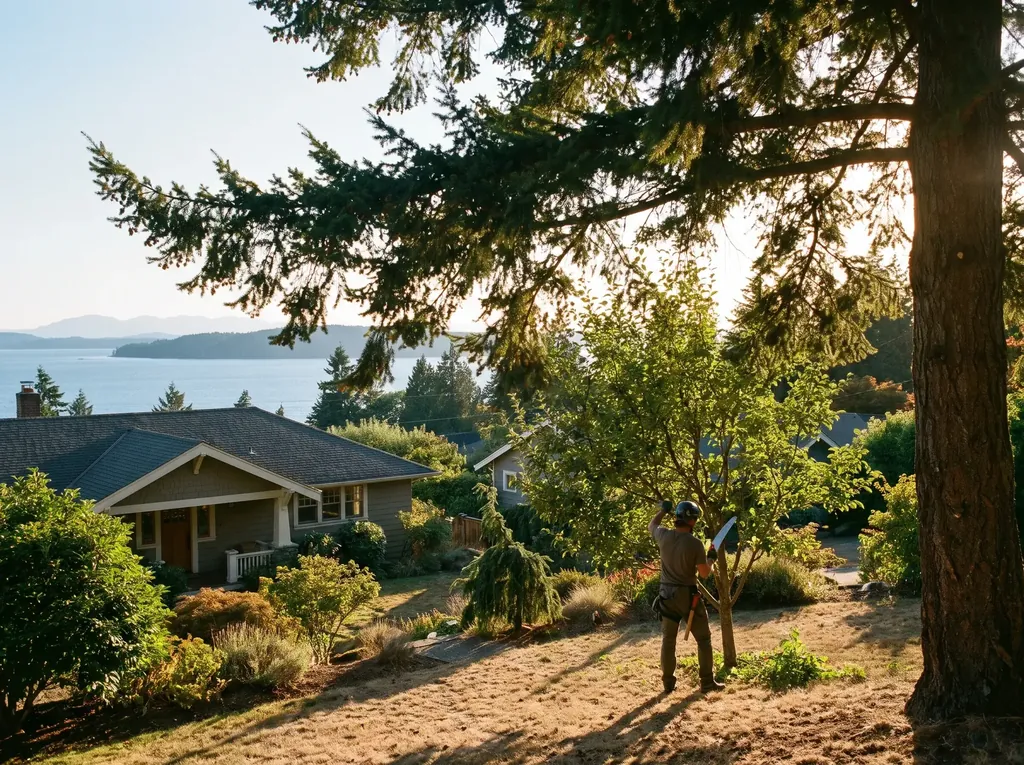
Selective thinning and windowing that opens a view of the bay or the mountains and leaves the tree standing.
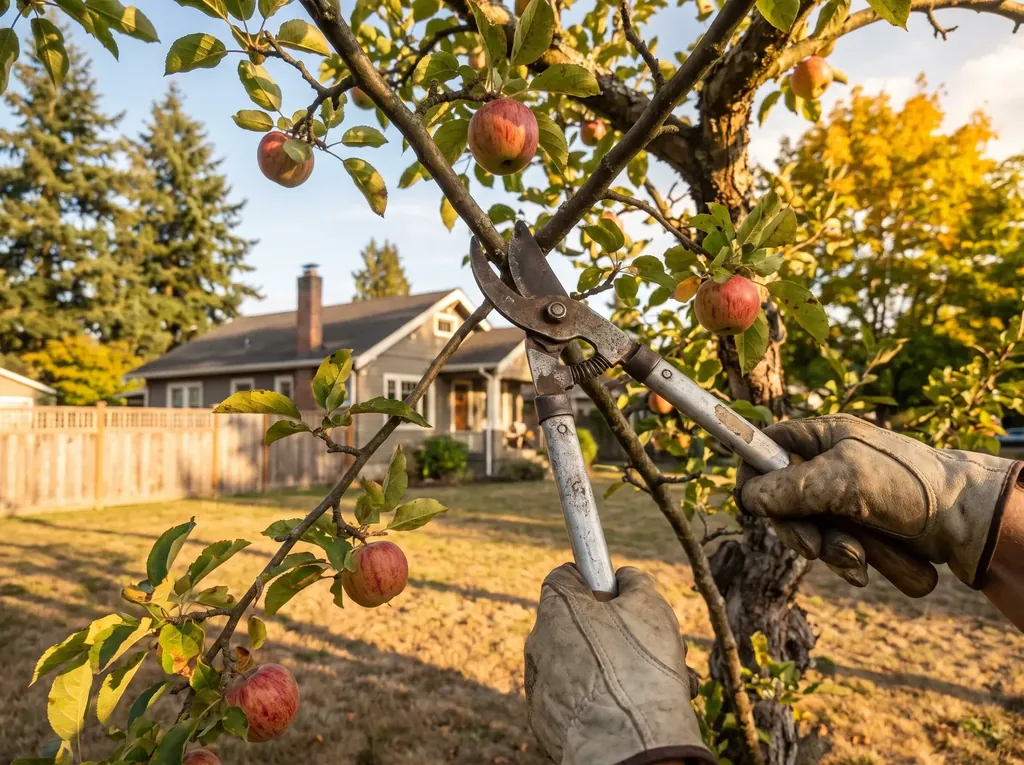
Apple, pear, plum and cherry pruned for structure, light and a better crop, including the neglected old ones.
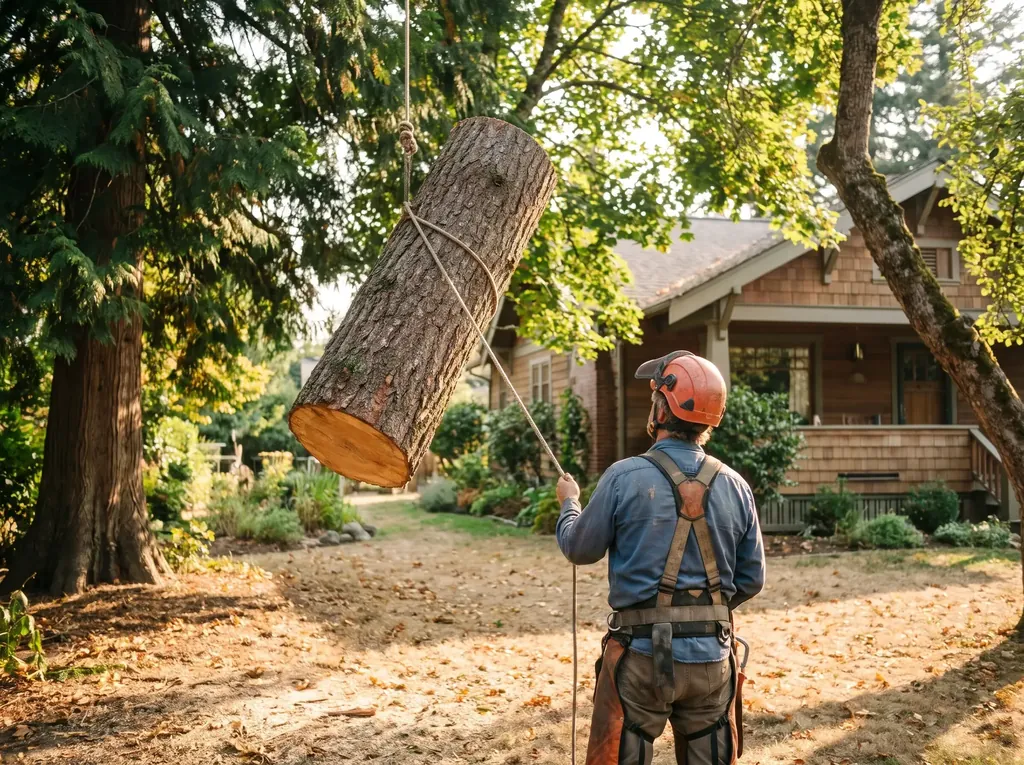
When a tree really has to go, taken down in sections where there is no room to drop it.
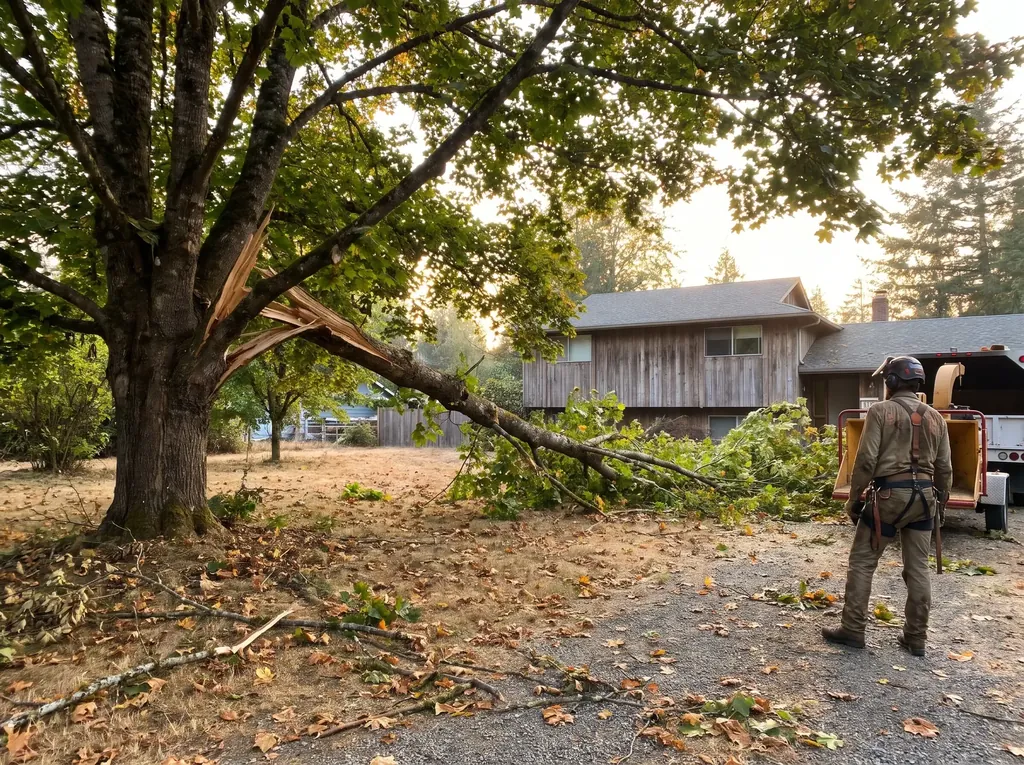
Broken limbs, hangers and trees down after a windstorm, made safe and cleared.
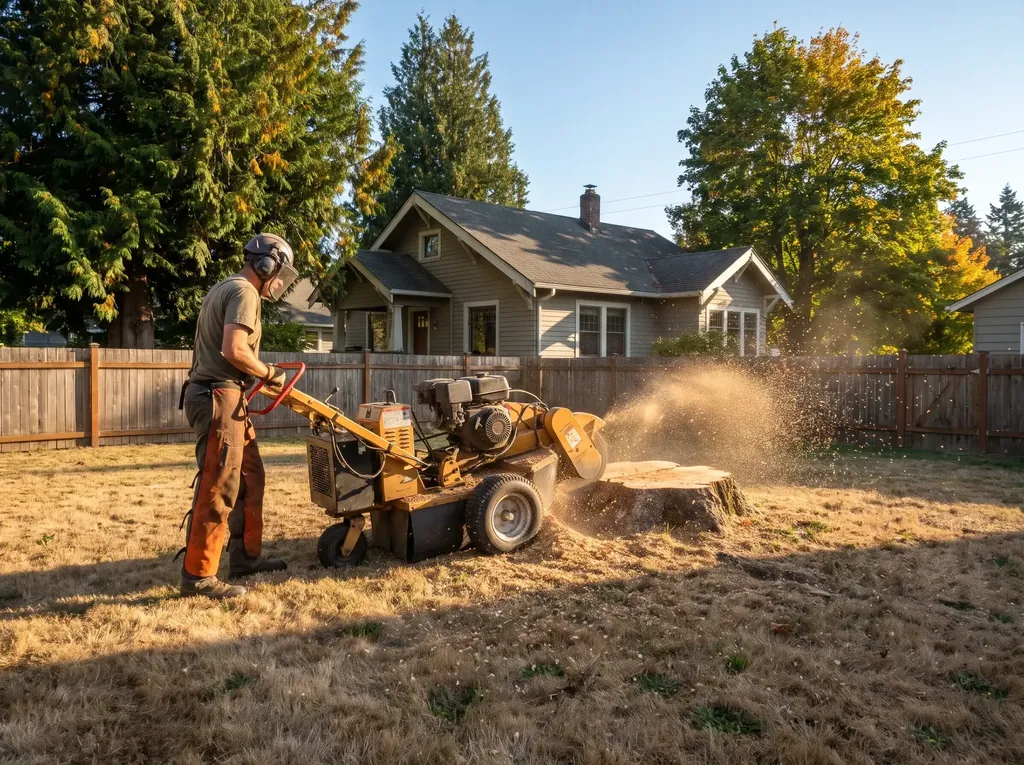
Stumps ground below grade, surface roots chased, chips cleaned up or left as mulch.
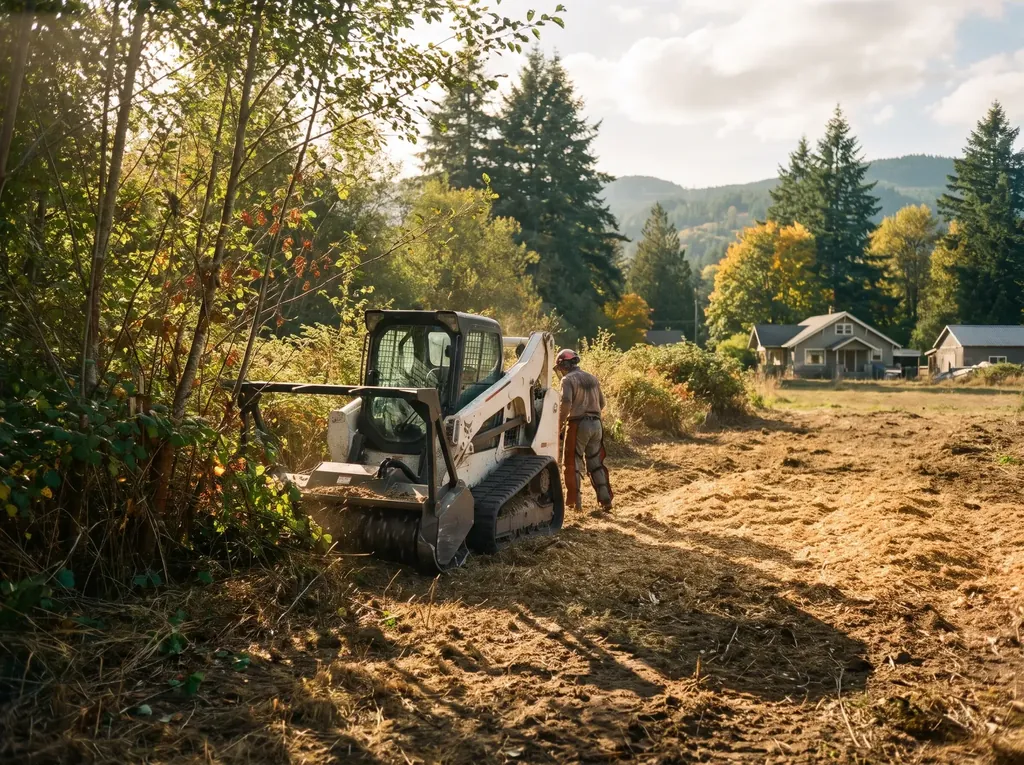
Overgrown lots and acreage cleared of alder, brush and small trees, including forestry mulching.
Tell us what is growing, roughly how big the area is, and what is hidden in it. A photo or two from the edge of the patch helps us plan.
We will be in touch to set up a time to look at the tree. If it is urgent, call (360) 555-0137.
Nothing was sent. Please call (360) 555-0137 and we will set up your free estimate.