Regular hedge trimming
Laurel, privet, boxwood, arborvitae and mixed hedges kept to the height and width you want, with straight faces, level tops and the base kept full. Most hedges here look best with a trim once or twice a year.
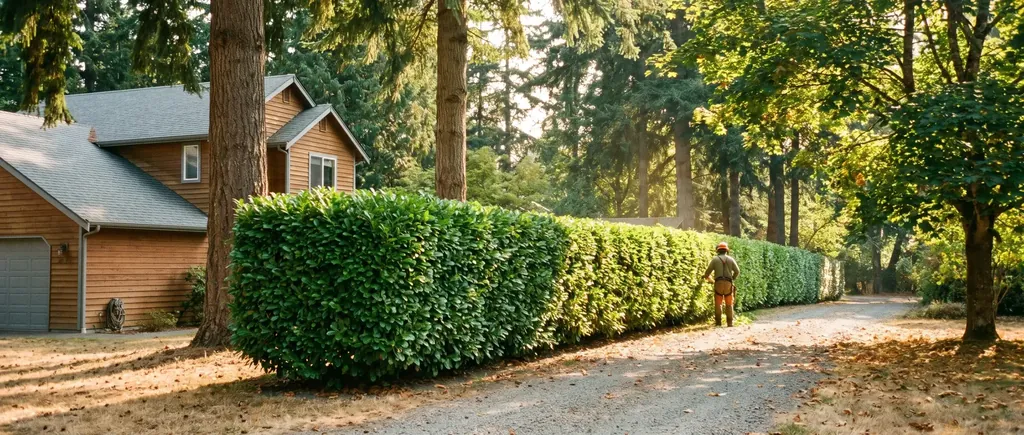
English laurel, arborvitae, holly and the shrubs that quietly took over the side yard. Trimmed, reduced or brought back to a size you can live with, with clean lines and a proper clean-up.
Overgrown hedges brought back
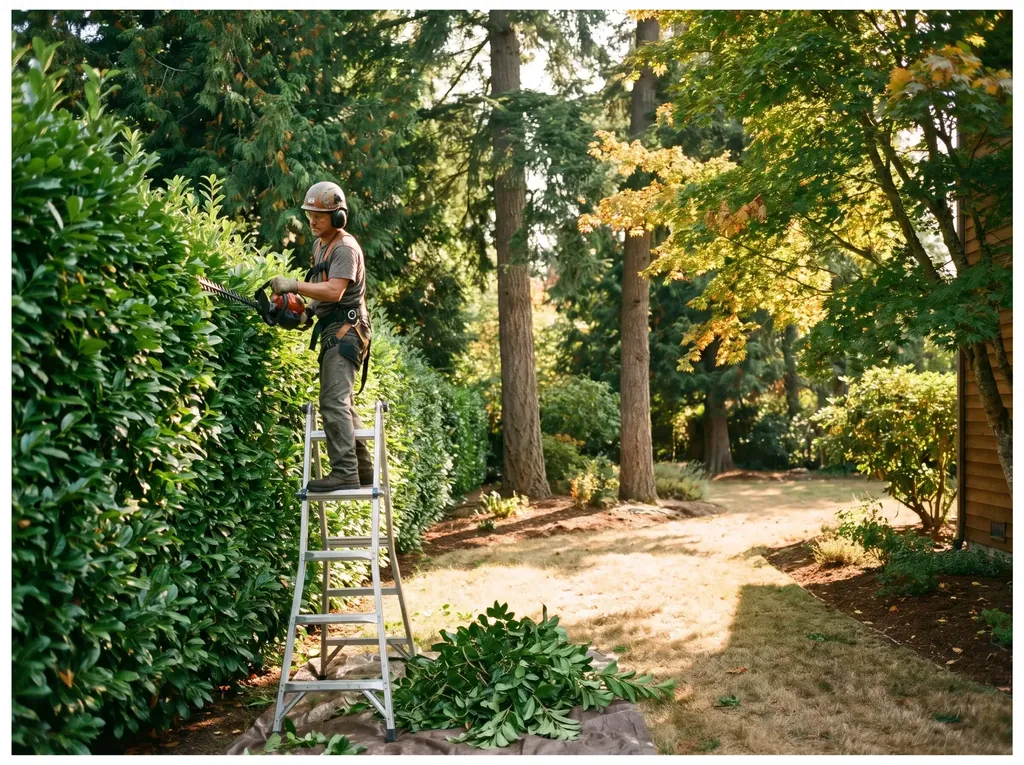
Our mild, wet climate is very good at growing hedges. An English laurel screen planted along a Bellingham property line can put on a remarkable amount of growth in a single season, and a few years of "we'll get to it" turns a tidy six foot screen into a dark wall that shades the house, swallows the path and leans over the neighbour's drive. Holly spreads by seed every time a bird drops a berry. Arborvitae rows planted for privacy along Ferndale and Lynden subdivisions grow tall, thin at the base and splay apart under wet snow.
Getting a hedge back under control starts with knowing what the plant will tolerate. Laurel takes hard cutting and will sprout again from old wood, so a badly overgrown laurel can usually be reduced a long way. Arborvitae and most other conifers will not regrow from the bare brown interior, so cutting past the green layer leaves a permanent hole. Holly also regrows from old wood, just more slowly than laurel. The advice to "just cut it back by half" is right for one of those plants and ruinous for another.
So we trim to the plant in front of us. Regular hedges get a clean, even face and a top slightly narrower than the base, so light reaches the bottom and it stays green to the ground. Overgrown ones get a plan, which sometimes means one hard cut and sometimes means two or three seasons of steady reduction.
Laurel, privet, boxwood, arborvitae and mixed hedges kept to the height and width you want, with straight faces, level tops and the base kept full. Most hedges here look best with a trim once or twice a year.
Hedges that have doubled in height or crept a few feet into the lawn, brought back down and in. On laurel we can often take off a great deal in one visit. On conifer hedges we reduce in stages so the hedge stays green while it shrinks.
Rhododendrons swallowing a front window, overgrown foundation shrubs, holly crowding a path, and old ornamentals that need thinning rather than shearing. Some shrubs are better thinned by hand from the inside than clipped into a ball, and we will tell you which.
We identify what is in the hedge, check how far back the green growth goes, and look for nests, dieback and anything growing through it. That decides how hard we can cut and when.
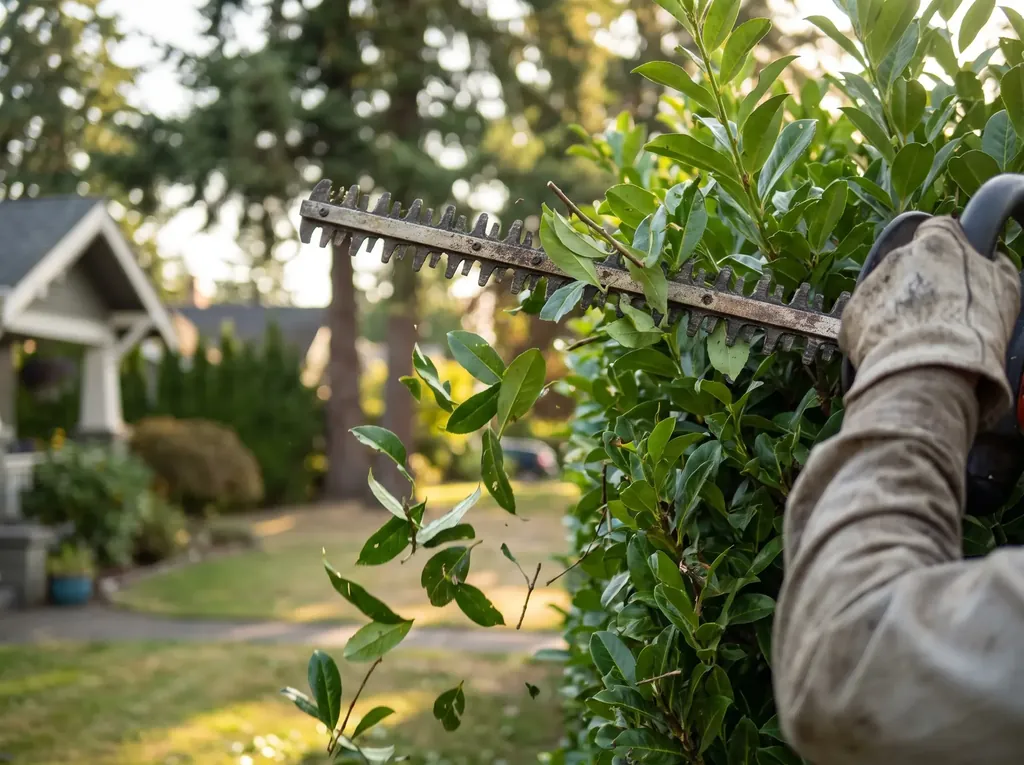
On a long run of laurel, powered shears are the practical tool, and the cut leaves brown at the edges for a few weeks before new growth covers them. On a short, visible stretch by the front door we can hand prune for a cleaner face. We will tell you the trade-off before we start.
Faces cut with a slight taper so the base gets light, tops cut level, and corners kept square or rounded the way you want them. A hedge that is wider at the top than the bottom goes bare at the base within a few years.
Clippings raked out of the hedge base, the beds, the lawn and the path, and blown off the drive and out of the gutters if they landed there. Chipped and hauled, or left for your green bin if you prefer.
A photo and a rough length and height is usually enough to start: how long the run is, how tall it has got, and what you would like it to be.
We check the plant, the access on both sides, and whether the far face is on your side of the line or the neighbour's.
Height, width and finish agreed in plain words, plus anything we recommend doing in stages rather than all at once.
Drop sheets along beds and paths, and ladders or platforms set where the top needs reaching safely.
Faces first, then the top, then the corners and ends, checking the line by eye from the street as well as up close.
Everything raked and cleared, and a quick word on when the hedge will want cutting again.
We know what each plant can take. The difference between a laurel that bounces back in a season and an arborvitae with a brown hole in it forever is usually one cut too deep, and we would rather tell you a hedge needs two seasons than ruin it in one afternoon.
We tell you when a hedge is not worth saving. A conifer hedge that has gone bare in the middle, or a laurel that has become a row of trunks with a green lid on top, can sometimes be rescued and sometimes cannot. If replacing it would give you a better screen sooner, we will say so.
And we are careful at the property line. Many hedges here sit on or near a boundary.
If a hedge sits on the line, we will ask you to check with your neighbour before we cut the far side, and we only trim what you have the right to trim.
Tell us how long it is and how tall it has got. We will come out and tell you how far it can safely come back, and how quickly.
We are only just starting to collect customer reviews. When we do, they will appear here in full, in our customers' own words.
For most hedges in Whatcom County, a main trim in late spring after the first flush of growth and a lighter tidy in late summer keeps them neat. Hard reductions on laurel and other broadleaf hedges are best done in late winter or early spring, just before growth starts, so the plant has a full season to refill. Conifer hedges like arborvitae are best trimmed lightly while they are actively growing, never cut back into bare wood.
For hedges it depends entirely on the plant. A healthy English laurel can be cut back very hard, even to stumps, and will usually regrow, though it looks rough for a season or two. Holly tolerates a firm reduction. Arborvitae, cypress and most other conifers should only lose green growth, because they will not regrow from the bare interior. When in doubt, take less and come back the following year.
For hedges, the main caution is spring and early summer, when birds nest in dense growth. We check hedges for active nests before we cut and work around them or come back later. We will tell you if a hedge needs to wait, and why.
Anything that wants to be much bigger than the space allows. Douglas fir, western red cedar and big-leaf maple belong well away from the house. English laurel is often planted as a foundation shrub and quickly outgrows it, pushing against siding and holding damp on the walls. Cottonwood and willow have aggressive roots near drains. If you are replanting after a hedge comes out, choose something whose mature size fits the spot.
Usually the best route is a conversation, and many hedge disputes end once someone offers to split the cost of a trim. Whether you can require it is a legal question that depends on the situation and the location. We are happy to look at a shared hedge and give both owners the same plain answer on what it needs.
We trim hedges and shrubs across Whatcom County: Bellingham, Ferndale, Lynden, Blaine, Everson, Sudden Valley, Birch Bay, Sumas, Deming and Custer, plus the rural ground between them.
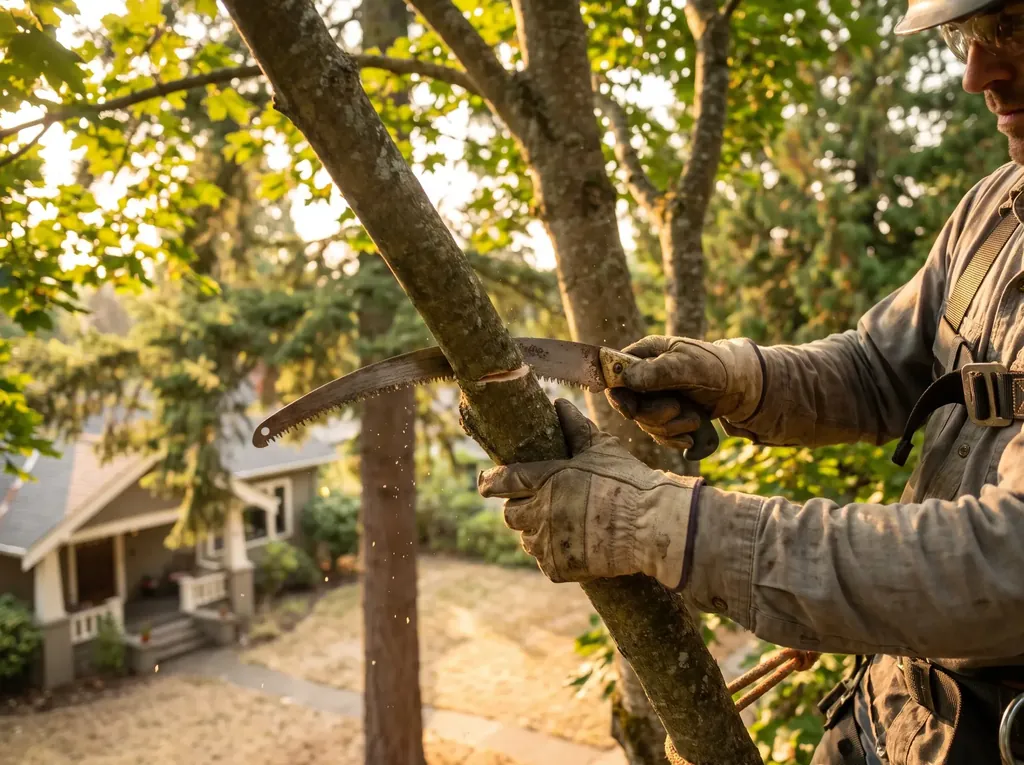
Deadwood out, crowns thinned, limbs cleared from roofs, houses and lines, every cut made where the tree can seal it off.
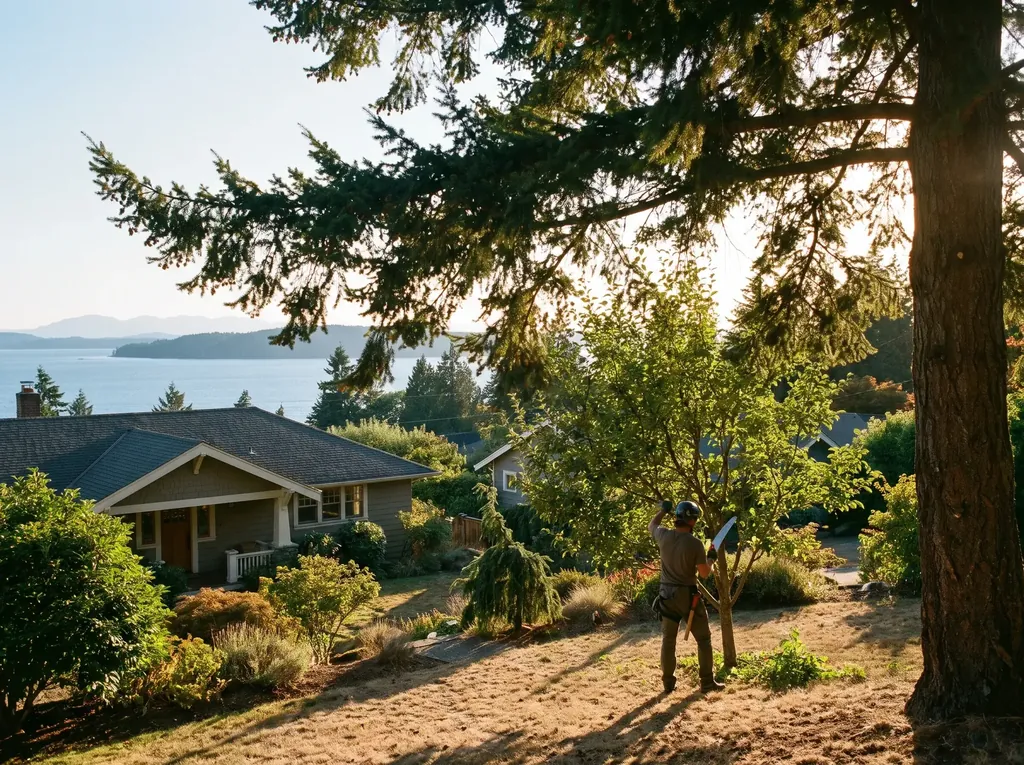
Selective thinning and windowing that opens a view of the bay or the mountains and leaves the tree standing.
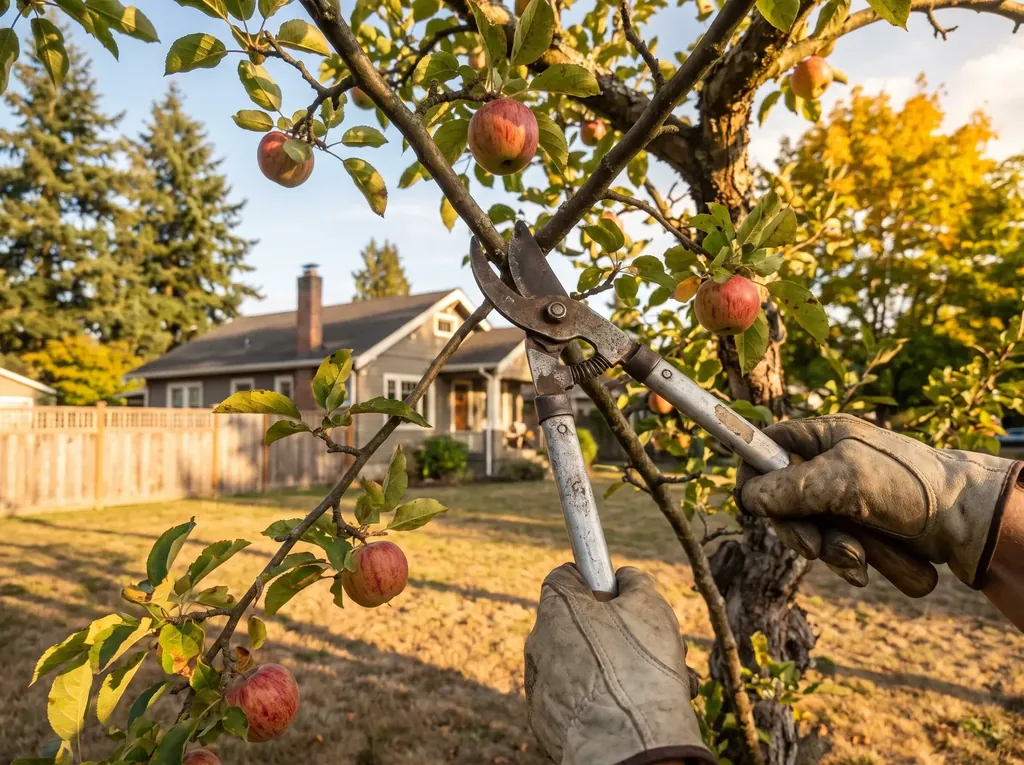
Apple, pear, plum and cherry pruned for structure, light and a better crop, including the neglected old ones.
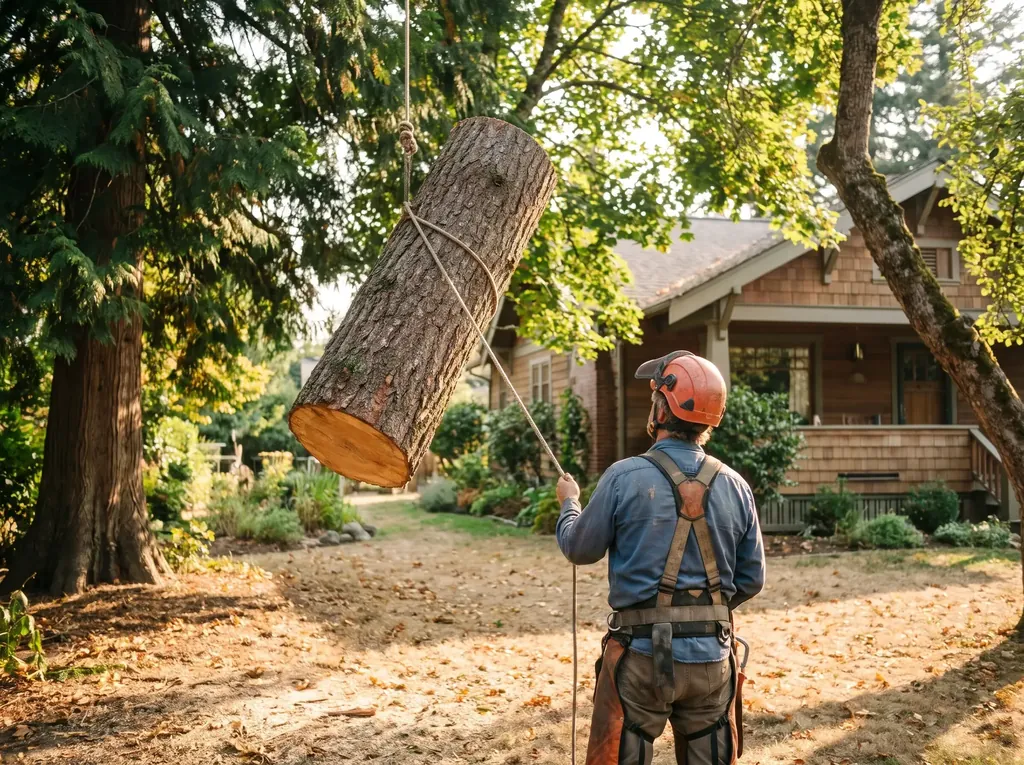
When a tree really has to go, taken down in sections where there is no room to drop it.
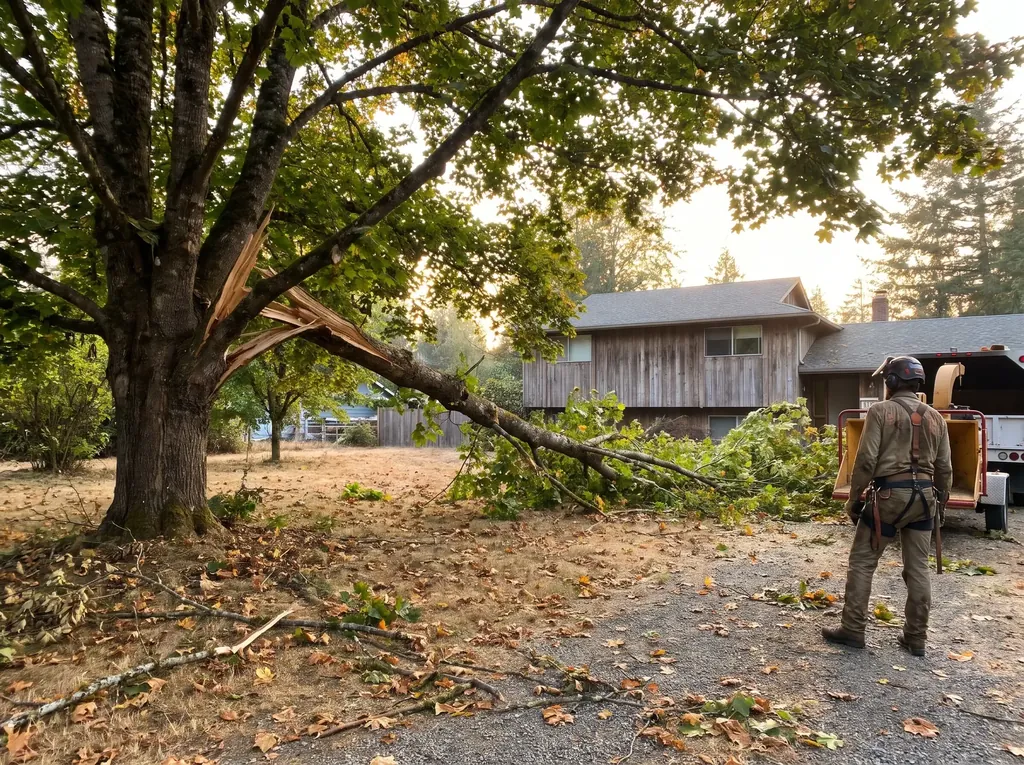
Broken limbs, hangers and trees down after a windstorm, made safe and cleared.
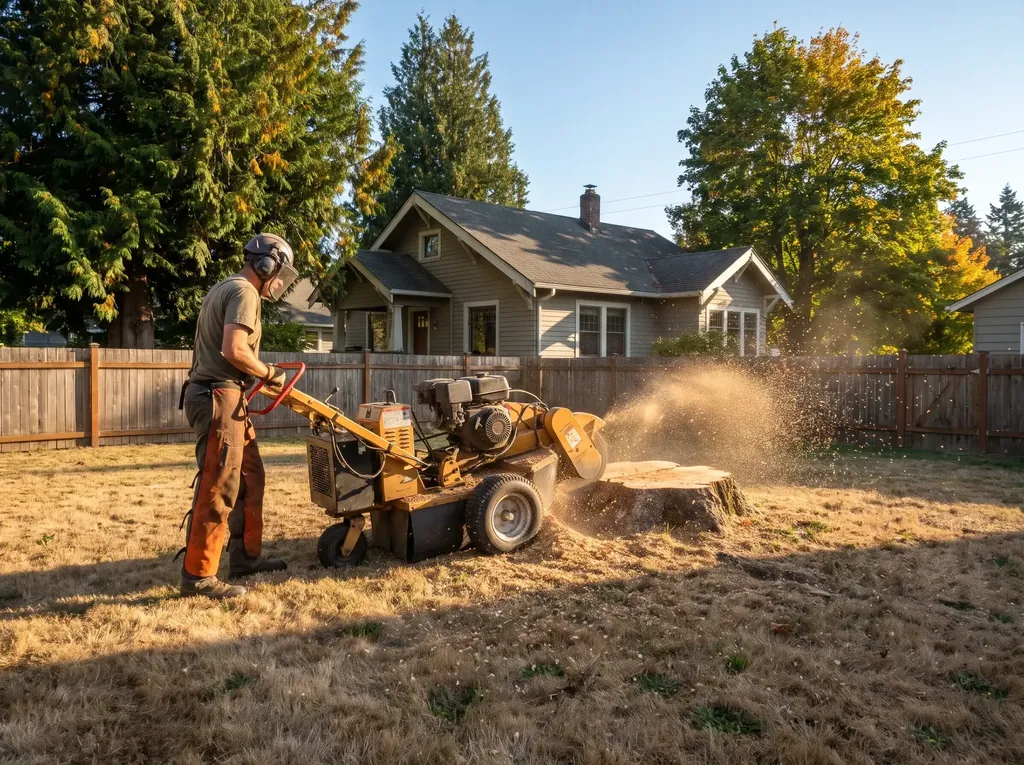
Stumps ground below grade, surface roots chased, chips cleaned up or left as mulch.
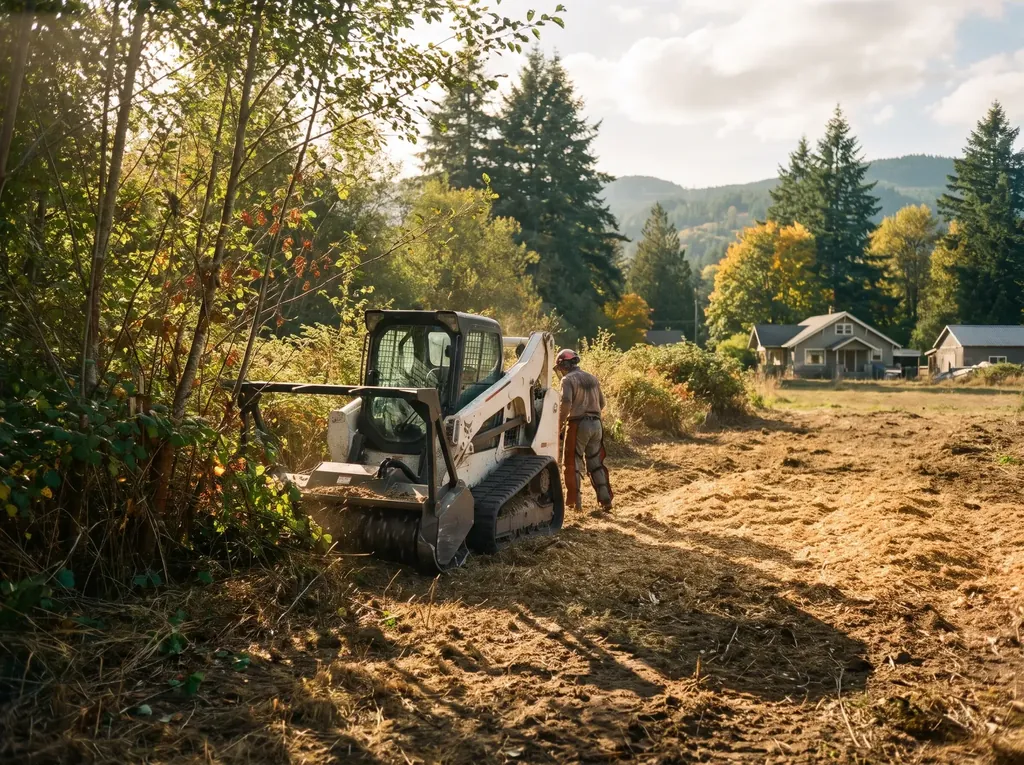
Overgrown lots and acreage cleared of alder, brush and small trees, including forestry mulching.
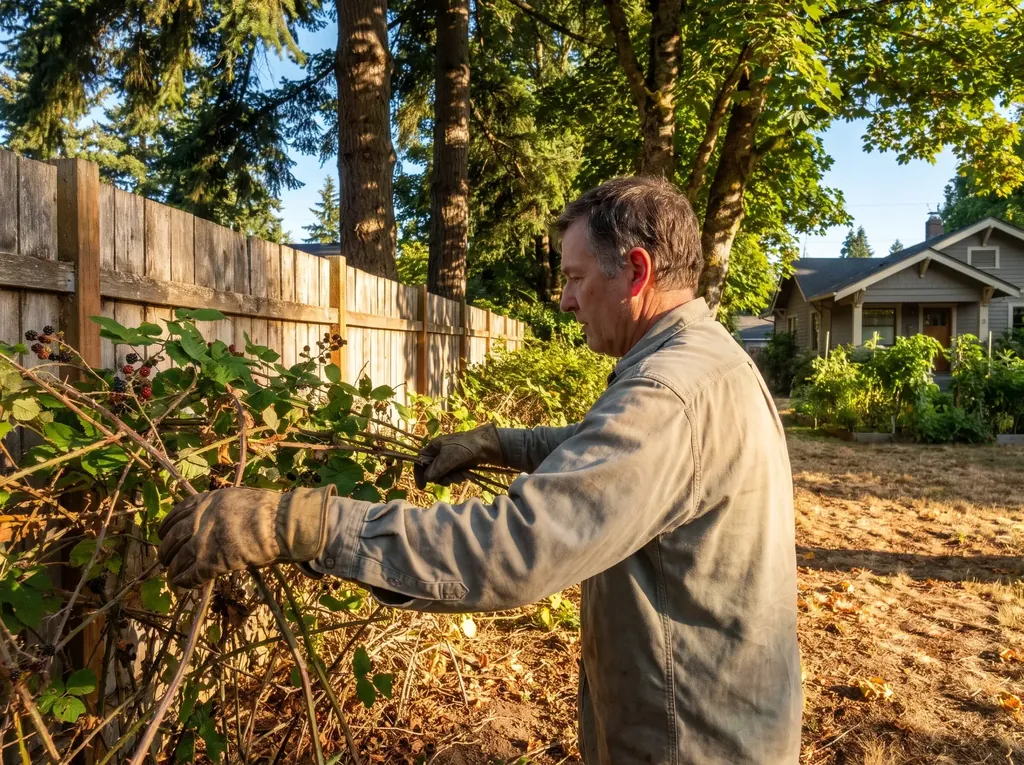
Himalayan blackberry, Scotch broom and invasive brush cut back and dealt with at the root.
Tell us roughly how long and how tall the hedge is, what it is if you know, and how you would like it to look. A photo from the street helps.
We will be in touch to set up a time to look at the tree. If it is urgent, call (360) 555-0137.
Nothing was sent. Please call (360) 555-0137 and we will set up your free estimate.